Michigan Reports More Than 6,500 Cyclospora Cases as State Faces Largest Outbreak in Years
What's Happening
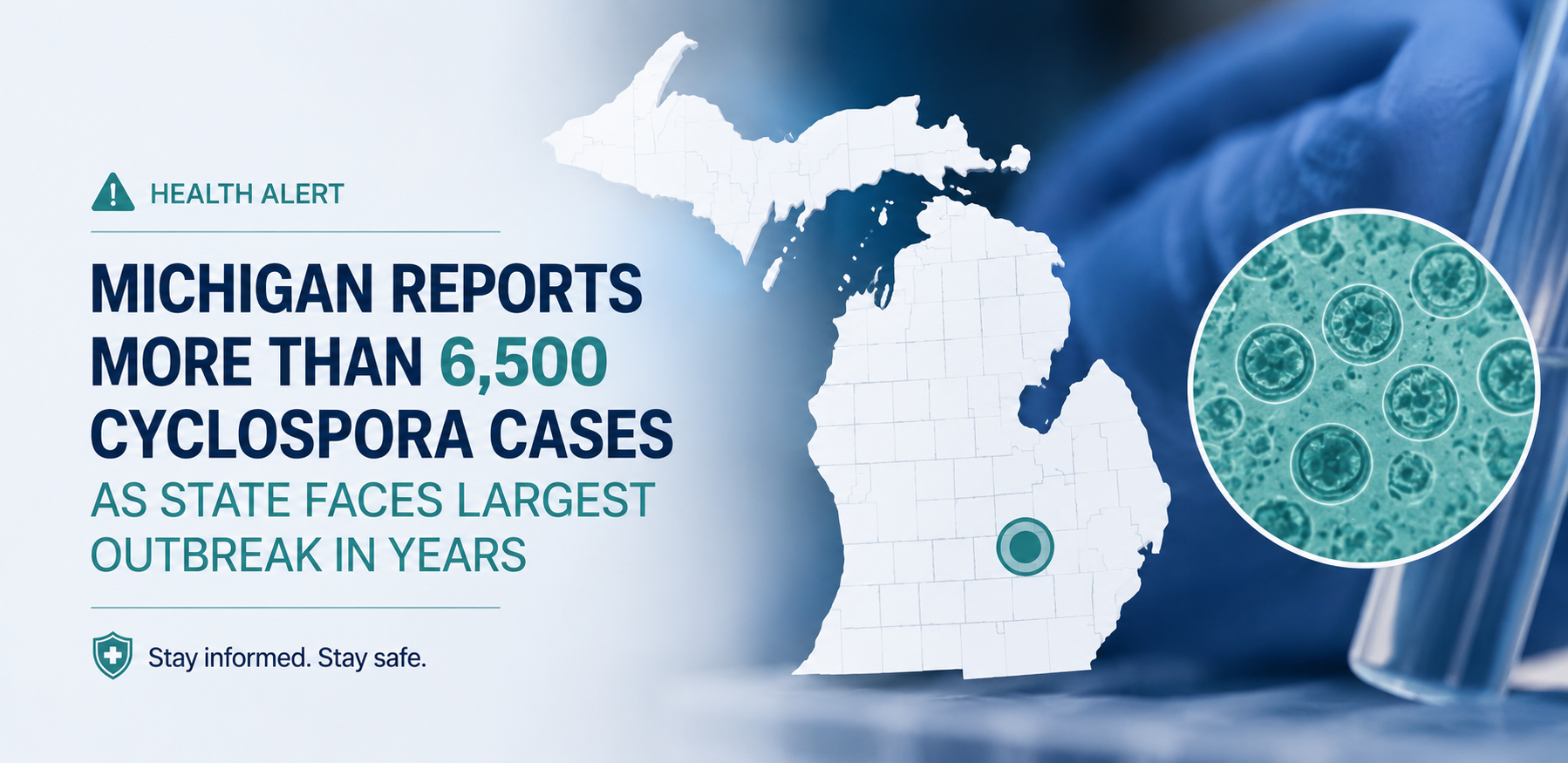
Michigan health officials have reported 6,571 cases of cyclosporiasis since May, making it one of the states most heavily affected by the ongoing U.S. outbreak of the foodborne parasitic illness.
The cases are part of a larger nationwide investigation led by the Centers for Disease Control and Prevention (CDC) and the U.S. Food and Drug Administration (FDA) into outbreaks linked to contaminated fresh produce. State officials say investigations remain ongoing as public health agencies continue tracing potential sources of infection.
Michigan has emerged as one of the states reporting the highest number of infections, highlighting the continued spread of the outbreak across multiple regions of the United States.
What Is Cyclosporiasis?
Cyclosporiasis is an intestinal illness caused by the microscopic parasite Cyclospora cayetanensis.
People become infected by consuming food or water contaminated with the parasite, most commonly fresh produce such as leafy greens, herbs, berries, or vegetables that have been exposed to contaminated water during growing or processing.
Symptoms generally develop about one week after exposure and may include:
- Persistent watery diarrhea.
- Abdominal cramps.
- Nausea.
- Fatigue.
- Loss of appetite.
- Weight loss.
- Bloating.
Without appropriate treatment, symptoms can last for weeks and may recur after temporarily improving.
Why Michigan Has Been Heavily Affected
Health officials have not identified a single reason why Michigan has recorded such a large number of cases.
Several factors may contribute, including:
- Distribution of contaminated produce through regional supply chains.
- Extensive case detection and laboratory reporting.
- Strong public health surveillance systems.
- Ongoing investigations involving restaurant-associated exposures.
Michigan has also been central to one of the multistate outbreak investigations linked to shredded iceberg lettuce served at Taco Bell restaurants across several Midwestern states.
The Connection to the National Outbreak
The CDC and FDA continue investigating multiple cyclospora outbreaks occurring simultaneously across the country.
One major investigation has focused on shredded iceberg lettuce supplied through Taylor Farms' operations in central Mexico.
Although the FDA recently determined that a laboratory test indicating Cyclospora contamination in one lettuce sample was a false positive, federal officials say epidemiological evidence and traceback investigations continue to support the connection between the outbreak and the recalled lettuce products.
The voluntary recall of the implicated lettuce remains in effect while investigations continue.
Why Cyclospora Outbreaks Are Difficult to Investigate
Cyclospora presents unique challenges for public health investigators.
Unlike many bacteria responsible for foodborne illness:
- The parasite cannot currently be cultured in laboratories.
- Food samples rarely contain enough organisms for easy detection.
- Fresh produce is often consumed before contamination is discovered.
- Symptoms appear several days after exposure, making it difficult for patients to remember what they ate.
Because laboratory confirmation is often unavailable, investigators rely heavily on:
- Patient interviews.
- Restaurant purchase records.
- Supply chain tracing.
- Distribution data.
- Epidemiological analysis.
Together, these methods help identify likely sources even when direct laboratory evidence is limited.
Protecting Against Infection
Public health officials continue recommending standard food safety practices, including:
- Washing fresh produce thoroughly.
- Following FDA recall notices.
- Avoiding recalled products.
- Seeking medical care if prolonged diarrhea develops.
Cyclospora infections are typically treated with prescription antibiotics, and most patients recover fully when diagnosed promptly.
Industry Impact
- Public Health Agencies: State and federal agencies continue coordinating surveillance, laboratory testing, and traceback investigations to identify contaminated products and prevent additional illnesses.
- Food Producers: Produce growers and distributors may face increased oversight of sanitation practices, irrigation systems, and supply chain traceability as investigators work to prevent future outbreaks.
- Restaurants and Food Service: Restaurant operators are reinforcing supplier verification processes and recall response procedures to reduce the risk of serving contaminated ingredients.
- Consumers: The outbreak serves as a reminder of the importance of food safety guidance and timely public health communications during large multistate investigations.
Why This Matters
Michigan's growing case count illustrates how widespread foodborne outbreaks can become before investigators identify a common source.
Fresh produce often moves through complex distribution networks spanning multiple states and countries, making contamination events difficult to detect early. Because Cyclospora infections typically appear days after exposure and are difficult to confirm through laboratory testing, public health agencies must rely on extensive epidemiological investigations to identify likely sources.
The outbreak also highlights the growing importance of food traceability systems. Faster identification of contaminated products allows regulators and food companies to remove affected items from the market more quickly, reducing additional illnesses and strengthening public confidence in the food supply.
Key Takeaways
- Michigan has reported 6,571 cases of cyclosporiasis, making it one of the states most affected by the ongoing outbreak.
- The cases are part of broader CDC and FDA investigations into multiple cyclospora outbreaks linked to contaminated fresh produce.
- One major investigation continues to focus on recalled shredded iceberg lettuce supplied through Taylor Farms' operations in central Mexico.
- Cyclospora remains one of the most difficult foodborne parasites to trace because it is challenging to detect in food samples and symptoms appear several days after exposure.
- Public health officials continue urging consumers to follow recall notices and seek medical attention if symptoms develop.
What This Means for Healthcare Marketers
Michigan's experience demonstrates how rapidly foodborne disease outbreaks can place pressure on healthcare systems, laboratories, and public health agencies. Organizations providing infectious disease diagnostics, laboratory services, surveillance technology, and public health analytics may see increased demand for solutions that improve outbreak detection and response.
For healthcare marketers, the outbreak reinforces the importance of communicating evidence-based public health information in a clear and timely manner. As investigations evolve, organizations that provide accurate updates while explaining scientific uncertainty can strengthen trust among healthcare professionals and the public.
For healthcare intelligence teams, monitoring regional outbreak data alongside national investigations provides valuable insight into emerging health threats and regulatory priorities. Trends in infectious disease surveillance, food safety investigations, and recall activity can influence healthcare utilization, diagnostic demand, and investment in public health infrastructure.