Molina Healthcare Shares Fall as Medicaid and ACA Enrollment Concerns Weigh on Outlook
What's Happening
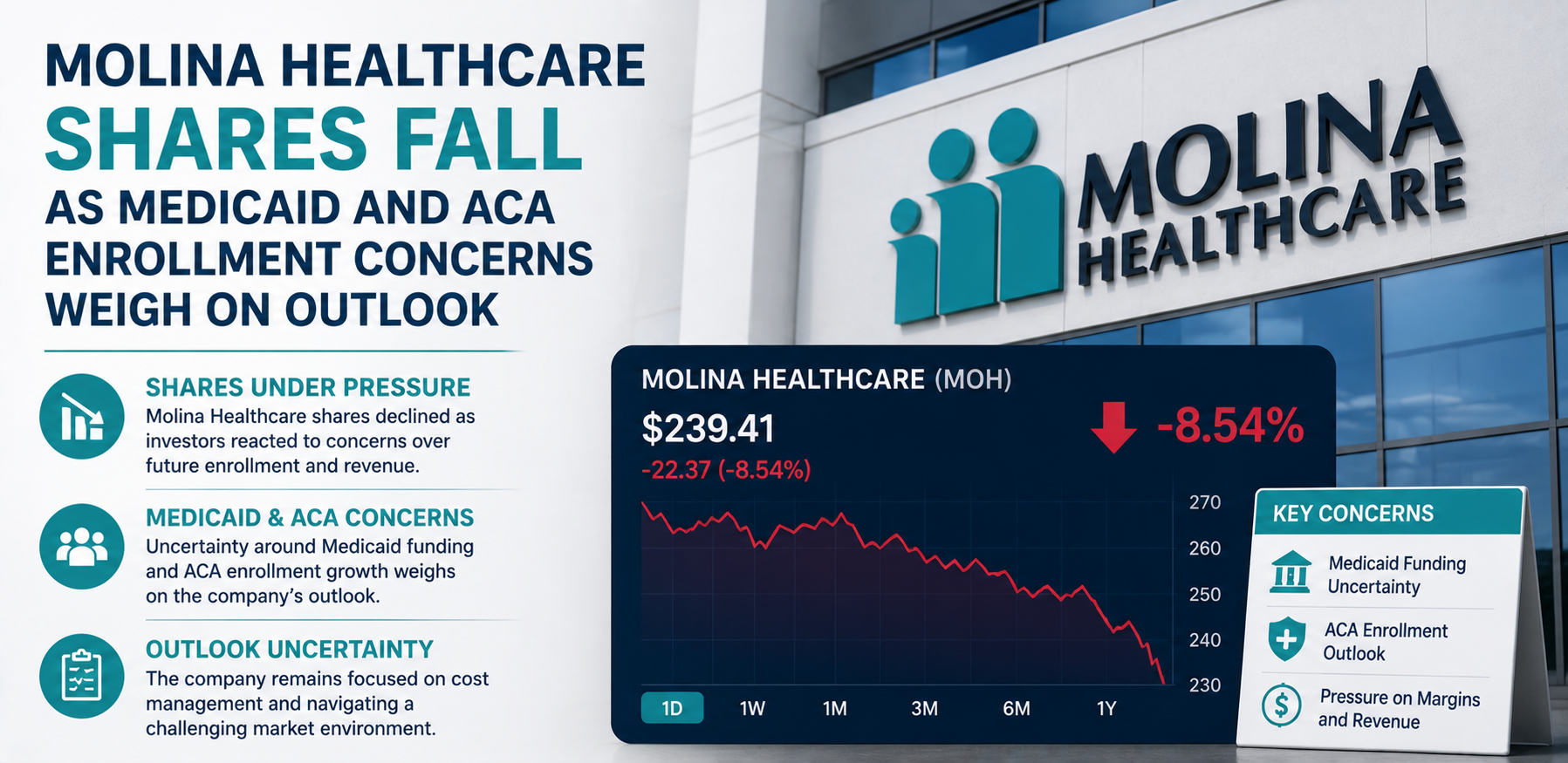
Molina Healthcare's shares fell after investors raised concerns about the company's outlook for two of its largest businesses: Medicaid managed care and the Affordable Care Act (ACA) Marketplace.
The health insurer said it continues to experience higher medical costs and uncertainty surrounding enrollment trends, prompting investors to reassess the company's growth expectations. While Molina remains one of the nation's largest government-sponsored health insurers, the broader market is closely watching how policy changes, redeterminations, and healthcare utilization patterns may affect future profitability.
The development reflects a larger challenge facing the managed care industry as insurers adapt to changing government programs, rising healthcare costs, and evolving patient enrollment patterns.
Understanding Molina's Business
Unlike many commercial health insurers, Molina Healthcare focuses primarily on government-sponsored health insurance programs.
Its business is built around three major segments:
- Medicaid, which provides health coverage for low-income individuals and families.
- ACA Marketplace plans, which offer subsidized health insurance to individuals purchasing coverage through federal and state exchanges.
- Medicare, serving seniors and eligible individuals with disabilities.
Together, Medicaid and ACA Marketplace plans account for a significant portion of Molina's membership and revenue, making changes in these programs particularly important for the company's financial performance.
Why Investors Are Concerned
Several trends are creating uncertainty for insurers that depend heavily on government-funded healthcare programs.
- Medicaid Eligibility Reviews Continue: During the COVID-19 public health emergency, states temporarily paused Medicaid eligibility reviews, allowing millions of Americans to remain enrolled. Since those protections ended, states have resumed eligibility redeterminations, resulting in millions of people losing Medicaid coverage because they no longer qualify or failed to complete required paperwork. For insurers such as Molina, declining Medicaid enrollment can directly affect membership growth and premium revenue.
- Higher Medical Costs: Like many health insurers, Molina continues to experience elevated healthcare utilization. Patients are increasingly seeking hospital care, outpatient procedures, specialist visits, behavioral health services, and prescription medications. As utilization increases, insurers pay more medical claims, placing pressure on profit margins if premium revenue does not keep pace.
- ACA Marketplace Uncertainty: The Affordable Care Act Marketplace has experienced strong enrollment growth in recent years, supported in part by enhanced federal premium subsidies. However, policymakers continue to debate the long-term future of those subsidies. Any changes could influence enrollment levels, premium pricing, and insurer participation in Marketplace plans. Because Molina has invested heavily in this segment, investors closely monitor policy developments that could affect future membership growth.
Why Government Programs Matter to U.S. Healthcare
Government-sponsored insurance programs now cover well over one-third of the U.S. population.
Together, Medicaid, Medicare, and ACA Marketplace plans represent one of the largest sources of healthcare funding in the country.
When enrollment shifts within these programs, the effects extend far beyond health insurers.
Changes can influence:
- Hospital reimbursement.
- Physician practice revenue.
- Pharmacy utilization.
- Care management programs.
- Population health initiatives.
- State healthcare budgets.
As a result, investor reactions to companies like Molina often reflect broader expectations about the direction of publicly funded healthcare.
Industry Impact
- Health Insurers: Molina's results underscore the pressures facing insurers with significant exposure to Medicaid and ACA plans. Companies may need to refine pricing strategies, strengthen care management programs, and improve operational efficiency to offset higher medical costs.
- Hospitals and Health Systems: Hospitals closely monitor Medicaid enrollment because government-sponsored coverage affects patient volumes, reimbursement levels, and uncompensated care. Declining enrollment can lead to more uninsured patients seeking treatment.
- State Governments: States continue balancing Medicaid eligibility reviews with efforts to maintain access to healthcare. Policymakers face the challenge of controlling program costs while minimizing unnecessary coverage losses among eligible individuals.
- Investors: The market's reaction illustrates how sensitive healthcare stocks remain to changes in utilization trends, government policy, and enrollment forecasts. Financial performance increasingly depends on insurers' ability to manage medical costs while navigating a shifting regulatory environment.
Looking Ahead
The managed care industry is entering a period of transition.
The end of pandemic-era Medicaid protections, ongoing eligibility reviews, and continued debate over ACA policy are reshaping the insurance landscape. At the same time, rising healthcare utilization is testing insurers' ability to maintain profitability.
Companies with strong care management capabilities, advanced data analytics, and diversified government programs may be better positioned to navigate these changes.
For Molina, future performance will depend largely on how effectively it manages medical costs, retains members, and adapts to evolving federal and state healthcare policies.
Why This Matters
Government-sponsored insurance programs are a cornerstone of the U.S. healthcare system, influencing how millions of Americans access care and how providers are reimbursed.
Molina's stock decline highlights the uncertainty facing insurers as healthcare utilization rises and enrollment patterns evolve. While the immediate impact is financial, the underlying issues have broader implications for healthcare access, provider stability, and public healthcare spending.
As policymakers continue to adjust Medicaid and ACA programs, insurers, providers, and patients alike will be watching closely for changes that could reshape the healthcare landscape over the coming years.
Key Takeaways
- Molina Healthcare's shares declined amid investor concerns about Medicaid and ACA Marketplace performance.
- Medicaid eligibility reviews and higher medical utilization continue to create financial pressure for government-focused insurers.
- Policy decisions affecting ACA subsidies and Medicaid enrollment remain key factors influencing the managed care industry.
- Changes in government-sponsored insurance programs have ripple effects across hospitals, physicians, pharmacies, and state healthcare systems.
- The industry's long-term outlook will depend on balancing healthcare affordability, enrollment stability, and rising medical costs.
What This Means for Healthcare Marketers
Molina's performance illustrates how closely healthcare organizations are tied to government coverage programs and policy changes. Companies serving Medicaid populations, value-based care organizations, digital health providers, and healthcare technology vendors should closely monitor enrollment trends and payer strategies, as shifts in membership can influence purchasing priorities and care delivery models. For healthcare marketers, understanding where insurers are investing in cost management, member engagement, and population health can help identify organizations most likely to adopt new technologies and strategic partnerships.