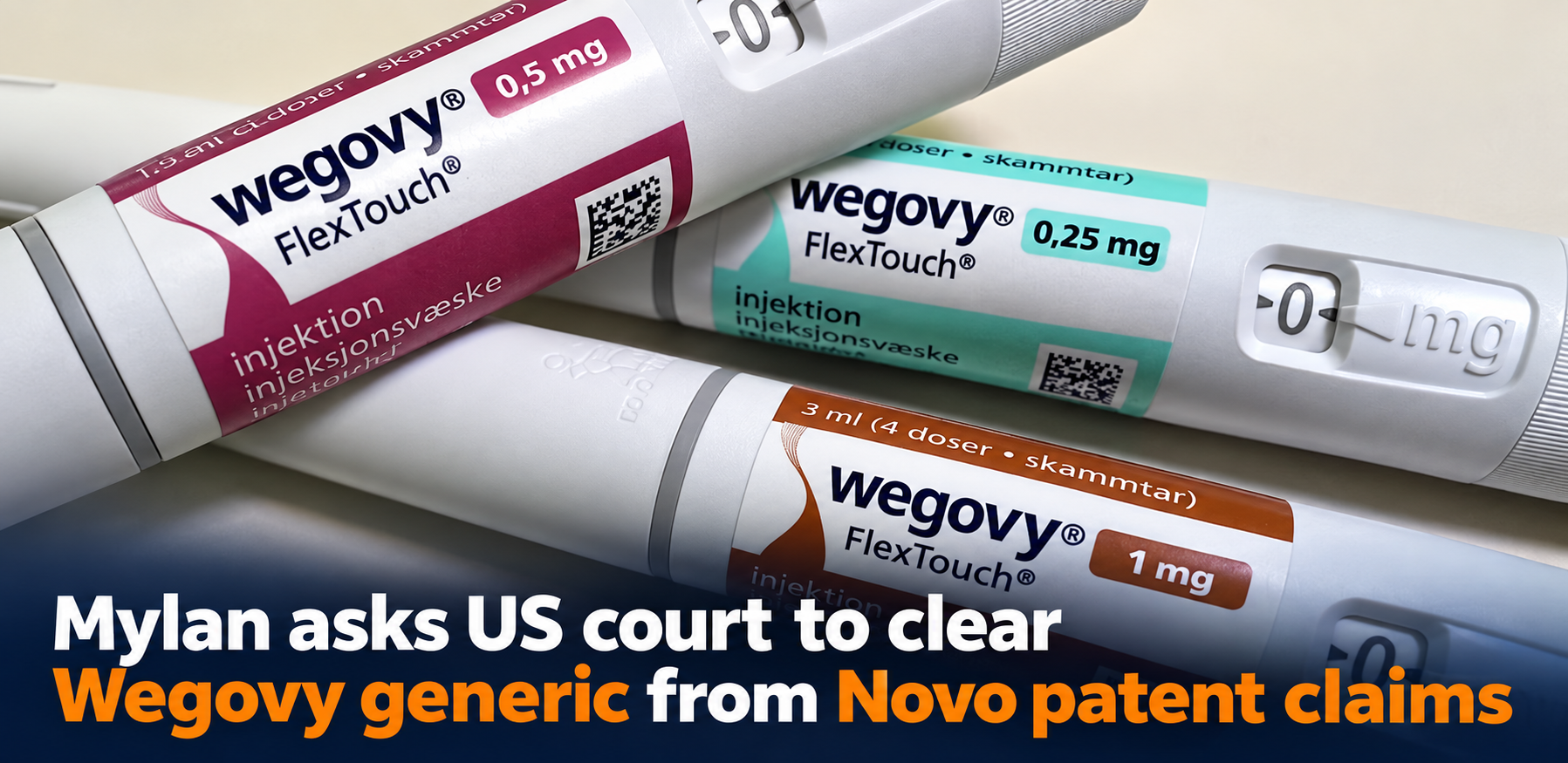
What’s Happening
Generic drugmaker Mylan Pharmaceuticals, a unit of Viatris, has asked a U.S. federal court to rule that its proposed generic version of Wegovy would not violate Novo Nordisk’s patent rights.
The case was filed in federal court in Delaware and is part of a broader patent battle over whether and when cheaper generic versions of Novo Nordisk’s blockbuster weight-loss drugs can enter the U.S. market. (Reuters)
Mylan is specifically challenging a Novo patent covering a method of administering single-dose Wegovy pens for weight loss.
Novo Nordisk has not commented on the case because the litigation is ongoing. (Reuters)
What Is Wegovy?
Wegovy is Novo Nordisk’s brand-name weight-loss treatment. Its active ingredient is semaglutide, a GLP-1 receptor agonist.
GLP-1 medicines work by helping regulate appetite and food intake. Wegovy is approved for chronic weight management and has become one of the world's biggest-selling obesity treatments.
Novo also sells semaglutide under the brand name Ozempic, which is approved for type 2 diabetes.
Together, Wegovy and Ozempic generated nearly $31 billion in revenue for Novo Nordisk last year, according to the company's report. (Reuters)
What Is Mylan Asking the Court to Decide?
Mylan wants the Delaware court to declare that its proposed generic Wegovy would not infringe Novo Nordisk’s patent.
The patent at issue covers a particular method of using single-dose Wegovy pens for weight loss.
This type of lawsuit is part of the process generic drugmakers use when they are preparing to bring a lower-cost version of a branded medicine to market.
Rather than waiting until a generic launches and then facing an infringement lawsuit, a generic manufacturer can ask a court to determine whether its proposed product would violate the brand company's patent rights.
Why Are Patents Important Here?
Patents give pharmaceutical companies legal protection for their inventions for a limited period.
During that period, a brand-name company can generally prevent competitors from making or selling products covered by its patents.
Generic drugmakers, however, can challenge patents they believe are invalid or do not apply to their proposed products.
The outcome of these disputes can have a major effect on when generic competition reaches patients.
For Wegovy, the situation is particularly important because Novo has several patents covering different aspects of the drug.
When Could Generic Wegovy Reach the U.S. Market?
Even though Mylan is challenging Novo's patent claims now, generic versions of Wegovy and Ozempic are not expected to enter the U.S. market until 2032, when Novo's patents covering semaglutide are set to expire. (Reuters)
That does not mean every patent dispute will necessarily continue until 2032.
Novo has previously reached settlements with Mylan and other drugmakers involving proposed generic versions of Wegovy and Ozempic.
Those agreements can establish when a generic manufacturer may enter the market and can resolve individual patent disputes without a full trial. (Reuters)
What’s Changing / Business Impact
The lawsuit highlights the growing competition around the GLP-1 market, which has become one of the most commercially important areas in the pharmaceutical industry.
For Novo Nordisk, protecting Wegovy's patents is important because the drug generates billions of dollars in revenue.
For Mylan and other generic manufacturers, gaining the ability to launch a lower-cost version represents a major potential commercial opportunity.
The dispute is therefore about more than one patent. It is part of a larger effort by generic drugmakers to determine how soon they can compete with major GLP-1 products.
For patients and healthcare systems, eventual generic competition could potentially create lower-cost treatment options, although the timing and availability will depend on patent litigation and regulatory requirements.
Why This Matters
Wegovy is one of the most important drugs in the rapidly expanding obesity-treatment market.
The success of GLP-1 medicines has encouraged pharmaceutical companies to develop competing treatments and has also attracted generic manufacturers looking toward the future.
Patent disputes can determine how long a company maintains market exclusivity and when competitors can begin offering alternatives.
The case also demonstrates why intellectual property strategy is a major part of pharmaceutical commercialization.
A company may have an approved drug and strong demand, but its long-term commercial position can still depend on the strength and duration of its patent portfolio.
Looking Ahead
The Delaware court will consider Mylan's request and Novo Nordisk's position on the patent.
The outcome could affect one part of the broader legal fight surrounding generic Wegovy.
However, the larger timeline for generic semaglutide remains tied to Novo's patents, with generic versions of Wegovy and Ozempic not expected to enter the U.S. market before 2032 based on the current patent landscape. (Reuters)
Novo and generic manufacturers could also reach additional settlements before all of the remaining disputes reach trial.
What This Means for Healthcare Marketers
The case creates several important signals for healthcare marketers:
- Patent litigation: Patent challenges can indicate that competitors are preparing for future entry into a major drug market.
- GLP-1 competition: Obesity and diabetes treatments remain highly active pharmaceutical markets, creating demand for competitive intelligence and market research.
- Future generic entry: Companies preparing for eventual generic competition may need to rethink pricing, positioning, patient retention, and provider engagement.
- Market access: The arrival of lower-cost alternatives can significantly change payer negotiations and treatment access.
- Commercial planning: Patent expiration timelines can help companies anticipate when market dynamics may change.
- Competitive intelligence: Tracking patent filings, court cases, settlements, and regulatory filings can provide early signals about future competitors.
- Patient affordability: Generic competition can eventually create new opportunities for patient-access and affordability programs.
For B2B healthcare marketers, patent challenges can be an early commercial signal. A generic manufacturer filing a lawsuit against a major drugmaker may indicate that the company is actively preparing for future market entry, even if commercialization is still years away.
Key Takeaways
- Mylan Pharmaceuticals has asked a Delaware federal court to rule that its proposed generic Wegovy would not infringe a Novo Nordisk patent.
- The patent covers a method of administering single-dose Wegovy pens for weight loss.
- Wegovy and Ozempic generated nearly $31 billion in revenue for Novo Nordisk last year.
- Generic versions of Wegovy and Ozempic are not expected to enter the U.S. market before 2032 under the current semaglutide patent timeline.
- Novo Nordisk has previously settled other patent disputes involving proposed Wegovy and Ozempic generics.
- The case highlights the importance of patents, generic competition, pricing, and market access in the GLP-1 market. (Reuters)