Baby Formula Maker Nara Issues Nationwide Recall After Infant Botulism Concerns
What's Happening
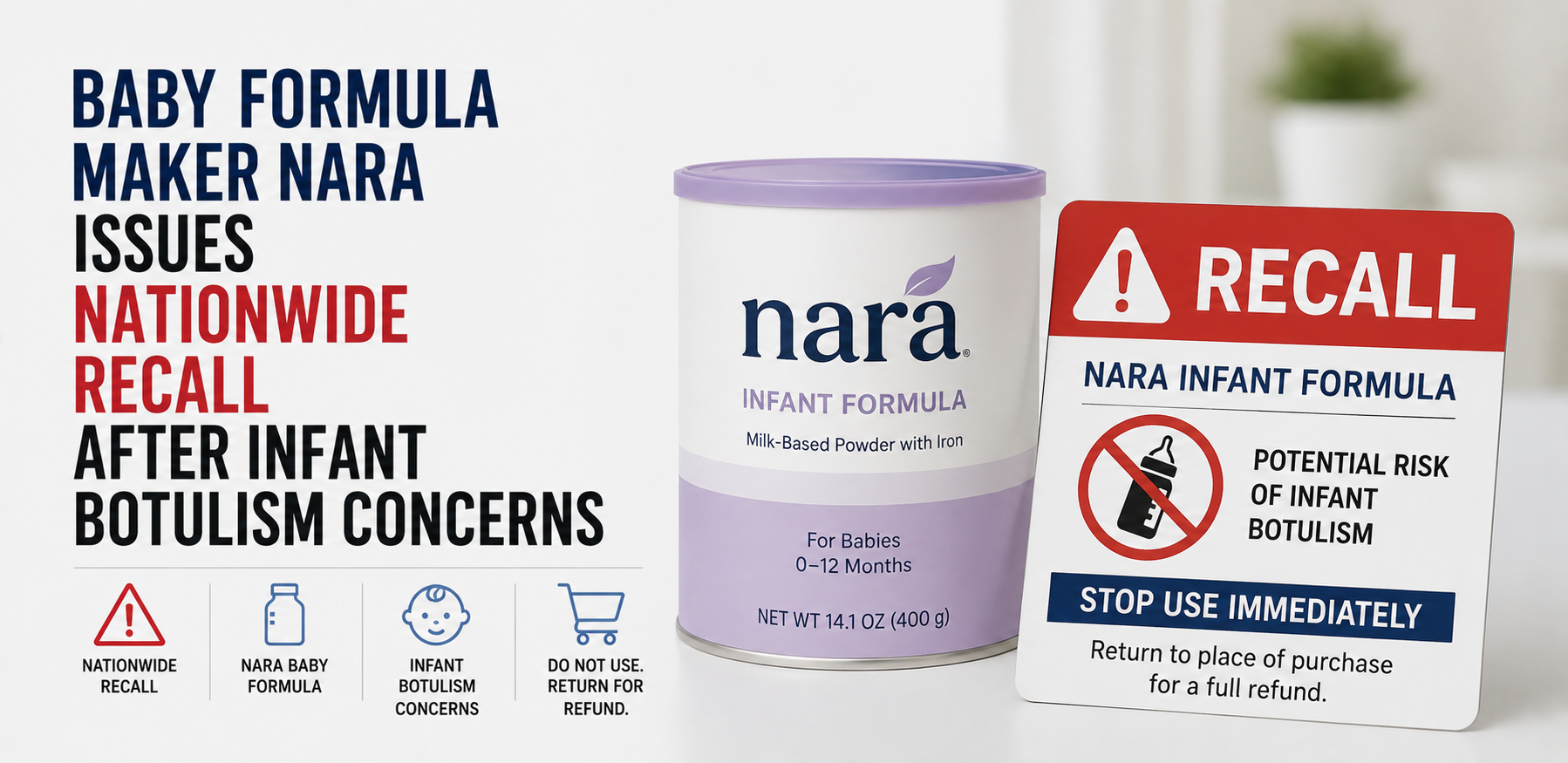
Infant formula manufacturer Nara announced a nationwide recall after concerns emerged that one of its products could be linked to infant botulism, a rare but potentially life-threatening illness.
The recall followed warnings from both the FDA and CDC, which began investigating after reports raised concerns about possible contamination. While investigations were still ongoing, the company decided to recall affected products as a precautionary measure.
The recall applies to formula distributed across the United States and has prompted healthcare providers, retailers, and parents to review whether they may have purchased impacted products.
Although infant botulism is rare, public health officials take even small numbers of potential cases seriously because infants are particularly vulnerable to severe complications.
The announcement immediately attracted attention throughout the healthcare industry because infant nutrition products are among the most heavily scrutinized consumer healthcare products on the market.
What Is Infant Botulism?
Infant botulism is a rare but serious illness caused by toxins produced by the bacterium Clostridium botulinum.
These toxins can affect the nervous system and interfere with muscle function. Symptoms may include:
- Weakness
- Poor feeding
- Constipation
- Weak crying
- Difficulty breathing
- Reduced muscle control
Because infants' digestive systems are still developing, they are more susceptible to certain forms of bacterial exposure than older children or adults. Although the condition is uncommon, it is considered a medical emergency because severe cases can affect breathing and require intensive medical care. With appropriate treatment, most infants recover, but early recognition is important.
Why Formula Recalls Receive So Much Attention
Infant formula occupies a unique position within healthcare and consumer products.
Unlike many food products, formula often serves as a primary or exclusive source of nutrition during a critical period of development.
As a result, manufacturers operate under strict quality-control requirements and extensive regulatory oversight.
When concerns arise involving infant formula, even before a definitive link is established, regulators typically move quickly because of the potential risks involved. The healthcare industry still remembers the major infant formula crisis that affected the United States several years ago, when contamination concerns contributed to widespread formula shortages. That event demonstrated how quickly safety issues can affect both public health and product availability.
How Recalls Typically Work
Product recalls generally follow a structured process. When a potential safety concern is identified, companies work with regulators to determine:
- Which products may be affected
- Where those products were distributed
- Whether consumers should stop using them immediately
- How replacement or refund programs will operate
In many cases, recalls occur before investigators have reached final conclusions. This approach is intended to protect consumers while investigations continue. For parents, this can sometimes be confusing because a recall announcement does not necessarily mean contamination has been definitively confirmed. Instead, it often means enough concern exists to justify precautionary action.
The Role of the FDA and CDC
Both the FDA and CDC play important but different roles during food and healthcare product investigations.
The FDA focuses primarily on product safety, manufacturing oversight, inspections, and regulatory compliance.
The CDC focuses on disease surveillance, outbreak investigations, and public health monitoring.
When both agencies become involved in a situation, it generally indicates that regulators are attempting to determine whether a product-related issue may have broader public health implications. Their combined involvement often increases public attention because consumers recognize that multiple federal agencies are investigating the matter.
Potential Industry Impact
The recall could have consequences extending beyond a single manufacturer.
Healthcare providers may become more cautious when evaluating infant nutrition products. Retailers may review supplier relationships and quality-assurance procedures. Parents may pay closer attention to formula sourcing, manufacturing standards, and recall notices.
Meanwhile, competing formula manufacturers could face increased scrutiny as regulators, healthcare providers, and consumers examine quality-control practices across the industry. The situation also highlights how quickly trust can be affected when products are intended for infants and young children. In healthcare, trust is often one of the most valuable assets a company possesses.
Why This Matters
Infant nutrition products serve one of the most vulnerable patient populations in healthcare. Even rare safety concerns can have significant consequences because parents, physicians, regulators, and hospitals tend to adopt a precautionary approach when infant health is involved.
The recall demonstrates how public health agencies, manufacturers, and healthcare providers work together when potential risks emerge. It also serves as a reminder that healthcare product safety depends not only on scientific innovation but also on manufacturing quality, regulatory oversight, and ongoing surveillance. As investigations continue, the industry will be watching closely to determine whether the concerns remain isolated or reveal broader quality-control issues.
Key Takeaways
- Nara issued a nationwide recall following concerns about possible infant botulism risk.
- The FDA and CDC are involved in the investigation.
- Infant botulism is rare but potentially serious.
- Formula products receive especially close regulatory scrutiny because they are often a primary source of infant nutrition.
- The recall highlights the importance of quality control, safety monitoring, and public trust in healthcare products.
What This Means for Healthcare Marketers
This story illustrates how quickly safety concerns can become reputation-management challenges in healthcare.
For healthcare marketers, the recall serves as a reminder that trust is often more important than product features. Parents, healthcare providers, hospitals, and regulators place enormous importance on safety, transparency, and responsiveness when evaluating products intended for infants.
The situation also highlights the growing importance of crisis communication. Organizations that respond quickly, communicate clearly, and demonstrate transparency often preserve credibility more effectively than companies that appear defensive or slow to act.
Healthcare marketers should view product recalls as more than regulatory events. They are moments that test brand trust, stakeholder relationships, and long-term reputation. In highly regulated healthcare markets, trust can take years to build but can be challenged within days when safety concerns emerge.
As healthcare consumers become more informed and regulators become more active, companies that prioritize transparency and evidence-based communication will be better positioned to maintain confidence during periods of uncertainty.