Natera and Aveta Biomics Partner on Late-Stage Head and Neck Cancer Trial
What's Happening
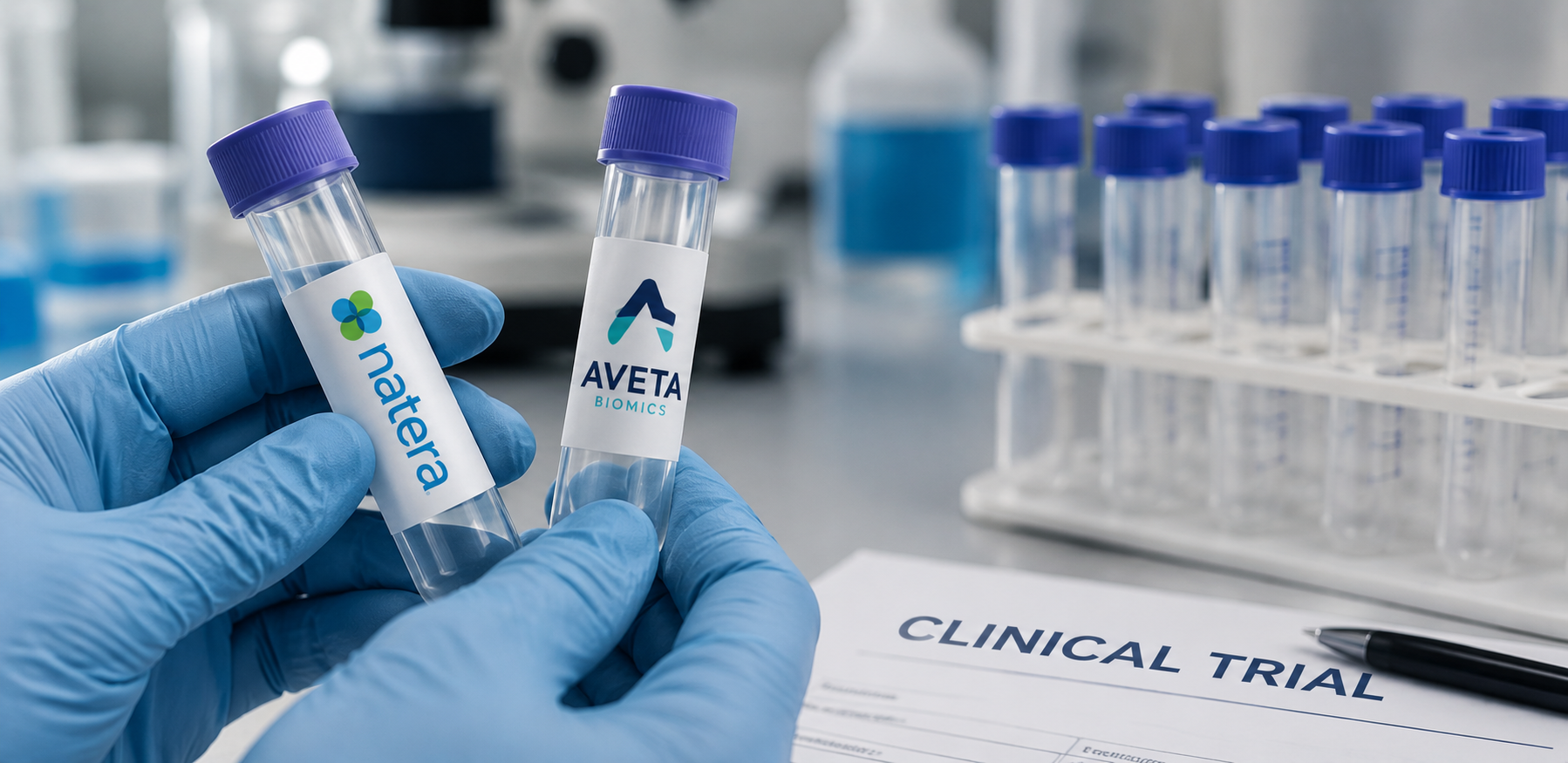
Genetic testing company Natera and cancer drug developer Aveta Biomics have announced a strategic partnership to support a global Phase 3 clinical trial evaluating Aveta's experimental cancer therapy for patients with locally advanced head and neck cancer. As part of the collaboration, Natera's Signatera blood test will be used during the study to help measure how well patients respond to treatment and to detect any remaining cancer after therapy.
The Phase 3 study will evaluate APG-157, Aveta's investigational oral immunotherapy, in patients with locally advanced head and neck squamous cell carcinoma. Unlike many existing immunotherapies that rely on specific immune markers, APG-157 is designed to stimulate the body's immune system to attack tumors through a different mechanism, potentially making it effective in a broader group of patients.
The trial is expected to enroll approximately 826 patients across North America, Europe, Asia-Pacific, and Australia, making it one of the largest studies conducted for this therapy. Enrollment is expected to begin during the second half of 2026.
Understanding Head and Neck Cancer
Head and neck cancer refers to a group of cancers that develop in areas such as the:
- Mouth
- Tongue
- Throat
- Voice box (larynx)
- Nose and sinuses
The majority are classified as head and neck squamous cell carcinoma (HNSCC). These cancers are often associated with risk factors including tobacco use, heavy alcohol consumption, and Human papillomavirus (HPV) infection. Worldwide, hundreds of thousands of new cases are diagnosed each year. Although treatment has improved considerably, patients with locally advanced disease often require aggressive therapy involving surgery, radiation, chemotherapy, or immunotherapy. Even after successful treatment, many patients remain at risk of their cancer returning.
What Is APG-157?
APG-157 is an experimental oral immunotherapy being developed by Aveta Biomics. Unlike chemotherapy, which directly attacks rapidly dividing cells, immunotherapies aim to activate the body's own immune system to recognize and destroy cancer cells. According to Aveta, APG-157 has a dual mechanism of action. It is designed to:
- Trigger cancer cell death.
- Modify the tumor's immune environment to help immune cells attack the cancer more effectively.
Earlier clinical studies showed encouraging safety and efficacy results, leading the FDA to grant the therapy Fast Track designation, a program intended to speed development of promising treatments for serious diseases. The Phase 3 trial will now determine whether these early results can be confirmed in a much larger patient population.
What Is Signatera and Why Is It Important?
One of the most significant aspects of this partnership is the use of Natera's Signatera test. Signatera is a personalized blood test that looks for minimal residual disease (MRD). Minimal residual disease refers to tiny amounts of cancer that may remain in the body after treatment. These remaining cancer cells may be too small to appear on imaging scans but can eventually lead to recurrence.
The Signatera test works by identifying small fragments of tumor DNA circulating in the bloodstream, known as circulating tumor DNA (ctDNA). This allows doctors to:
- Detect residual cancer earlier.
- Monitor treatment response.
- Identify recurrence months before it becomes visible on scans.
- Potentially adjust treatment sooner if cancer returns.
In the Aveta trial, Signatera will be used as a secondary endpoint, meaning researchers will study whether changes in ctDNA correlate with treatment success.
Why Blood-Based Cancer Monitoring Is Becoming More Common
Cancer treatment has traditionally relied on imaging scans such as CT scans, MRI scans, and PET scans to determine whether treatment is working. While these technologies remain essential, they have limitations. Very small amounts of remaining cancer may not be detectable until the disease grows larger. Blood-based testing offers several advantages. It can:
- Detect molecular changes earlier.
- Monitor patients more frequently.
- Require only a simple blood sample.
- Help physicians personalize treatment decisions.
This approach, commonly called a liquid biopsy, has become one of the fastest-growing areas in oncology. Many pharmaceutical companies are now incorporating liquid biopsy technologies into clinical trials because they provide valuable information beyond traditional imaging.
Why This Partnership Matters
The collaboration benefits both companies. For Aveta, incorporating Signatera could generate additional evidence showing whether APG-157 effectively eliminates microscopic disease. For Natera, another large global Phase 3 study strengthens the growing clinical evidence supporting Signatera across multiple cancer types. The partnership also reflects a broader trend within oncology. Drug developers increasingly partner with diagnostic companies because precision diagnostics can help:
- Select appropriate patients.
- Measure treatment effectiveness.
- Detect recurrence earlier.
- Improve clinical trial quality.
Rather than evaluating drugs alone, modern cancer research increasingly combines therapies with advanced diagnostic tools.
Key Takeaways
- Natera and Aveta Biomics have partnered on a global Phase 3 trial for APG-157 in head and neck cancer.
- The study will enroll approximately 826 patients across multiple regions.
- Natera's Signatera blood test will monitor treatment response and detect minimal residual disease.
- Blood-based cancer monitoring is becoming an increasingly important part of precision oncology.
- The collaboration highlights the growing integration of diagnostics and therapeutics in cancer care.
What This Means for Healthcare Marketers
This partnership demonstrates one of the biggest trends shaping oncology today: the convergence of therapeutics and diagnostics. Pharmaceutical companies are increasingly recognizing that successful cancer treatment is no longer determined solely by the effectiveness of a drug. The ability to identify the right patients, monitor treatment response in real time, and detect recurrence early has become equally important.
For healthcare marketers, this creates opportunities beyond traditional drug promotion. Companies developing diagnostics, laboratory services, AI-powered analytics, precision medicine platforms, and companion diagnostics are becoming essential partners in cancer care. Marketing strategies will increasingly focus on demonstrating how integrated solutions improve clinical decision-making rather than highlighting individual products alone.
For healthcare intelligence teams, collaborations like this provide valuable signals about where oncology research is heading. Partnerships between drug developers and molecular diagnostics companies suggest growing demand for liquid biopsy technologies, personalized treatment pathways, and biomarker-driven clinical trials. Organizations monitoring these trends can better anticipate future investment areas, commercialization opportunities, and evolving standards of care.