Nestlé Pushes Simpler U.S. Food Labels to Move Away from "Frankenstein Ingredients"
What's Happening
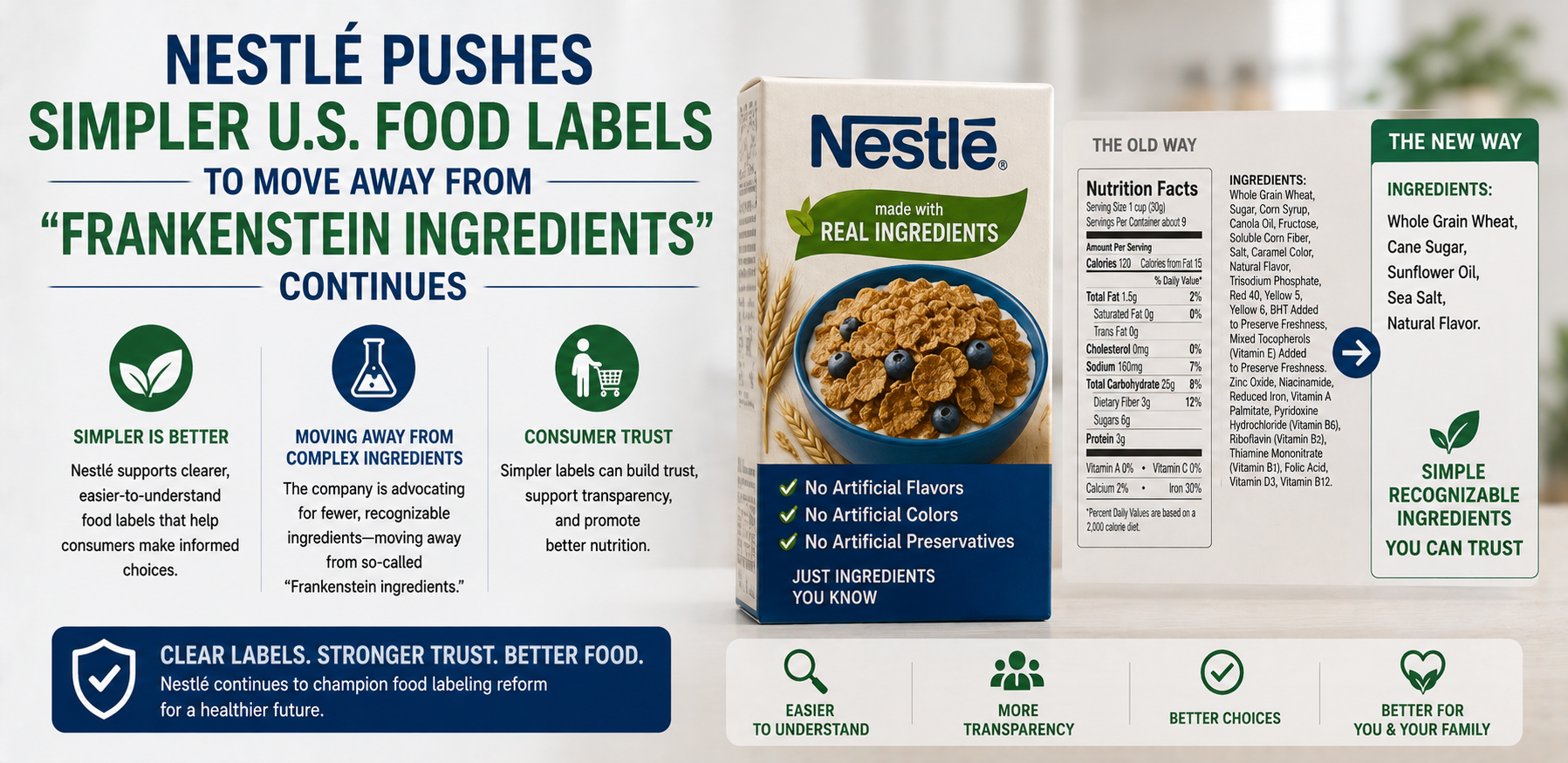
Nestlé is expanding its efforts to simplify ingredient labels across its U.S. food portfolio as consumer demand continues to shift toward products made with recognizable, familiar ingredients.
The company says it is working to reformulate products by replacing or removing certain artificial additives, colours, flavours, and preservatives where possible. The initiative is part of a broader strategy to improve ingredient transparency and respond to growing consumer interest in foods perceived as simpler and less processed.
Nestlé executives described the effort as moving away from what many consumers refer to as "Frankenstein ingredients" — long, highly technical ingredient lists that can make packaged foods appear overly processed, even when the ingredients are considered safe by regulators.
The company emphasized that the changes are intended to improve consumer confidence while maintaining food safety, product quality, taste, and shelf life.
Why Consumers Are Paying More Attention to Food Labels
Over the past decade, ingredient transparency has become one of the fastest-growing trends in the food and beverage industry. Today's shoppers increasingly read nutrition labels before making purchasing decisions, paying close attention not only to calories and sugar but also to the length and complexity of ingredient lists.
Consumers often associate shorter ingredient lists with:
- Higher product quality.
- Less processing.
- Greater transparency.
- Healthier food choices.
- More natural ingredients.
While scientific evidence does not necessarily support the idea that unfamiliar ingredient names are inherently unsafe, consumer perception has become a powerful driver of purchasing behaviour. As a result, many food manufacturers are redesigning products to better align with changing expectations.
What Does "Clean Label" Mean?
Although there is no official regulatory definition, the term clean label generally refers to foods that use:
- Simple, recognizable ingredients.
- Fewer artificial additives.
- Natural colours and flavours where practical.
- Clear, easy-to-understand packaging.
Clean-label products are not necessarily healthier than conventional alternatives. Instead, the concept focuses on improving transparency and helping consumers understand what is inside the foods they purchase.
Many companies now evaluate ingredients based not only on their scientific safety but also on how consumers perceive them. An ingredient with a long chemical name may be completely safe while still creating concern among shoppers who are unfamiliar with it.
The Challenge of Reformulating Packaged Foods
Replacing ingredients in packaged foods is often far more complicated than simply removing additives. Many ingredients perform multiple functions beyond flavour. For example, additives may help:
- Preserve freshness.
- Prevent bacterial growth.
- Maintain texture.
- Improve colour consistency.
- Extend shelf life.
- Stabilize emulsions.
- Protect nutritional quality during storage.
When manufacturers remove one ingredient, they frequently need to redesign recipes, manufacturing processes, and quality control procedures to ensure products continue meeting safety and performance standards. In some cases, multiple years of research and testing are required before a reformulated product reaches store shelves.
Why Food Companies Are Reformulating Products
Nestlé is not alone in pursuing simpler ingredient lists. Across the food industry, manufacturers are responding to several long-term trends:
- Changing Consumer Preferences: Consumers increasingly expect greater transparency regarding how foods are made and what ingredients they contain.
- Retailer Expectations: Many grocery chains now promote products with clean-label positioning, encouraging manufacturers to simplify formulations.
- Competitive Differentiation: Ingredient transparency has become an important way for brands to distinguish themselves in crowded supermarket categories.
- Regulatory Environment: While many artificial ingredients remain approved for use, regulatory agencies continue reviewing food additives as new scientific evidence becomes available. Companies increasingly anticipate potential future regulatory changes by investing in alternative formulations early.
Industry Impact
- Food Manufacturers: Companies across the packaged food sector are likely to continue investing in research and development to identify ingredients that meet both consumer expectations and regulatory requirements without compromising taste or product quality.
- Ingredient Suppliers: Growing demand for natural colours, flavours, preservatives, and functional ingredients is creating opportunities for suppliers developing alternatives to traditional food additives.
- Retailers: Supermarkets increasingly highlight products with simplified ingredient lists as consumers seek foods that align with clean-label preferences. Retailers may expand merchandising strategies that emphasise ingredient transparency and product reformulation.
- Healthcare and Nutrition Professionals: Dietitians and healthcare providers continue educating patients that ingredient names alone do not determine whether a food is healthy. Overall dietary patterns, nutritional value, and portion sizes remain far more important indicators of long-term health than whether an ingredient has a complex scientific name.
Looking Ahead
Consumer interest in ingredient transparency is expected to remain strong as shoppers continue seeking foods they perceive as healthier and easier to understand. Future innovation is likely to focus on:
- Plant-based functional ingredients.
- Natural preservation technologies.
- Alternative colouring systems.
- Cleaner flavour formulations.
- Improved food processing techniques.
- Greater supply chain transparency.
Food companies will continue balancing consumer expectations with the scientific, manufacturing, and regulatory requirements necessary to produce safe, affordable, and consistent products. As ingredient innovation advances, manufacturers may increasingly reduce reliance on certain synthetic additives while maintaining the quality consumers expect.
Why This Matters
The movement toward simpler ingredient labels reflects a broader transformation in how consumers evaluate food products. Purchasing decisions are no longer based solely on price or taste. Transparency, trust, and ingredient familiarity have become major competitive advantages for food manufacturers.
For healthcare professionals, the trend also presents an opportunity to educate consumers about nutrition using evidence-based guidance while addressing common misconceptions about food ingredients. The challenge for manufacturers will be balancing consumer preferences with scientific evidence, ensuring that ingredient simplification improves transparency without compromising food safety, nutritional quality, or product performance.
Key Takeaways
- Nestlé is simplifying ingredient labels across its U.S. food portfolio to better align with consumer demand for recognizable ingredients.
- The initiative is part of the growing clean-label movement focused on transparency rather than a formal regulatory standard.
- Reformulating packaged foods often requires extensive research to maintain safety, quality, and shelf life.
- Consumers increasingly consider ingredient transparency when making purchasing decisions.
- The broader food industry continues investing in cleaner formulations as demand for simple ingredient lists grows.
What This Means for Healthcare Marketers
The clean-label movement is reshaping consumer health, nutrition, and food innovation. Food manufacturers, ingredient suppliers, nutrition companies, retail pharmacy chains, and preventive health organisations are increasingly investing in product reformulation, consumer education, and transparency initiatives. For healthcare marketers, companies prioritising nutrition science, food safety, and ingredient innovation represent valuable opportunities as they develop educational campaigns, launch reformulated products, and strengthen consumer trust through clearer health and nutrition messaging.