New Heart Disease Guidelines Could Lead Millions More Americans to Take Statins, Study Finds
What's Happening
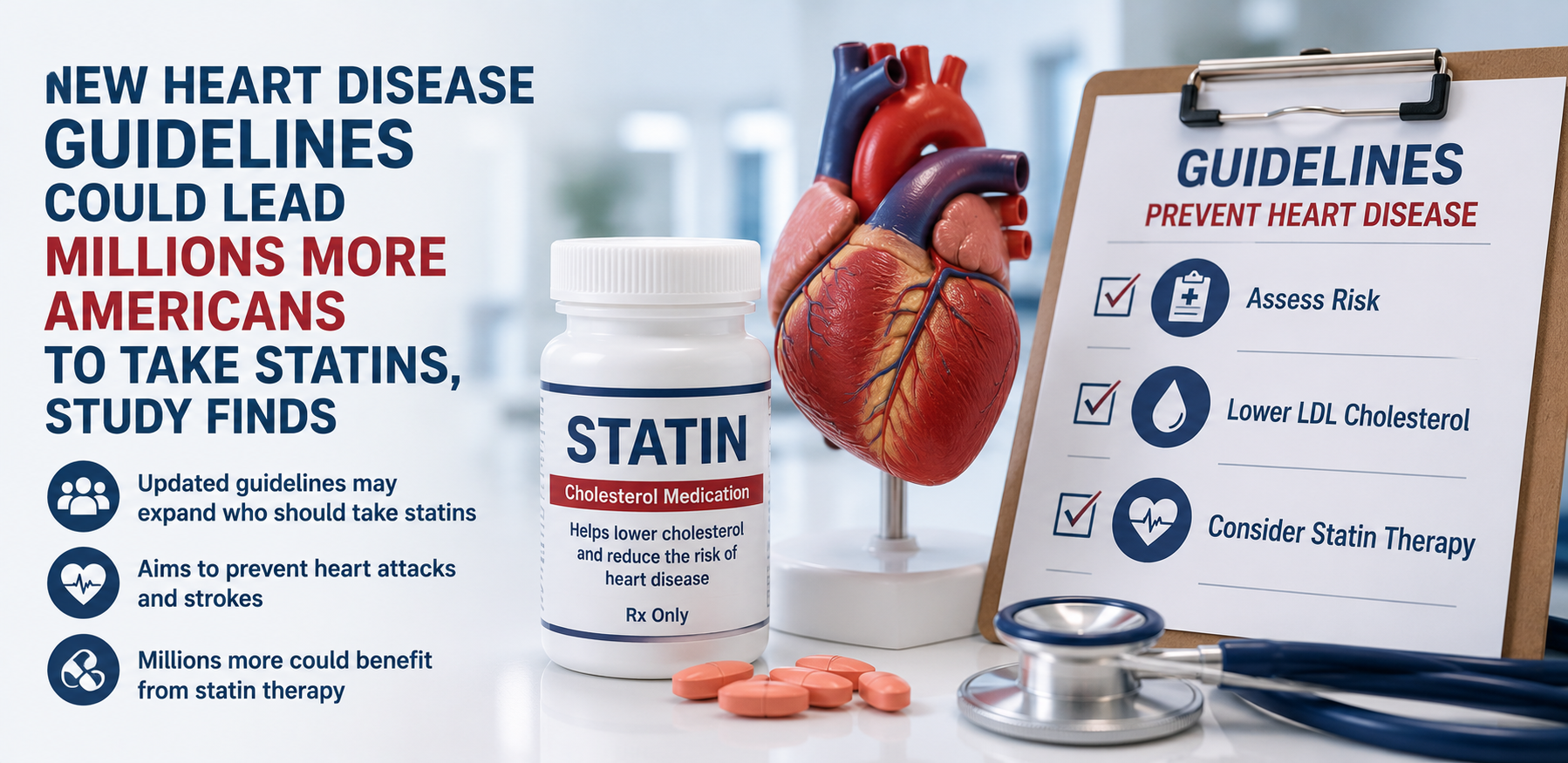
A new study suggests that recently updated U.S. cardiovascular prevention guidelines could significantly expand the number of Americans who are recommended to take statins, the cholesterol-lowering medicines widely used to reduce the risk of heart attacks and strokes.
Researchers found that applying the latest clinical guidance would make millions of additional adults eligible for statin therapy compared with previous recommendations. The findings highlight how evolving scientific evidence is reshaping preventive cardiovascular care and could influence prescribing patterns across the U.S. healthcare system.
The study does not require patients already taking statins to change their treatment, but it suggests that many people previously considered at moderate risk may now qualify for preventive therapy after discussing their individual risk with a healthcare provider.
What Are Statins?
Statins are one of the most commonly prescribed classes of medicines worldwide.
They work by reducing the liver's production of cholesterol, particularly low-density lipoprotein (LDL), often referred to as "bad cholesterol."
Lower LDL cholesterol helps reduce the buildup of fatty plaques inside arteries, decreasing the risk of:
- Heart attacks.
- Strokes.
- Peripheral artery disease.
- Other cardiovascular complications.
Common statins include:
- Atorvastatin.
- Rosuvastatin.
- Simvastatin.
- Pravastatin.
These medicines have been studied extensively and are considered a cornerstone of cardiovascular disease prevention.
Why Were the Guidelines Updated?
Medical guidelines evolve as new research becomes available.
The updated recommendations place greater emphasis on overall cardiovascular risk rather than focusing solely on cholesterol levels.
Healthcare providers now consider several factors together, including:
- Age.
- Blood pressure.
- Cholesterol levels.
- Diabetes.
- Smoking status.
- Kidney disease.
- Family history.
- Overall likelihood of developing cardiovascular disease over the coming years.
This broader assessment allows clinicians to identify patients who may benefit from preventive treatment even if their cholesterol levels alone are not exceptionally high.
What Did the Study Find?
Researchers applied the updated cardiovascular prevention guidelines to a representative U.S. population.
They found that:
- Millions more adults would become eligible for statin therapy.
- The largest increases were seen among middle-aged and older adults with elevated cardiovascular risk.
- Expanded statin use could potentially prevent additional heart attacks and strokes if eligible patients receive appropriate treatment and continue taking their medications.
The researchers emphasized that guideline eligibility does not automatically mean every patient should begin treatment. Instead, statin use should be based on shared decision-making between patients and healthcare providers.
Why Preventive Treatment Matters
Cardiovascular disease remains the leading cause of death in the United States.
Many heart attacks and strokes occur in people who have never experienced previous symptoms.
Preventive strategies aim to reduce risk before serious complications develop.
Alongside statins, physicians commonly recommend:
- Healthy eating.
- Regular physical activity.
- Smoking cessation.
- Blood pressure management.
- Diabetes control.
- Weight management.
For many patients, lifestyle modifications remain the foundation of prevention, while medications are added when overall cardiovascular risk justifies treatment.
Benefits and Considerations
Statins have consistently demonstrated substantial cardiovascular benefits in clinical trials.
Potential benefits include:
- Lower LDL cholesterol.
- Reduced risk of heart attack.
- Reduced risk of stroke.
- Lower cardiovascular mortality in appropriate patients.
Like all medicines, statins may also produce side effects in some individuals, including muscle-related symptoms or mild changes in liver enzyme levels.
Healthcare providers generally evaluate both the potential benefits and risks before recommending therapy.
Industry Impact
- Healthcare Providers: Clinicians may see an increase in cardiovascular risk assessments and discussions about preventive treatment during routine primary care visits.
- Pharmaceutical Industry: Expanded guideline eligibility could increase demand for statins, many of which are now available as affordable generic medicines.
- Health Insurers: Earlier preventive treatment has the potential to reduce future healthcare costs associated with heart attacks, strokes, and hospitalizations.
- Patients: More individuals may be advised to discuss cholesterol management and cardiovascular risk reduction with their healthcare providers.
Why This Matters
The study illustrates how evolving clinical evidence can influence healthcare practice on a national scale.
Rather than waiting until cardiovascular disease develops, modern preventive medicine increasingly focuses on identifying high-risk individuals earlier and intervening before serious events occur. Updated guidelines reflect a growing understanding that overall cardiovascular risk,not cholesterol alone should guide treatment decisions.
If the findings translate into broader adoption of the updated recommendations, millions more Americans could become eligible for preventive cholesterol-lowering therapy. This shift has the potential to reduce the long-term burden of cardiovascular disease while reinforcing the importance of personalized, risk-based healthcare.
Key Takeaways
- A new study found that updated U.S. cardiovascular guidelines could make millions more Americans eligible for statin therapy.
- The revised recommendations place greater emphasis on overall cardiovascular risk rather than cholesterol levels alone.
- Statins remain a cornerstone of preventing heart attacks and strokes in patients at elevated risk.
- Researchers emphasized that treatment decisions should be individualized through discussions between patients and healthcare providers.
- Expanded preventive treatment could help reduce future cardiovascular events across the U.S. population.
What This Means for Healthcare Marketers
The updated cardiovascular guidelines reflect a broader shift toward preventive, risk-based healthcare. As eligibility for statin therapy expands, healthcare organizations will likely place greater emphasis on early cardiovascular screening, risk assessment tools, and patient education. Companies offering digital health platforms, clinical decision support, diagnostics, and preventive care solutions may see growing opportunities as providers adapt to evolving recommendations.
For healthcare marketers, the study highlights the importance of communicating the value of prevention rather than treatment alone. Messaging that emphasizes long-term health outcomes, personalized risk assessment, and evidence-based decision-making can resonate with clinicians, health systems, and payers seeking to reduce the burden of cardiovascular disease.
For healthcare intelligence teams, the findings illustrate how updated clinical guidelines can reshape prescribing patterns, healthcare utilization, and market demand. Monitoring changes in treatment recommendations, preventive care initiatives, and physician adoption can provide early insight into shifts affecting pharmaceutical companies, health systems, and population health strategies.