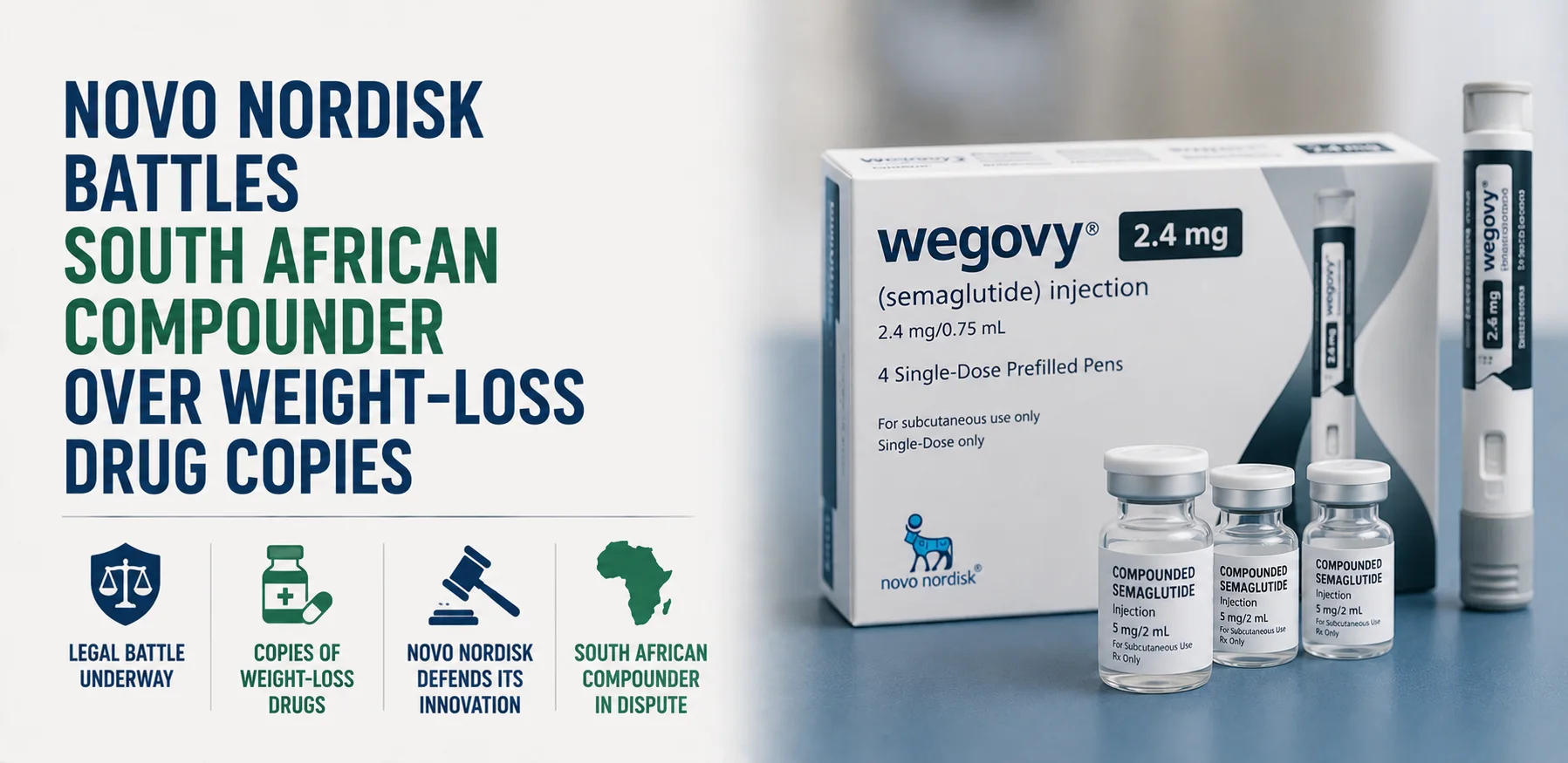
Novo Nordisk Battles South African Compounder Over Weight-Loss Drug Copies
What's happening
Danish pharmaceutical giant Novo Nordisk has faced off in the High Court in Pretoria, seeking an immediate injunction to stop South African compounding pharmacy iDexis from manufacturing, advertising, and selling unauthorized versions of semaglutide. Semaglutide is the active ingredient powering Novo's global blockbuster therapies, Ozempic and Wegovy.
Novo Nordisk argues that large-scale commercial distribution of "unregistered and untested" semaglutide base poses a direct threat to public safety. Conversely, iDexis has aggressively rejected these claims as unsubstantiated, maintaining that they are serving a critical clinical need amid surging demand.
What's changing / Business impact
The legal clash underscores a massive, highly lucrative gray market for GLP-1 compounding alternatives. Following the local launches of Eli Lilly's Mounjaro and Novo's Wegovy, demand across South Africa exploded. Even with recent tier-based brand price cuts lowering low-dose Wegovy costs down to 1,873 rand ($111), high costs continue to push lower-income patients toward unapproved compounded variants.
This battle is forcing regulatory bodies to crack down. A joint raid by the South African Health Products Regulatory Authority (SAHPRA) and the South African Pharmacy Council recently resulted in product seizures at iDexis due to severe safety and quality compliance deficiencies. The outcome of this case will set a powerful precedent for how aggressively manufacturers can leverage international patent law to shut down unauthorized mass production lines.
Why this matters
Obesity and metabolic care have evolved into the most financially significant clinical segments in modern medicine. Traditional compounding rules are strictly intended to let local pharmacies modify specific medication mixtures for individual patients who have rare allergies or unique needs, not to act as scale manufacturing facilities bypassing formal drug approval pipelines.
The Pretoria High Court case perfectly mirrors fierce multi-district litigation sweeping across the United States. How global courts define the boundary lines between necessary patient access during shortages and strict intellectual property enforcement will heavily shape clinical distribution, telehealth supply chains, and safety oversight frameworks worldwide.