Novo Nordisk Pushes for Broader Insurance Coverage of Weight-Loss Drugs in the U.S.
What's Happening
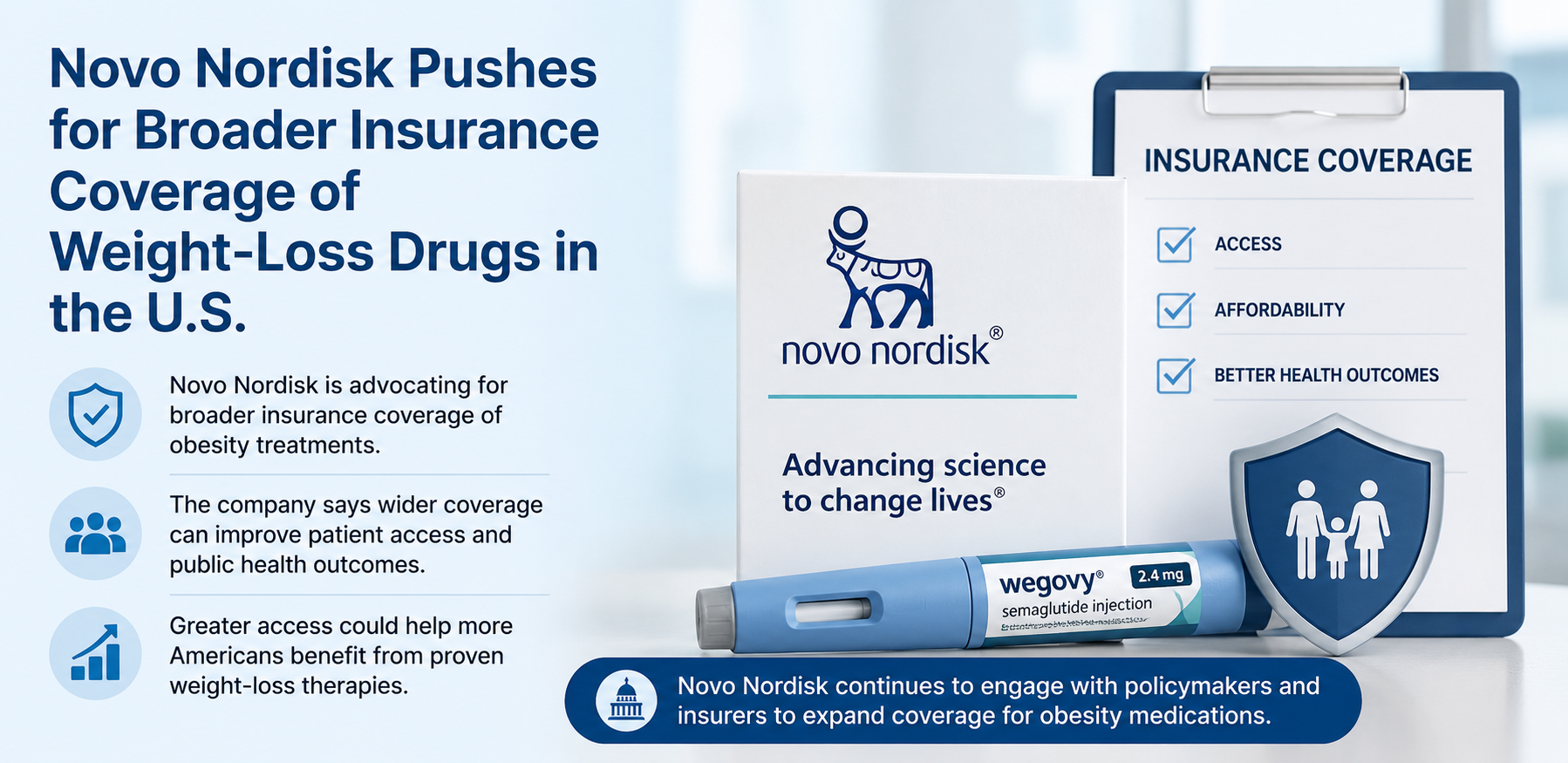
Novo Nordisk's top U.S. executive is urging health insurers and employers to expand insurance coverage for prescription weight-loss medications, arguing that broader access is essential to addressing the growing obesity epidemic in the United States. The company says millions of Americans who could benefit from obesity treatment are unable to access medications because many health insurance plans either do not cover them or require patients to pay significant out-of-pocket costs.
Novo Nordisk, the maker of blockbuster obesity drug Wegovy, believes that expanding insurance coverage would improve patient access while helping reduce the long-term health complications associated with obesity. The comments come as employers and insurers continue debating whether they can afford widespread coverage of GLP-1 weight-loss drugs, which have become one of the fastest-growing and most expensive categories in healthcare.
Why Insurance Coverage Is a Major Issue
Although GLP-1 weight-loss medications have demonstrated impressive clinical results, many Americans cannot easily access them. One of the biggest barriers is insurance coverage. Many commercial insurance plans:
- Do not cover obesity medications.
- Restrict access through prior authorization requirements.
- Cover diabetes versions of GLP-1 drugs but not obesity versions.
- Require patients to pay high out-of-pocket costs.
For patients without insurance coverage, treatment can cost hundreds or even thousands of dollars each month. As a result, many individuals who qualify medically for treatment never begin therapy.
Why Employers Are Hesitant
Employers provide health insurance for millions of Americans. However, the growing popularity of GLP-1 medications has significantly increased healthcare spending for many employer-sponsored health plans. Obesity medications are often intended for long-term use, meaning employers could be responsible for covering treatment costs over several years. Many employers worry about rising pharmacy costs, long-term financial commitments, large numbers of eligible employees, and uncertainty regarding future healthcare spending.
Why Novo Believes Coverage Should Expand
Novo Nordisk argues that obesity should be treated like any other chronic disease. The company points to growing scientific evidence showing that obesity increases the risk of developing numerous serious medical conditions, including:
- Type 2 diabetes
- Heart disease
- Stroke
- High blood pressure
- Sleep apnea
- Certain cancers
Treating obesity earlier may help reduce these complications and lower future healthcare costs. The company also points to clinical studies showing that GLP-1 medications can improve cardiovascular outcomes and help patients maintain significant weight loss when combined with lifestyle changes.
The Growing Debate Over Cost Versus Value
The discussion surrounding GLP-1 drugs is no longer focused solely on whether the medicines work. Most healthcare experts now agree that these medications can produce meaningful weight loss for many patients. The larger debate has shifted toward value. Healthcare decision-makers are asking questions such as: Can healthcare systems afford widespread use? Which patients benefit most? Should employers cover treatment indefinitely? Will long-term savings outweigh current costs?
Key Takeaways
- Novo Nordisk is urging insurers and employers to expand coverage for weight-loss medications.
- Many patients cannot access GLP-1 drugs because of limited insurance coverage.
- Employers are concerned about the long-term financial impact of covering obesity treatments.
- Pharmaceutical companies argue that treating obesity earlier could reduce future healthcare costs.
- Insurance coverage will remain a major factor influencing the growth of the obesity-drug market.
What This Means for Healthcare Marketers
This story highlights the growing importance of payer strategy in the commercialization of innovative therapies. For healthcare marketers, clinical success alone is no longer enough to ensure market adoption. Insurance coverage, employer benefit decisions, reimbursement policies, and patient affordability have become just as important as clinical trial results. The debate also illustrates the evolution of obesity treatment from a niche therapeutic area into one of healthcare's largest chronic disease markets.
For healthcare intelligence teams, changes in payer coverage provide valuable insight into future demand, prescribing patterns, and commercialization opportunities. Monitoring employer decisions, reimbursement policies, and government coverage discussions can help organizations anticipate shifts in market access and competitive dynamics. More broadly, the discussion demonstrates that the future of obesity care will depend not only on scientific innovation but also on how healthcare systems finance and deliver these therapies.