Novo Nordisk Seeks Court Order to Block Eli Lilly Weight-Loss Drug Advertisements
What's Happening
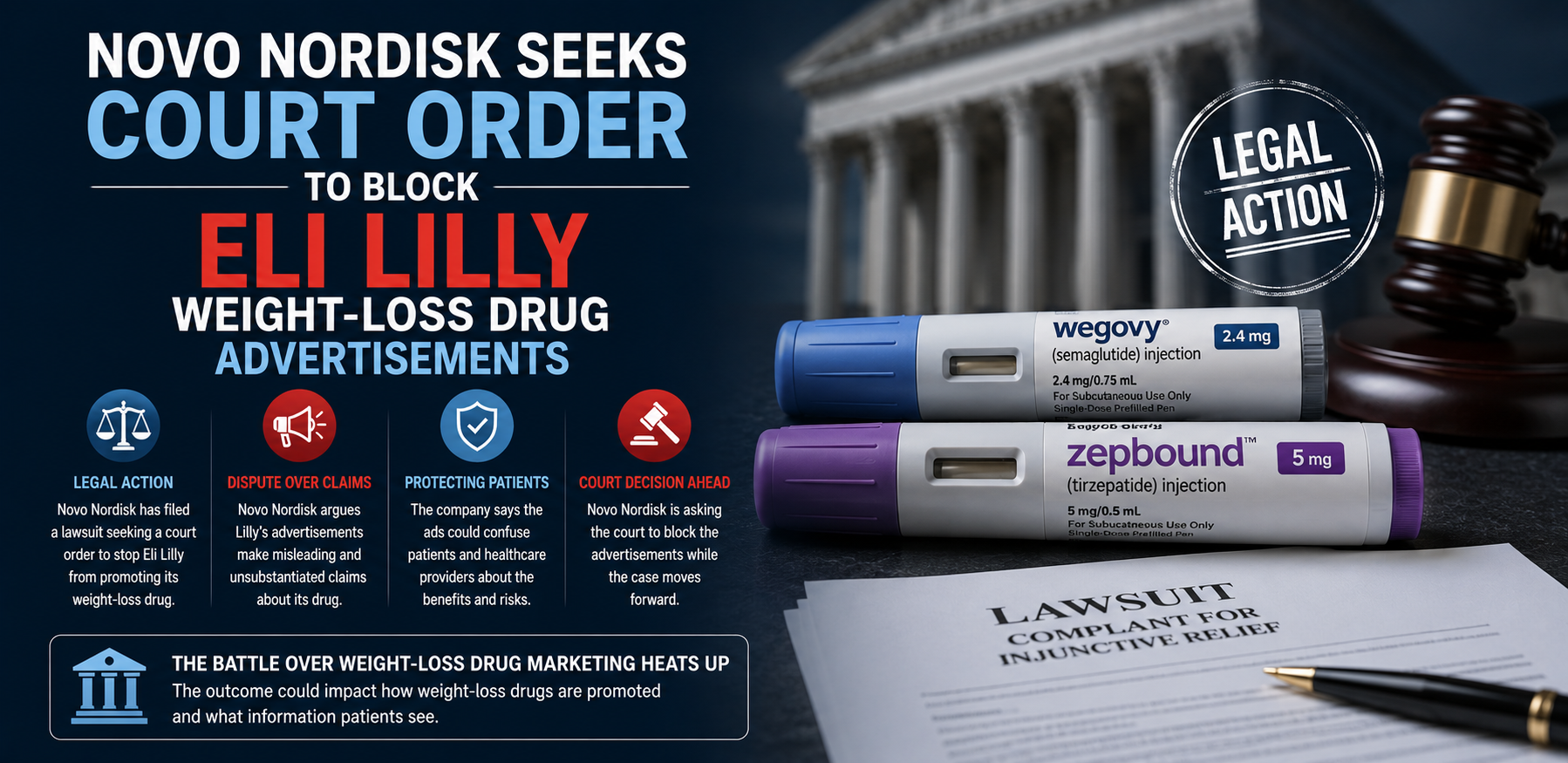
Novo Nordisk has escalated its legal dispute with Eli Lilly by asking a U.S. court for a preliminary injunction that would immediately stop Lilly from running certain advertisements for its blockbuster obesity and diabetes medicines.
The request follows a lawsuit Novo Nordisk filed earlier in the week, alleging that Lilly's advertising campaigns mislead consumers by comparing the companies' GLP-1 medicines using outdated clinical data and dose comparisons that do not reflect the latest approved treatments. Novo is also seeking corrective advertising to address what it believes are misleading claims made in the campaigns.
Eli Lilly has denied any wrongdoing, maintaining that its advertisements are supported by clinical evidence and that it intends to vigorously defend its marketing practices in court.
The dispute represents one of the most high-profile legal battles yet in the rapidly expanding obesity drug market, where competition extends far beyond clinical innovation into marketing, branding, and consumer perception.
Understanding the Dispute
At the center of the lawsuit is how the effectiveness of competing weight-loss medicines is presented to consumers.
Novo Nordisk argues that Lilly's advertisements compare:
- Higher-dose versions of Lilly's products.
- Lower-dose versions of Novo Nordisk's products.
- Older clinical studies that do not reflect more recent approvals.
According to Novo, these comparisons create the impression that Lilly's medicines are substantially more effective than Novo's products, even though newer data and higher-dose formulations may narrow those differences.
Lilly disagrees with that characterization, arguing that its advertising accurately reflects available scientific evidence and published clinical studies.
Rather than debating whether one medicine is superior overall, the case focuses on whether comparative advertising accurately represents the available evidence and provides consumers with a fair understanding of treatment options.
Why GLP-1 Competition Has Become So Intense
The legal dispute reflects the enormous commercial importance of GLP-1 medicines.
Originally developed for type 2 diabetes, GLP-1 receptor agonists have transformed obesity treatment by helping patients achieve clinically meaningful weight loss while improving several metabolic risk factors.
Demand for these therapies has surged worldwide, making obesity one of the fastest-growing pharmaceutical markets.
Leading products include:
- Wegovy.
- Ozempic.
- Zepbound.
- Mounjaro.
These medicines have reshaped treatment guidelines, expanded insurance discussions, and generated billions of dollars in annual revenue.
Industry analysts expect the U.S. obesity drug market alone to exceed $100 billion annually by the end of the decade, making every percentage point of market share increasingly valuable.
As the market grows, pharmaceutical companies are investing heavily not only in research and development but also in physician education, consumer awareness campaigns, and brand positioning.
The Role of Pharmaceutical Advertising
Unlike many countries, the United States allows direct-to-consumer advertising for prescription medicines under specific regulatory requirements.
Drug manufacturers can advertise prescription therapies through television, digital media, print publications, and social platforms, provided promotional materials remain truthful, balanced, and adequately disclose risks.
Comparative advertising, where one company's product is compared with another's, is permitted but often becomes the subject of legal disputes when competitors believe comparisons are incomplete, misleading, or based on selective evidence.
Such disagreements are typically evaluated under:
- False advertising laws.
- Unfair competition statutes.
- Federal and state consumer protection regulations.
Courts reviewing these cases may consider whether advertising claims could influence prescribing decisions or mislead consumers about a product's performance.
Novo's request for a preliminary injunction seeks to pause the disputed advertisements before the broader lawsuit reaches trial, arguing that continued use of the campaigns could cause ongoing commercial harm.
Why This Case Matters Beyond Two Companies
Although the lawsuit involves Novo Nordisk and Eli Lilly, its outcome could influence how pharmaceutical companies communicate comparative clinical data in future advertising campaigns.
If the court grants the injunction, manufacturers across the healthcare industry may become more cautious when:
- Comparing competing products.
- Referencing older clinical studies.
- Highlighting efficacy differences.
- Marketing newly approved formulations.
The decision could also reinforce expectations that promotional materials evolve alongside new scientific evidence rather than relying solely on earlier clinical trials.
As more therapies compete in crowded treatment categories, advertising disputes may become increasingly common across healthcare.
Industry Impact
- Pharmaceutical Manufacturers: The case highlights that competition increasingly extends beyond drug development into commercial strategy. Companies introducing new therapies may face greater scrutiny regarding how comparative clinical data is presented in marketing campaigns.
- Healthcare Providers: Physicians rely primarily on peer-reviewed evidence, clinical guidelines, and professional judgment rather than advertisements when selecting treatments. However, consumer advertising can influence patient awareness and the questions patients bring into clinical consultations.
- Patients: Direct-to-consumer advertising has increased public awareness of obesity treatment options but has also made it more important for patients to discuss comparative benefits and risks with healthcare professionals instead of relying solely on promotional messaging.
- Regulators: Although this case is being litigated in court rather than through an FDA enforcement action, it reflects broader expectations that pharmaceutical advertising remains scientifically accurate, balanced, and transparent as treatment options continue expanding.
Looking Ahead
The preliminary injunction request represents only the next phase of what could become a lengthy legal battle.
If the court grants Novo Nordisk's request, Lilly may be required to suspend or modify the disputed advertising while the lawsuit proceeds.
If the request is denied, the advertisements could continue running until the case reaches a final resolution.
Regardless of the outcome, the dispute underscores how competition within the GLP-1 market has evolved.
Companies are no longer competing solely on clinical innovation or manufacturing capacity. Brand positioning, patient education, physician engagement, and marketing credibility have become equally important components of commercial success.
As additional obesity therapies enter the market over the next several years, legal challenges involving promotional claims are likely to become more frequent.
Why This Matters
The obesity treatment market has entered a new phase where commercial competition is becoming as significant as scientific innovation.
As multiple highly effective therapies become available, pharmaceutical companies are increasingly seeking to differentiate themselves through marketing, clinical evidence, pricing strategies, and patient support programs.
The Novo Nordisk and Eli Lilly dispute illustrates how rapidly evolving scientific evidence can create challenges for comparative advertising.
Healthcare organizations, providers, and patients all benefit when promotional claims accurately reflect the latest available evidence and support informed treatment decisions.
Key Takeaways
- Novo Nordisk is seeking a preliminary injunction to stop Eli Lilly from running certain weight-loss and diabetes drug advertisements.
- Novo alleges Lilly's campaigns rely on outdated studies and unfair dose comparisons that misrepresent product effectiveness.
- Lilly denies the allegations and says its advertising is supported by clinical evidence.
- The case highlights growing competition in the rapidly expanding GLP-1 obesity treatment market.
- The court's decision could influence future standards for comparative pharmaceutical advertising.
What This Means for Healthcare Marketers
The legal dispute between Novo Nordisk and Eli Lilly demonstrates that marketing has become a strategic battleground alongside clinical innovation in the obesity treatment market. As healthcare organizations increasingly rely on comparative data to differentiate products, marketers must ensure promotional claims remain aligned with current evidence, regulatory expectations, and evolving clinical practice. Companies operating in highly competitive therapeutic areas should anticipate greater scrutiny of comparative messaging and invest in transparent, evidence-based communications that build long-term credibility with providers, patients, and regulators.