Novo Nordisk's Experimental Inflammation Drug Fails to Reduce Cardiovascular Risk in Late-Stage Trial
What's Happening
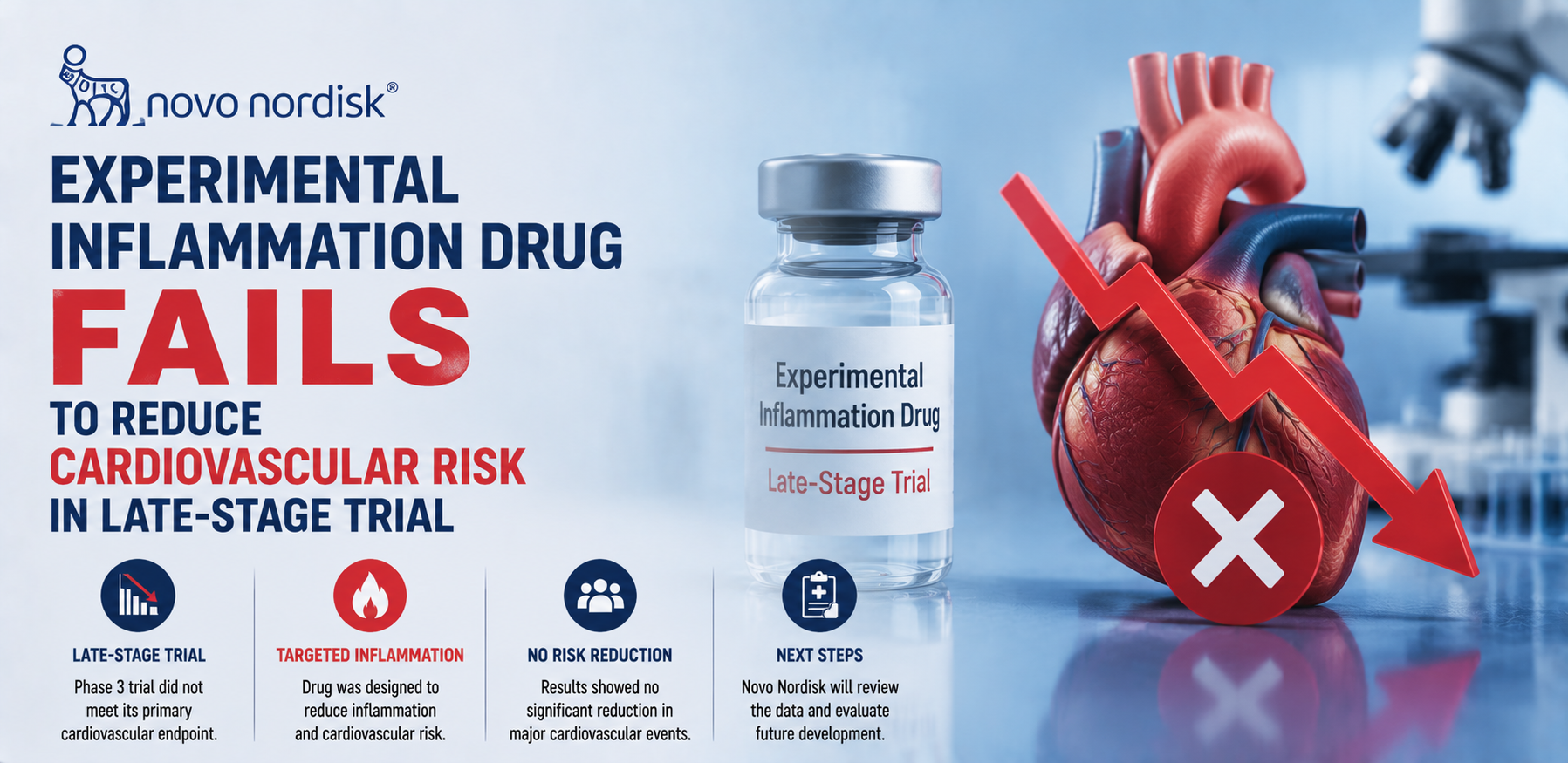
Novo Nordisk has announced that its experimental anti-inflammatory drug did not achieve its primary goal in a late-stage clinical trial, failing to significantly reduce the risk of major cardiovascular events in patients with cardiovascular disease.
The study evaluated whether reducing inflammation could lower the likelihood of serious events such as heart attacks, strokes, and cardiovascular-related deaths. While the therapy demonstrated anti-inflammatory effects, it did not provide the cardiovascular benefit researchers had hoped to achieve.
The disappointing results represent a setback for Novo Nordisk's efforts to expand its cardiovascular and inflammation treatment portfolio.
Understanding Inflammation and Cardiovascular Disease
Inflammation plays an important role in the development of cardiovascular disease.
Over time, chronic inflammation can contribute to the buildup of plaque inside arteries, increasing the risk of heart attacks, strokes, and other serious cardiovascular complications.
Researchers have been investigating whether medicines that reduce inflammation can also lower cardiovascular risk beyond traditional treatments such as cholesterol-lowering drugs, blood pressure medications, and lifestyle interventions.
About the Clinical Trial
The late-stage clinical trial enrolled patients with cardiovascular disease to evaluate whether the experimental therapy could reduce major adverse cardiovascular events.
Researchers monitored outcomes including:
- Heart attacks.
- Strokes.
- Cardiovascular-related deaths.
- Other serious cardiovascular complications.
Although the drug successfully targeted inflammatory pathways, the study did not demonstrate a statistically significant reduction in cardiovascular events compared with the control group.
These findings indicate that reducing inflammation alone may not always translate into improved cardiovascular outcomes.
Industry Impact
- Pharmaceutical Companies: The trial highlights the scientific challenges involved in developing new cardiovascular therapies and reinforces the importance of large-scale clinical trials before regulatory approval.
- Healthcare Providers: Cardiologists will continue relying on established treatments for cardiovascular risk reduction while researchers explore new therapeutic approaches.
- Patients: Patients with cardiovascular disease will continue benefiting from proven therapies, including cholesterol management, blood pressure control, diabetes treatment, and healthy lifestyle changes.
- Clinical Research: The results provide valuable scientific insights that may help researchers develop more effective therapies targeting inflammation and cardiovascular disease in the future.
Looking Ahead
Novo Nordisk is expected to analyze the trial data further to better understand why the therapy failed to reduce cardiovascular events despite lowering inflammation.
The findings may influence future research into inflammatory pathways and guide the development of next-generation cardiovascular treatments.
The company continues to invest in research across cardiovascular disease, obesity, diabetes, and other chronic conditions.
Why This Matters
Cardiovascular disease remains the leading cause of death worldwide, creating an ongoing need for innovative therapies that improve patient outcomes.
While inflammation has long been considered an important treatment target, the trial demonstrates that promising biological mechanisms do not always translate into meaningful clinical benefits.
The results underscore the importance of rigorous late-stage clinical trials in determining whether new therapies truly improve patient health.
Key Takeaways
- Novo Nordisk's experimental inflammation drug failed to reduce major cardiovascular events in a late-stage clinical trial.
- The therapy successfully targeted inflammation but did not achieve its primary clinical endpoint.
- The findings represent a setback for the company's cardiovascular research program.
- Researchers will continue analyzing the data to guide future drug development.
- The study highlights the complexity of developing new treatments for cardiovascular disease.
What This Means for Healthcare Marketers
The trial results highlight both the challenges and continued investment in cardiovascular and inflammation research. Pharmaceutical companies remain committed to developing innovative therapies for chronic diseases despite setbacks in clinical development. For healthcare marketers, organizations involved in cardiovascular medicine, immunology, clinical research, and pharmaceutical innovation represent important opportunities for physician education, scientific communications, clinical trial awareness, and future product commercialization.