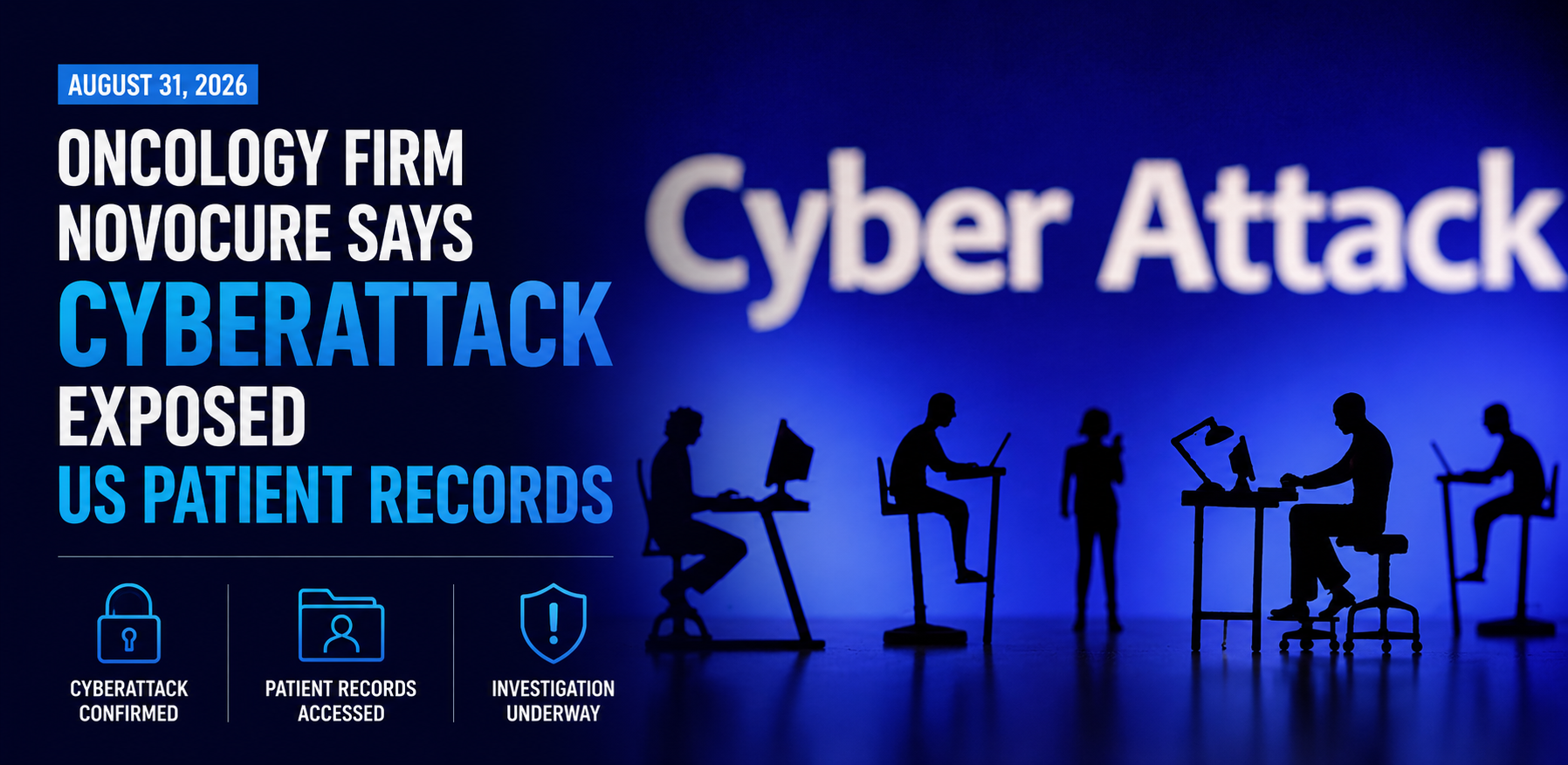
Oncology Firm Novocure Says Cyberattack Exposed U.S. Patient Records
What’s Happening
Oncology company Novocure said a cybersecurity incident in mid-August resulted in unauthorized access to some of its information systems and exposed internal records involving more than 1,400 U.S. patients.
The disclosure adds Novocure to a growing list of healthcare and medical-device companies affected by cyberattacks. The incident affected information systems, but Novocure said there was no unauthorized access to its medical treatment devices and that all of its systems remain fully operational. (Reuters)
Novocure said it detected the incident, activated its cybersecurity response plan, put containment measures in place and launched an internal investigation into what happened. (Reuters)
What Information Was Exposed
Patient and provider-related information
The company said the compromised information included internal patient identification numbers.
The affected systems also contained general contact information for healthcare providers who work with Novocure, as well as information relating to Novocure employees, including job titles and phone numbers. (Reuters)
For fewer than 50 patients in the western United States, the exposed information included additional identifying details beyond the information involved in the broader group. (Reuters)
The company has not indicated that treatment-device systems were accessed.
The Incident Happened in August
Novocure said the unauthorized access occurred in mid-August 2026.
Following discovery of the incident, the company activated its established cybersecurity response procedures. That included containment measures and an internal investigation intended to determine the scope and nature of the unauthorized access. (Reuters)
At this stage, the company has not indicated that the incident disrupted patient treatment or the operation of its medical devices.
Patient Care Has Not Been Disrupted
One of the most important distinctions in the incident is between data-system access and medical-device access.
Novocure said attackers did not gain access to its medical treatment devices, and the company's systems are fully functional. That means the company is not reporting an interruption to its clinical operations resulting from the attack. (Reuters)
This is significant for an oncology company because a cyber incident that disrupts treatment infrastructure could have consequences beyond privacy, potentially affecting patient care and clinical operations.
In Novocure's case, the disclosed impact so far is centered on information exposure rather than disruption of treatment technology.
A Growing Problem Across Healthcare
Novocure's incident comes amid an expanding series of cyberattacks affecting healthcare organizations.
Reuters pointed to recent attacks involving major medical-device manufacturers including Abbott, Stryker, Medtronic and Boston Scientific, as well as drugmaker Novo Nordisk and medical-equipment supplier West Pharmaceutical Services. (Reuters)
Healthcare organizations are particularly attractive targets because they hold a combination of valuable patient information, operational data and commercially sensitive information.
Medical-device companies face an additional layer of risk because their environments can include both conventional corporate IT systems and technology connected to clinical products.
Why Healthcare Data Is Especially Sensitive
A healthcare company's information systems can contain far more than basic customer contact details.
Patient identifiers can potentially be linked with providers, treatment relationships and other healthcare information. Even when a breach does not expose full medical records, the combination of identifiers and healthcare-related context can create privacy and security risks.
For companies operating in oncology and other specialized fields, the trust relationship with patients and providers is particularly important.
A cyberattack therefore creates two separate challenges:
- Data protection: preventing unauthorized access to patient and business information.
- Operational resilience: ensuring that clinical services and medical technologies continue functioning even when corporate systems are compromised.
Novocure says it has so far maintained operational continuity. (Reuters)
Financial Impact Expected to Be Limited
Despite the disclosure involving more than 1,400 U.S. patients, Novocure said it does not expect the incident to have a material impact on its financial results. (Reuters)
That does not mean there are no potential costs.
Cyber incidents can generate expenses related to forensic investigations, containment, remediation, legal work, regulatory requirements, customer or patient notifications and strengthening security infrastructure.
However, based on the company's current assessment, Novocure does not expect those consequences to materially affect its finances. (Reuters)
The Bigger Healthcare Cybersecurity Risk
Attacks are no longer limited to hospitals
The growing list of affected companies shows that healthcare cybersecurity is not only a hospital problem.
Medical-device manufacturers, pharmaceutical companies, drug-delivery suppliers and other healthcare businesses all hold information that can be valuable to attackers.
As healthcare becomes increasingly digital, companies are managing larger interconnected environments involving patients, providers, employees, clinical systems, manufacturing operations and commercial infrastructure.
Medical technology companies face a dual risk
For a company such as Novocure, cybersecurity involves protecting both information and technology.
A breach of administrative systems can create privacy and compliance problems. A compromise involving clinical or treatment systems could create a much more serious operational or patient-safety issue.
Novocure's statement that treatment devices were not accessed is therefore an important part of the company's disclosure. (Reuters)
Why This Matters
The incident highlights how cybersecurity has become a core healthcare business issue rather than simply an IT concern.
For providers, pharmaceutical companies and medical-device manufacturers, a breach can affect patient trust, regulatory obligations, business continuity and relationships with healthcare partners.
It also demonstrates why healthcare companies increasingly need to think about cybersecurity across the entire organization. Protecting only patient databases is not enough when providers, employees, business systems and connected medical technologies can all form part of the same digital environment.
For patients, even relatively limited data exposure matters because healthcare information is inherently sensitive and can be difficult to change once compromised.
Looking Ahead
Novocure's internal investigation will be important in determining the full scope of the incident and whether additional information was accessed beyond what the company has identified so far.
The company has already taken containment measures and says its systems remain operational. (Reuters)
The broader healthcare sector is likely to remain under pressure from cyber threats as attackers continue targeting organizations that possess valuable patient information and operate critical healthcare infrastructure.
For medical-device manufacturers in particular, the challenge will be balancing increasingly connected digital systems with the need to keep both patient information and clinical technology secure.
Key Takeaways
- Novocure disclosed a cyberattack involving unauthorized access to information systems in mid-August 2026.
- Internal records involving more than 1,400 U.S. patients were exposed.
- The information included patient ID numbers and contact information connected to healthcare providers and Novocure employees.
- Fewer than 50 patients had additional identifying information exposed.
- Novocure said its medical treatment devices were not accessed.
- The company's systems remain fully operational.
- Novocure activated its cybersecurity response plan, contained the incident and began an internal investigation.
- The company does not expect a material financial impact from the incident. (Reuters)
What This Means for Healthcare Marketers
Cybersecurity increasingly affects healthcare marketing because marketing systems can touch the same ecosystem of patients, providers, customer records and organizational data that healthcare companies must protect.
For healthcare marketers, trust is part of the product experience. A security incident can affect how patients, providers and health systems view a company, even when treatment operations continue normally.
The larger lesson is that data infrastructure is becoming part of brand reputation. Companies that collect, analyze or activate healthcare data need strong governance and security practices not only for compliance, but also to maintain the confidence required for long-term relationships.