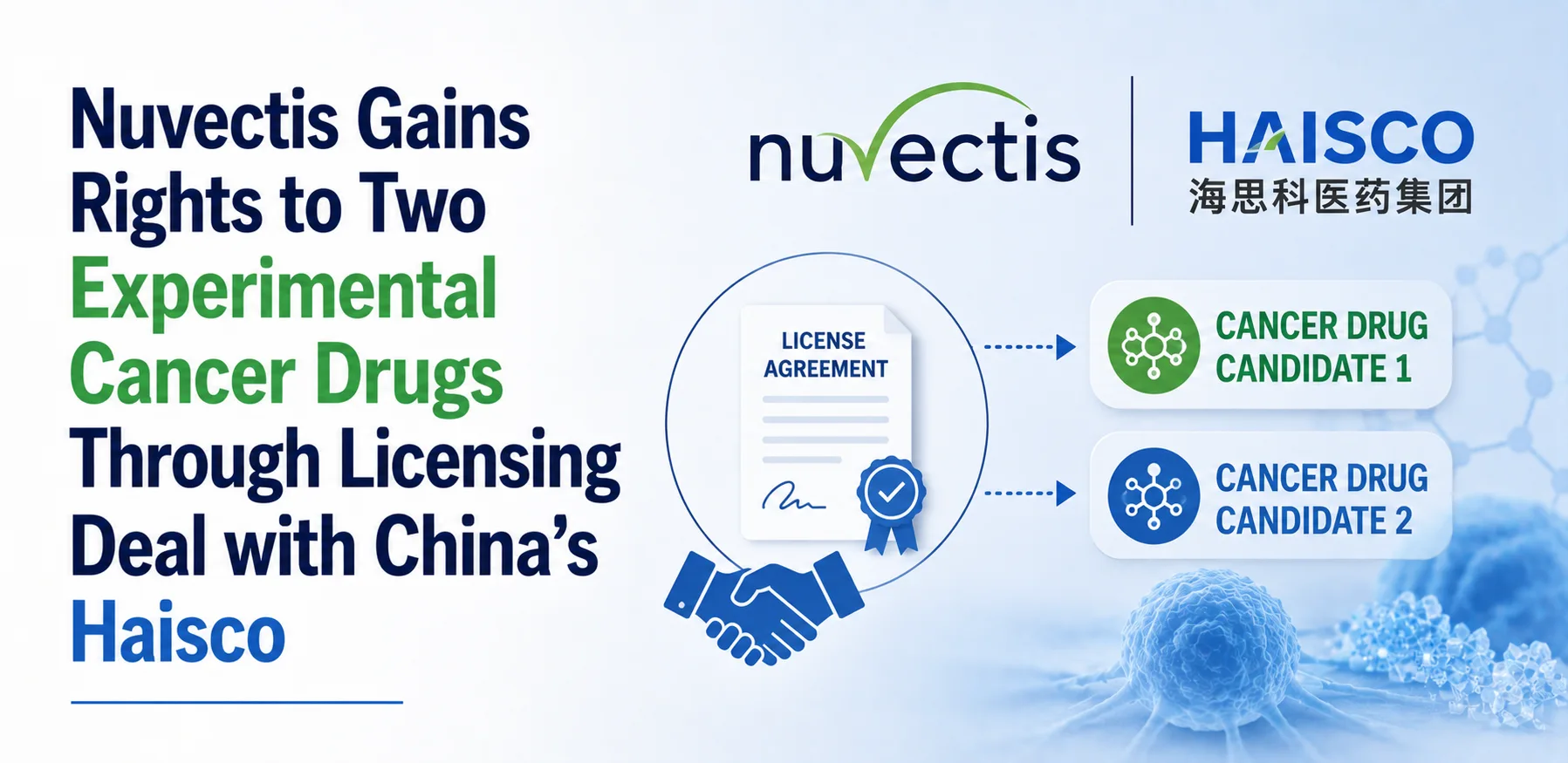
Nuvectis Gains Rights to Two Experimental Cancer Drugs Through Licensing Deal with China's Haisco
What's Happening
Nuvectis Pharma announced a licensing agreement with Chinese pharmaceutical company Haisco Pharmaceutical Group that gives Nuvectis exclusive ex-China rights to develop and commercialize two experimental clinical-stage compounds. The deal expands Nuvectis' pipeline into complement-mediated diseases and enhances its oncology portfolio.
The transaction represents a strategic shift for Nuvectis, transforming the company into a late-stage clinical development entity. Under the terms of the agreement, Nuvectis will take responsibility for further development and potential commercialization of the therapies in licensed territories, while Haisco gains a partner capable of advancing the programs internationally.
The Newly Licensed Assets
The two compounds included in the deal are:
- NXP100 (HSK39297): A once-daily oral Complement Factor B inhibitor in late-stage development. It is being studied for complement-mediated conditions such as paroxysmal nocturnal hemoglobinuria (PNH), IgA nephropathy, and lupus nephritis.
- NXP200 (HSK42360): An oral, brain-penetrant paradox-breaker BRAF inhibitor. Unlike first-generation BRAF inhibitors, NXP200 is designed to suppress BRAF signaling without triggering paradoxical pathway activation in normal cells, targeting both V600-mutated and Class II/III non-V600-mutated solid tumors.
Why Licensing Deals Matter in Drug Development
Developing a new cancer drug is one of the most expensive and complex processes in healthcare. Because of these challenges, companies frequently enter licensing agreements that allow them to access promising therapies developed by other organizations. Licensing deals help companies expand pipelines more quickly, reduce research risk, and access specialized scientific expertise.
Why Chinese Drug Innovation Is Receiving More Attention
Chinese biotechnology and pharmaceutical companies have dramatically expanded their research capabilities and are increasingly producing innovative drug candidates that attract international interest. This growth is driven by increased research investment, an expanding pool of scientific talent, improved development infrastructure, and more frequent collaborations with international pharmaceutical firms.
Key Takeaways
- Nuvectis licensed exclusive ex-China rights to NXP100 and NXP200 from Haisco Pharmaceutical Group.
- The deal includes upfront and near-term payments of up to $40 million, with potential milestones up to $1.421 billion.
- NXP100 targets complement-mediated diseases, while NXP200 serves as a next-generation BRAF inhibitor for solid tumors.
- The partnership reinforces the growing globalization of drug development and the emergence of China as a source of high-quality clinical-stage assets.
What This Means for Healthcare Marketers
For healthcare intelligence teams, cross-border licensing deals serve as strong indicators of emerging therapeutic trends and commercialization opportunities. This transaction highlights the importance of monitoring international biotechnology activity, as breakthrough therapies increasingly originate outside traditional U.S. and European hubs. Organizations should view such partnerships not just as financial events, but as markers of where global pharmaceutical companies are placing their bets on future treatment paradigms in oncology and rare disease.