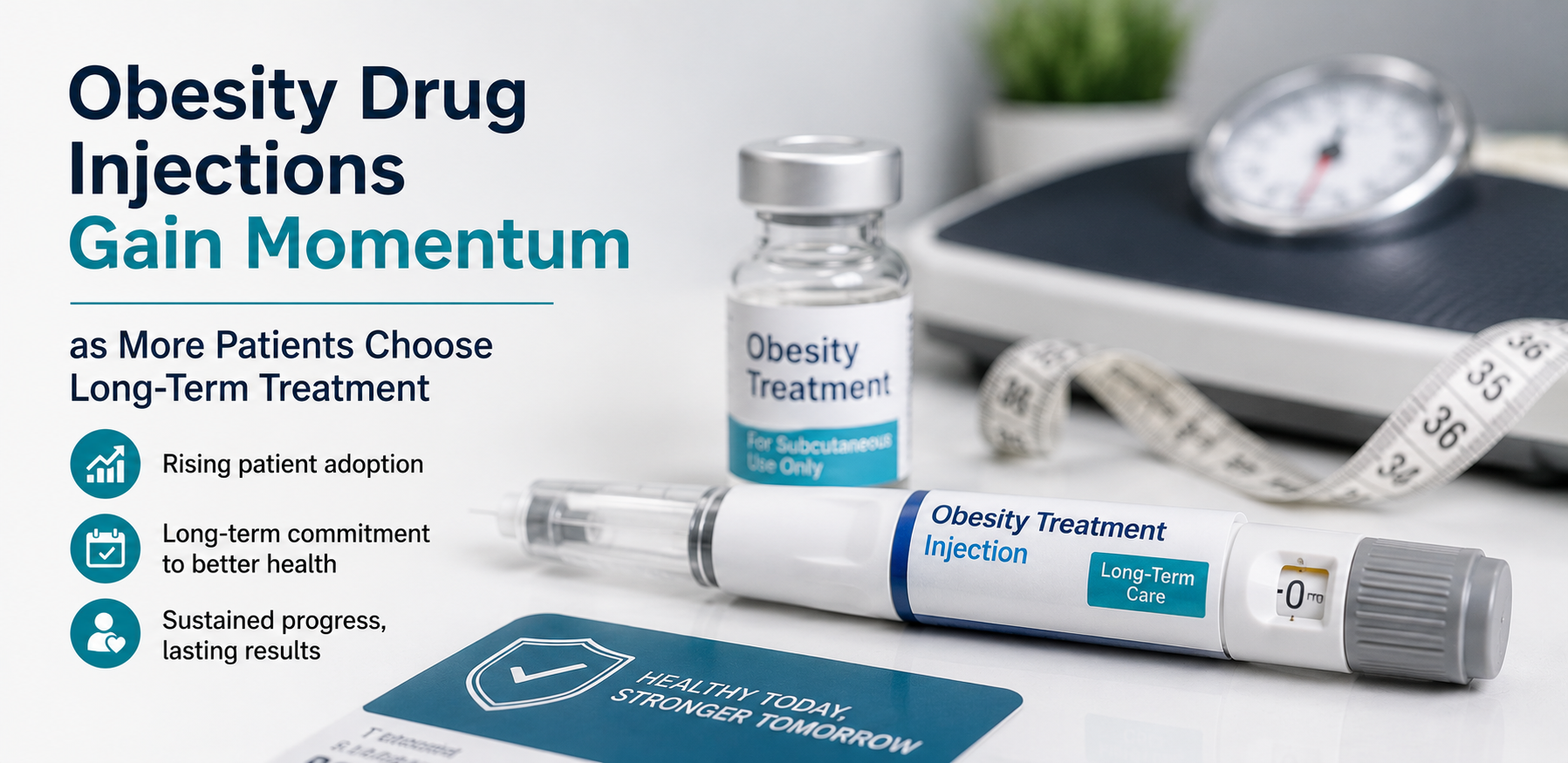
Obesity Drug Injections Gain Momentum as More Patients Choose Long-Term Treatment
What's Happening
The use of injectable obesity medicines continues to grow across the United States as more patients seek effective long-term treatments for weight management. The expanding adoption of glucagon-like peptide-1 (GLP-1) and related therapies is reshaping obesity care, prompting healthcare providers, insurers, pharmaceutical companies, and policymakers to evaluate how these medicines fit into routine clinical practice.
Although demand remains strong, questions continue around affordability, insurance coverage, long-term use, and ensuring that patients who are most likely to benefit can access treatment. As additional medicines enter the market and clinical evidence continues to grow, obesity care is shifting from short-term weight loss strategies toward chronic disease management.
Why Obesity Is Increasingly Treated as a Chronic Disease
Obesity affects hundreds of millions of people worldwide and is associated with a higher risk of numerous health conditions, including:
- Type 2 diabetes.
- Cardiovascular disease.
- High blood pressure.
- Obstructive sleep apnea.
- Certain cancers.
- Fatty liver disease.
- Osteoarthritis.
Healthcare professionals increasingly recognize obesity as a complex, chronic medical condition influenced by genetics, hormones, metabolism, environment, and lifestyle. As a result, treatment is moving beyond diet and exercise alone to include medications, behavioral support, and, in some cases, bariatric surgery.
How Injectable Obesity Medicines Work
Many of today's obesity medicines mimic naturally occurring hormones that help regulate appetite and food intake.
These therapies work by:
- Increasing feelings of fullness.
- Slowing stomach emptying.
- Reducing hunger.
- Helping patients consume fewer calories.
Clinical studies have shown that, when combined with lifestyle changes, these medicines can help many patients achieve substantial and sustained weight loss.
Healthcare providers generally recommend that treatment be paired with healthy eating, regular physical activity, and ongoing medical follow-up.
Why Demand Continues to Rise
Several factors are driving increased interest in obesity medications:
- Strong clinical trial results demonstrating meaningful weight loss.
- Greater awareness among patients and healthcare providers.
- Recognition of obesity as a chronic disease rather than simply a lifestyle issue.
- Growing evidence that weight loss may improve overall health and reduce the risk of obesity-related complications.
As more physicians become comfortable prescribing these therapies, demand is expected to remain strong across primary care, endocrinology, cardiology, and obesity medicine practices.
Challenges Facing Patients and Healthcare Systems
Despite growing enthusiasm, several barriers remain.
- Insurance Coverage: Coverage for obesity medicines varies widely among commercial insurers, Medicare, and Medicaid programs. Many eligible patients continue to face significant out-of-pocket costs.
- Long-Term Treatment: Obesity is generally considered a chronic condition, meaning many patients may require long-term therapy to maintain weight loss. Researchers continue studying the long-term effectiveness and safety of these medicines.
- Healthcare Costs: Although the medicines may reduce future healthcare spending by lowering obesity-related complications, their current cost remains an important consideration for health systems and payers.
- Patient Access: High demand has occasionally placed pressure on manufacturing capacity and supply chains, highlighting the importance of reliable production and distribution.
The Future of Obesity Care
The obesity treatment landscape continues to evolve rapidly.
Researchers are developing:
- New injectable medicines.
- Oral alternatives.
- Combination therapies.
- Treatments designed to improve weight loss while reducing side effects.
At the same time, healthcare organizations are expanding multidisciplinary obesity programs that combine medication, nutrition counseling, behavioral support, and regular follow-up to improve long-term outcomes.
As scientific understanding of obesity continues to advance, treatment is becoming increasingly personalized, with clinicians selecting therapies based on each patient's medical history, risk factors, and treatment goals.
Industry Impact
- Pharmaceutical Companies: Manufacturers continue investing heavily in obesity research and expanding production capacity as demand for these therapies grows.
- Healthcare Providers: Primary care physicians and specialists are incorporating obesity medicines into broader chronic disease management strategies.
- Health Insurers: Payers continue evaluating how broader coverage of obesity treatments may affect long-term healthcare costs and population health.
- Patients: More treatment options are becoming available, but affordability and insurance coverage remain important factors influencing access.
Why This Matters
The rapid adoption of injectable obesity medicines represents one of the most significant changes in chronic disease management in recent years.
For decades, obesity treatment focused primarily on lifestyle interventions, with relatively limited pharmaceutical options. New therapies have demonstrated that meaningful, sustained weight loss is achievable for many patients when medication is combined with comprehensive medical care.
This shift has implications beyond weight management alone. Because obesity contributes to numerous chronic conditions, effective treatment has the potential to improve overall health, reduce healthcare utilization, and lower the long-term burden of disease. As additional therapies become available and access expands, obesity care is expected to become an increasingly important component of preventive medicine.
Key Takeaways
- Injectable obesity medicines continue to see strong adoption as healthcare providers increasingly treat obesity as a chronic disease.
- These therapies help regulate appetite and support significant weight loss when combined with lifestyle changes.
- Insurance coverage, affordability, and long-term treatment remain important challenges.
- Pharmaceutical companies are investing in next-generation obesity therapies and expanding manufacturing capacity.
- The growing use of these medicines is reshaping how obesity is managed across the healthcare system.
What This Means for Healthcare Marketers
The rapid growth of obesity medicines reflects a broader shift toward chronic disease management and preventive care. Organizations involved in pharmaceuticals, digital health, nutrition, diagnostics, and care management have an opportunity to support patients throughout their treatment journey with evidence-based education and coordinated care solutions.
For healthcare marketers, the expanding obesity market highlights the importance of communicating outcomes that matter to providers, payers, and patients. Messaging that focuses on long-term health improvements, treatment adherence, and comprehensive care will be increasingly valuable as obesity management becomes more integrated into routine clinical practice.
For healthcare intelligence teams, monitoring obesity treatment trends provides insight into one of the fastest-growing segments of healthcare. Tracking prescribing patterns, reimbursement policies, clinical research, and market competition can help organizations anticipate future opportunities and understand how this rapidly evolving field will influence the broader healthcare landscape.