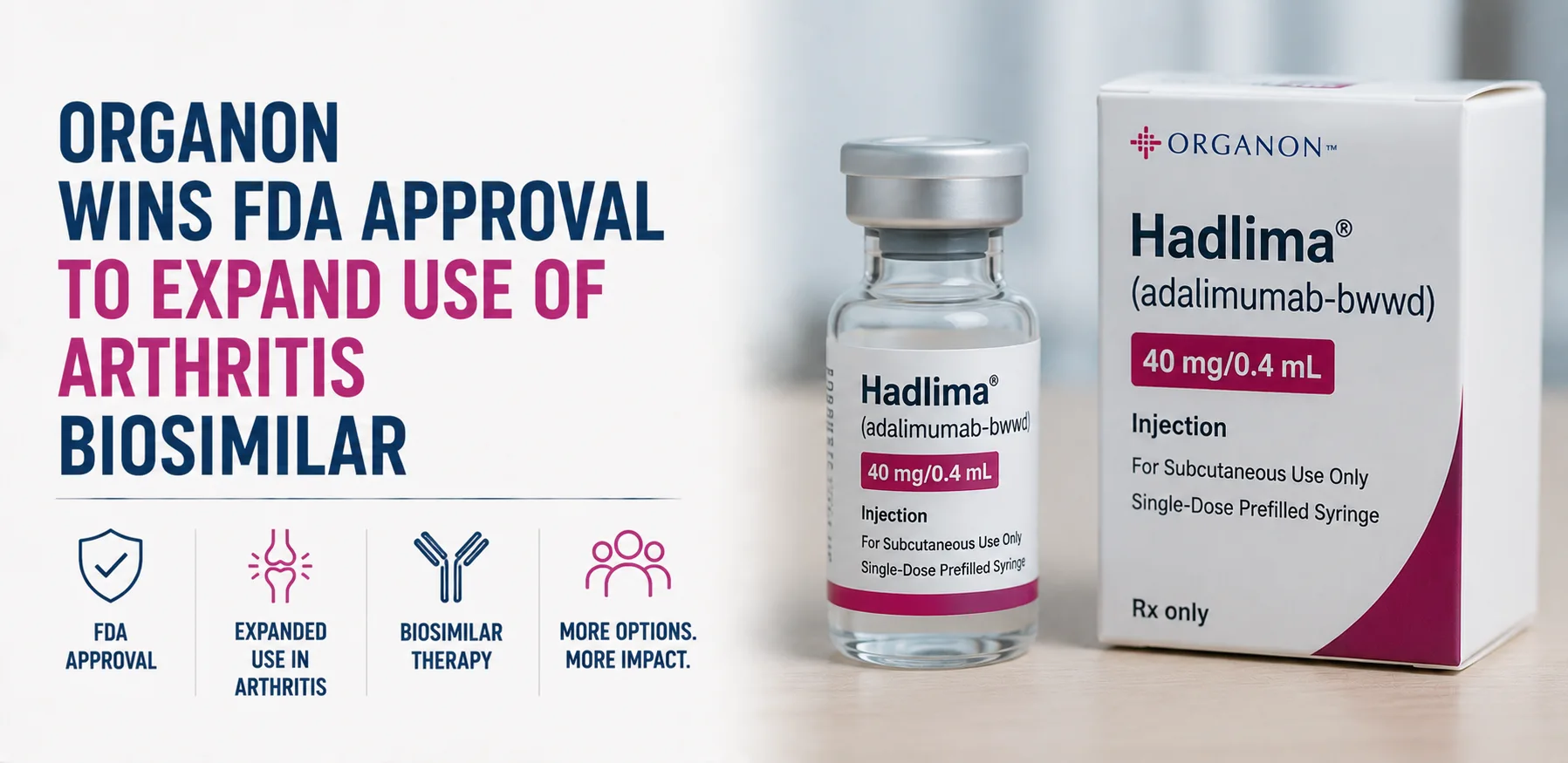
Organon Wins FDA Approval to Expand Use of Arthritis Biosimilar
What's happening
Organon announced that the U.S. Food and Drug Administration (FDA) has approved a supplemental Biologics License Application (sBLA) for TOFIDENCE® (tocilizumab-bavi), its intravenous biosimilar referencing Roche's multi-billion-dollar blockbuster Actemra®. This regulatory milestone expands the therapeutic label beyond chronic rheumatology conditions to include high-intensity acute hospital care lines.
The new indications cover the treatment of severe or life-threatening cytokine release syndrome (CRS) induced by chimeric antigen receptor (CAR) T-cell oncological therapies in adults and children aged 2 and older. It also covers hospitalized adult and pediatric patients with severe COVID-19 who require advanced respiratory support or mechanical ventilation.
What's changing / Business impact
By capturing these high-stakes acute indications, Organon aligns TOFIDENCE's clinical scope directly with its reference biologic product. This comprehensive alignment substantially elevates the commercial potential of the therapy by opening up high-volume inpatient pathways across nationwide health systems, integrated delivery networks (IDNs), and major academic cancer centers.
For hospital pharmacy directors and institutional formulary committees, the approval injects a needed, cost-effective alternative into oncology care structures. Because CAR-T toxicities are highly resource-intensive, substituting branded biologics with biosimilars allows providers to mitigate post-infusion specialty care costs and lower the pricing burden of modern cellular immunotherapies.
Why this matters
Biologic medications are highly advanced and clinically transformative, but their complex manufacturing requirements historically keep market prices exceptionally high. Biosimilars promote direct market competition, working to lower baseline therapeutic pricing and significantly democratize access for vulnerable patient groups.
The FDA's decision to grant this expansion based on established regulatory extrapolation frameworks highlights the safety and maturity of modern biosimilar review pathways. As healthcare systems actively seek structural financial relief without compromising clinical efficacy, broader biosimilar implementation across acute and oncological pipelines stands as a primary strategy to manage macro-level spend.