Pathos AI Licenses Experimental Breast Cancer Drug to Expand AI-Driven Oncology Pipeline
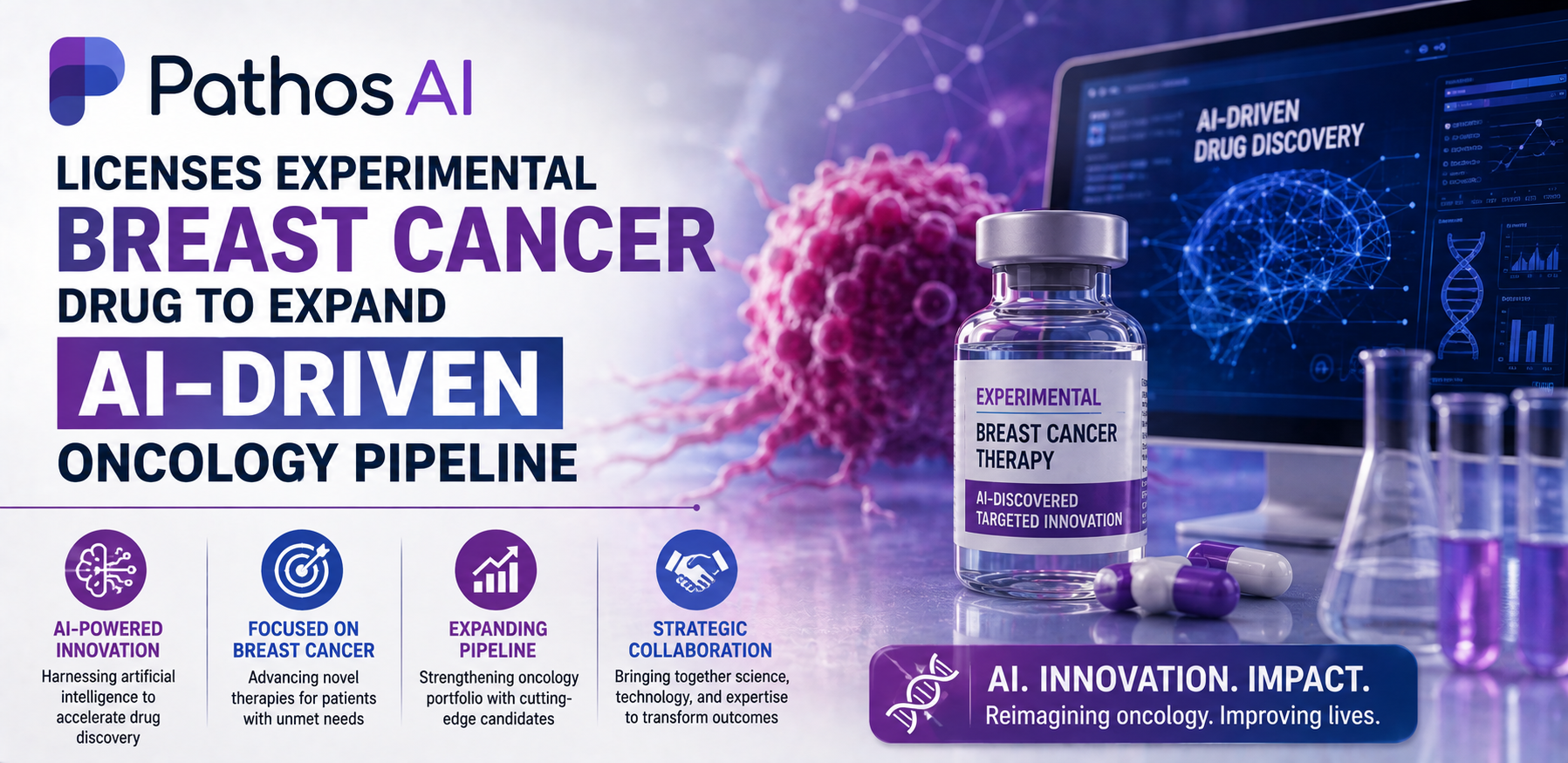
What's Happening
Pathos AI has licensed an experimental breast cancer drug from China's Jiangsu Alphamab, expanding its oncology pipeline as the company combines artificial intelligence with drug development to accelerate cancer treatment innovation.
Under the agreement, Pathos AI gains rights to develop and commercialize the investigational therapy outside Greater China, while Jiangsu Alphamab will retain rights in its home market. The deal reflects growing cross-border collaboration between biotechnology companies seeking to advance promising cancer therapies through global clinical development.
The licensing agreement also highlights the increasing role of artificial intelligence in identifying, developing, and optimizing new cancer treatments.
Understanding the Licensing Agreement
Licensing agreements allow pharmaceutical and biotechnology companies to expand access to promising medicines without developing every therapy internally.
In this case, Pathos AI will use its artificial intelligence platform to help guide the drug's clinical development and commercialization while leveraging Jiangsu Alphamab's scientific research.
Such partnerships enable companies to:
- Expand research pipelines.
- Accelerate clinical development.
- Share development risks.
- Reach broader global markets.
- Improve access to innovative therapies.
These collaborations have become increasingly common as drug development grows more complex and costly.
The Growing Role of Artificial Intelligence in Drug Development
Artificial intelligence is becoming an important tool across pharmaceutical research by helping companies analyze large volumes of biological and clinical data.
AI technologies can support:
- Drug discovery.
- Clinical trial design.
- Patient selection.
- Biomarker identification.
- Treatment optimization.
- Drug development decision-making.
By combining AI with traditional pharmaceutical research, companies aim to improve development efficiency while increasing the likelihood of clinical success.
Industry Impact
- Biotechnology Companies: The agreement reflects continued investment in AI-powered drug development and international partnerships to accelerate oncology innovation.
- Healthcare Providers: Future approvals could provide oncologists with additional treatment options for patients with breast cancer and other solid tumors.
- Patients: Collaborative drug development may accelerate access to innovative cancer therapies that address unmet medical needs.
- Investors: The licensing deal highlights growing confidence in artificial intelligence as a strategic tool for improving pharmaceutical research and development.
Looking Ahead
Pathos AI is expected to begin advancing the experimental therapy through additional clinical development while using its AI platform to support research and regulatory planning.
If future clinical trials demonstrate safety and effectiveness, the therapy could move toward regulatory review and eventual commercialization outside Greater China.
The collaboration may also encourage additional partnerships between AI-driven biotechnology companies and global pharmaceutical developers.
Why This Matters
Artificial intelligence is rapidly transforming how new medicines are discovered and developed.
The partnership between Pathos AI and Jiangsu Alphamab demonstrates how technology and international collaboration are helping accelerate oncology research while expanding access to promising therapies.
It also reflects the pharmaceutical industry's growing focus on combining advanced analytics with scientific expertise to improve the efficiency of drug development.
Key Takeaways
- Pathos AI has licensed an experimental breast cancer drug from Jiangsu Alphamab.
- The agreement expands Pathos AI's oncology pipeline and international presence.
- Artificial intelligence will play a key role in supporting the drug's development.
- The partnership reflects growing collaboration between biotechnology companies across global markets.
- AI-driven drug development continues gaining momentum across the pharmaceutical industry.
What This Means for Healthcare Marketers
The licensing agreement highlights continued investment in oncology, artificial intelligence, precision medicine, and global biotechnology partnerships. Pharmaceutical companies, AI-driven biotech firms, cancer centers, and research organizations are increasingly combining advanced analytics with clinical research to accelerate drug development. For healthcare marketers, organizations involved in oncology, AI-enabled healthcare, clinical research, and pharmaceutical innovation represent high-intent opportunities for physician education, scientific communications, partnership development, and commercial growth.