What’s Happening
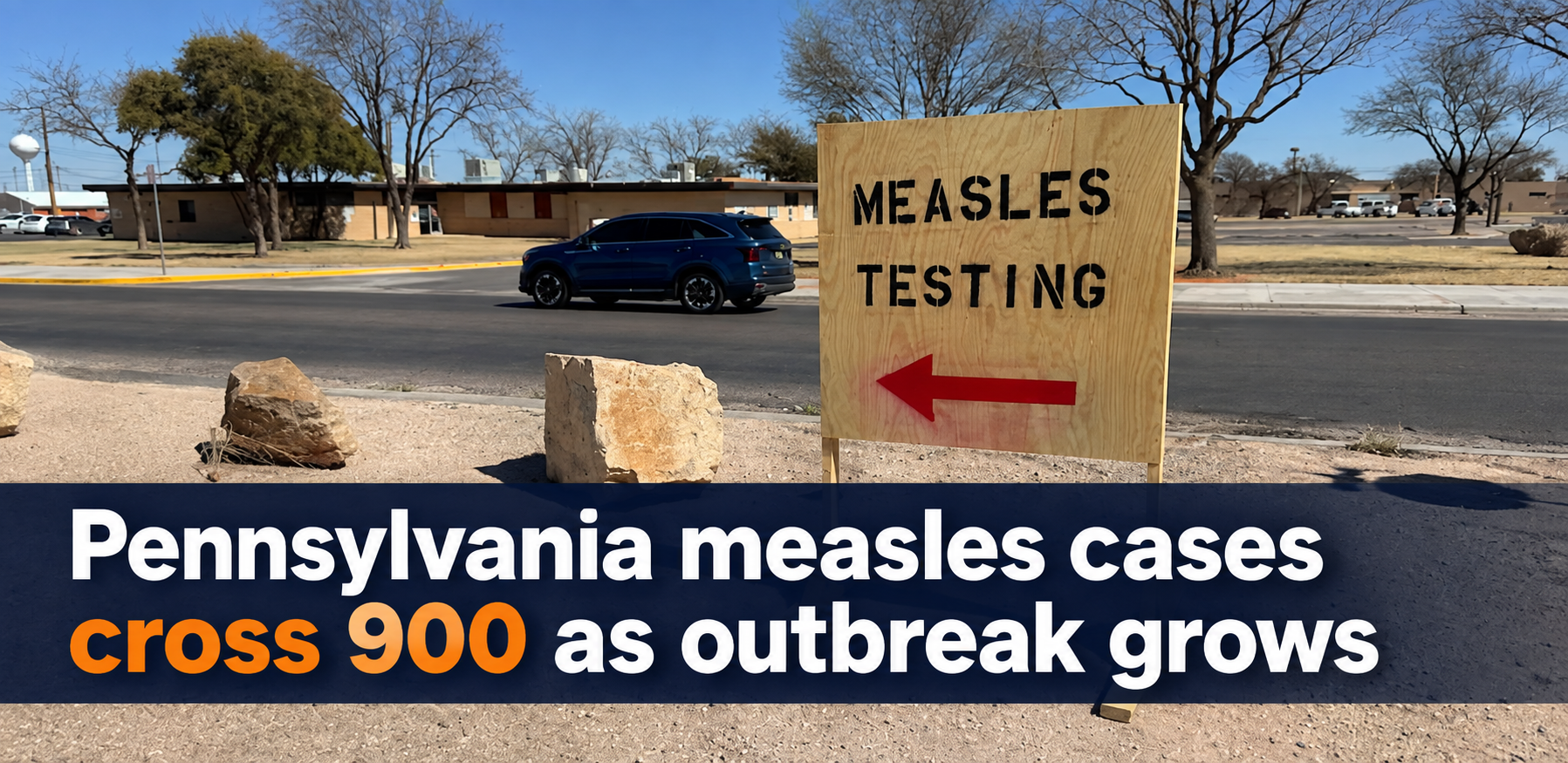
Pennsylvania’s measles outbreak has continued to grow, with the number of reported cases reaching 903 as of September 28.
The state recorded 68 new infections since the previous week, making the outbreak one of the largest measles resurgences Pennsylvania has experienced in decades.
The number of people hospitalized has also increased. Pennsylvania reported 176 measles-related hospitalizations, up from 164 reported on September 23.
What Is Measles?
Measles is a highly contagious viral disease that can cause fever, cough, rash, and other complications.
Because the virus spreads very easily, outbreaks can grow quickly when vaccination levels are not high enough to prevent transmission.
The standard prevention method is the measles, mumps and rubella (MMR) vaccine.
Two doses of the MMR vaccine provide about 97% protection against measles.
Where Is the Outbreak Concentrated?
Lancaster County continues to have the highest number of cases in Pennsylvania.
The outbreak has affected communities across the state, with health officials continuing to track new infections and hospitalizations.
The rising case count comes as measles cases have also increased nationally.
The United States had recorded 3,659 measles cases as of September 24, according to federal health data.
Hospitalizations and Deaths
Pennsylvania reported that 176 people had been hospitalized with measles as of September 28.
Earlier in September, the state also reported four measles-related deaths among unvaccinated residents.
There has been disagreement over how many of those deaths should be classified as directly caused by measles.
Federal health officials have been reviewing how measles-related deaths are classified.
As of September 28, the CDC website listed one verified measles death but did not identify where that death occurred.
Why Is the Outbreak Growing?
Measles can spread rapidly because it is highly contagious.
When an infected person enters a community where vaccination coverage is lower, the virus can spread to people who are not protected.
Unvaccinated children and adults face a higher risk of infection.
The current outbreak also demonstrates why maintaining high vaccination coverage is important even when measles cases are normally relatively uncommon.
What’s Changing / Business Impact
The growing outbreak creates additional demand for public-health and healthcare resources.
Healthcare systems may need to dedicate more resources to:
- Testing and diagnosing suspected cases
- Treating hospitalized patients
- Contact tracing
- Infection control
- Vaccination programs
- Public-health communications
- Protecting healthcare workers
Hospitals and clinics may also need to prepare for increased screening of patients who have symptoms or may have been exposed to measles.
For public-health organizations, communicating clearly about vaccination, symptoms, exposure, and when to seek care becomes increasingly important as case numbers rise.
Why This Matters
Measles outbreaks can place pressure on healthcare systems even when most infections do not require hospitalization.
The disease can cause serious complications, particularly in vulnerable patients.
The Pennsylvania outbreak also has broader significance because the state is part of a nationwide increase in measles cases.
As cases continue to rise, health departments and healthcare providers need reliable systems for identifying infections quickly and limiting further transmission.
The outbreak also creates a significant need for clear, accessible health information so families understand how measles spreads and how vaccination can reduce risk.
Looking Ahead
Pennsylvania health officials will continue monitoring new infections and hospitalizations as the outbreak develops.
The focus will be on identifying new cases, tracking potential exposures, and preventing additional transmission.
Nationally, the U.S. measles case count will also remain an important indicator of whether the current increase is continuing.
Vaccination remains the main tool for preventing measles outbreaks.
What This Means for Healthcare Marketers
The outbreak creates several important signals for healthcare marketers and public-health organizations:
- Vaccination campaigns: Rising case numbers can increase demand for vaccination outreach and education.
- Patient communications: Healthcare organizations need clear messaging around symptoms, exposure, testing, and prevention.
- Public-health engagement: Health departments may need stronger digital and community outreach as outbreaks expand.
- Provider communications: Hospitals and clinics may need to educate staff about screening, infection control, and case identification.
- Health information: Accurate, easy-to-understand content becomes especially important during an outbreak.
- Population targeting: Case locations can help public-health organizations focus outreach on communities experiencing higher transmission.
- Healthcare demand signals: Rising infections and hospitalizations can indicate increased demand for testing, treatment, vaccination, and public-health services.
For B2B healthcare marketers, an expanding infectious-disease outbreak can quickly change healthcare demand and communication priorities. Monitoring case growth, hospitalizations, vaccination activity, and geographic spread can help organizations identify where additional healthcare resources may be needed.
Key Takeaways
- Pennsylvania’s measles outbreak reached 903 cases as of September 28.
- The state recorded 68 new cases since the previous week.
- 176 people have been hospitalized during the outbreak.
- Lancaster County remains the hardest-hit area.
- Pennsylvania previously reported four measles-related deaths among unvaccinated residents, while the CDC currently lists one verified measles death.
- The U.S. had recorded 3,659 measles cases as of September 24.
- Two doses of the MMR vaccine provide about 97% protection against measles.
- The outbreak is increasing demand for vaccination, testing, infection control, public-health communication, and healthcare resources.