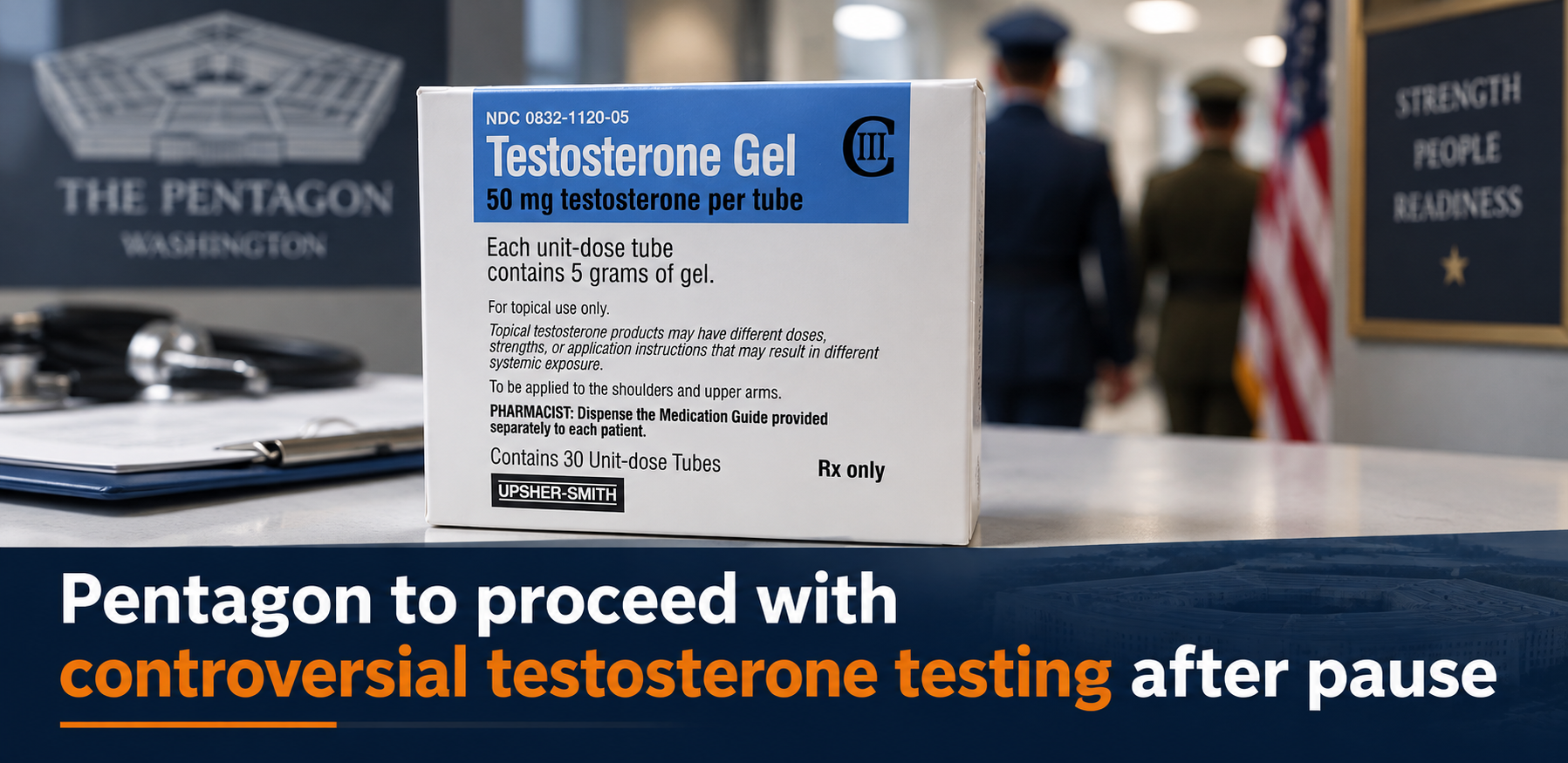
What's Happening
The Pentagon is reinstating a mandatory testosterone-deficiency screening program for U.S. service members age 30 and older, ending a brief pause that began earlier this month.
Defense Secretary Pete Hegseth first announced the screening policy in July as part of a broader effort to address hormone-related health issues and physical performance among service members.
The Pentagon published detailed clinical guidance on September 2, but withdrew it the following day, saying the document needed updates. On September 17, Pentagon spokesperson Sean Parnell said the updated guidance was effective immediately and established uniform screening and treatment pathways for male testosterone deficiency. (reuters.com; (Forth News))
The latest guidance marks a change from the version briefly published earlier in September. The current statement specifically addresses male service members, while the earlier guidance had also included a screening pathway for women.
What the Pentagon Is Requiring
Under the policy announced in July, service members 30 and older are to undergo testosterone-deficiency screening during their periodic health assessments.
Service members younger than 30 can be screened when clinically indicated or, under the broader Pentagon directive, through optional screening. (Forth News)
The program is intended to identify people with low testosterone and create a standardized process for evaluating and potentially treating those individuals.
The Pentagon describes this as part of its effort to improve the health and readiness of military personnel.
The September Pause
The policy was briefly put on hold earlier this month.
On September 2, the Pentagon published a document called "Clinical Guidance for Health and Human Performance Optimization." It laid out detailed screening and treatment procedures for service members.
Less than 24 hours later, the document was removed.
A U.S. official told Reuters at the time that the guidance had been temporarily rescinded to allow for updates, while interim guidance remained in effect. (reuters.com)
The Pentagon did not initially explain what specific changes were needed.
Now, the department has issued new guidance focused specifically on testosterone deficiency in male service members.
The New Guidance Focuses on Men
The latest Pentagon statement says the clinical guidance establishes uniform screening and treatment pathways for male testosterone deficiency across the Defense Health Agency.
This is an important change from the earlier September document, which included separate screening pathways for men and women.
The Pentagon's latest public statement does not provide a new clinical pathway for female service members. The Washington Post reported that the newly issued guidelines apply to male service members and that guidance for women will be addressed later. (The Washington Post)
That means the current reinstated program is more narrowly defined than the policy initially outlined in September.
How the Screening Is Intended to Work
The program is designed around identifying service members who may have testosterone deficiency and determining whether further clinical evaluation is appropriate.
The earlier clinical guidance described a process in which men age 30 and older would receive screening during periodic health assessments, with additional blood testing for those who met the relevant criteria. (reuters.com)
The updated September 17 guidance establishes the formal pathway for male service members, although the Pentagon's public statement did not provide all of the detailed clinical criteria contained in the full Defense Health Agency guidance. (Forth News)
Why the Pentagon Wants to Screen for Low Testosterone
The policy is tied directly to the Pentagon's broader military-readiness strategy.
Hegseth's July 15 memorandum directed mandatory testosterone-deficiency screening for service members age 30 and older as part of a broader initiative called "Health and Human Performance Optimization to Enhance Military Readiness." (Forth News)
The Pentagon says identifying and treating low hormone levels can contribute to the health, performance and readiness of service members.
The initiative reflects a growing focus within the military on physical fitness, recovery, nutrition, hormones and other factors that could affect performance.
Testosterone Naturally Changes With Age
Testosterone levels generally decline with age in men.
Low testosterone can be associated with symptoms such as:
- Reduced sex drive
- Fatigue
- Loss of muscle mass
- Changes in physical performance
- Other symptoms affecting quality of life
But diagnosing testosterone deficiency is not based solely on age.
Medical evaluation generally considers symptoms, laboratory measurements and the underlying clinical context.
That distinction is important because the Pentagon's screening program is designed to identify potential deficiency systematically rather than simply assume that every service member over 30 has a clinically significant hormone problem.
What Happens if Testosterone Is Low?
The Pentagon's approach creates a standardized pathway for service members found to have low testosterone.
The military's newly issued guidance establishes treatment pathways for male service members, including circumstances in which testosterone replacement may be considered. (Forth News)
The decision to prescribe testosterone still involves medical assessment.
Treatment can have risks and is not appropriate for every person with a low laboratory measurement.
Medical Concerns About Widespread Screening
The policy has faced criticism from physicians and other medical experts who question whether routine screening of all men above a certain age is supported by sufficient evidence.
Some experts have warned that widespread testing could identify men with borderline or temporary changes that do not necessarily require treatment.
They have also raised concerns about the consequences of treating people who do not have a clear medical need.
These concerns are part of the medical debate surrounding the Pentagon program and do not represent a finding by the Pentagon that the program is unsafe. (reuters.com)
Potential Risks of Testosterone Treatment
Medical professionals cited by Reuters have warned that inappropriate testosterone treatment can carry health risks.
One concern is fertility because testosterone therapy can suppress the body's natural production of testosterone and sperm.
Other potential risks can involve cardiovascular or blood-related complications and worsening of certain underlying medical conditions, depending on the patient.
That is why clinicians generally evaluate the potential benefits and risks before starting hormone replacement.
Existing Medical Guidelines Do Not Recommend Universal Screening
The Pentagon's policy differs from recommendations of major medical organizations.
Earlier Reuters reporting noted that the American Urological Association and the Endocrine Society do not recommend routine testosterone screening of all men solely because they have reached a particular age. (reuters.com)
Instead, those organizations generally emphasize evaluation based on symptoms and appropriate clinical assessment.
This difference is central to the controversy around the Pentagon's program.
The military is introducing an age-based screening requirement, while conventional clinical guidance does not generally recommend population-wide testing solely on the basis of age.
Why Military Readiness Is Part of the Policy
The Pentagon is not approaching testosterone deficiency only as a healthcare issue.
The department's stated objective is connected to force readiness and physical performance.
The July memorandum specifically linked hormone screening with the broader effort to optimize health and human performance among service members. (Forth News)
That means the policy is being evaluated within a military context that places particular emphasis on physical capacity.
The Pentagon argues that identifying treatable medical problems earlier can contribute to the readiness of the force.
The Program Also Raises Questions About Female Service Members
The original policy announced in July did not initially make clear how its testosterone-related requirements would apply to women.
The September 2 guidance attempted to address both men and women through different assessment pathways.
For women, the earlier guidance included questionnaires addressing symptoms such as fatigue and menstrual irregularities associated with possible hormonal imbalance. (reuters.com)
It also limited potential testosterone treatment for women to certain conditions where there is supporting evidence, including hypoactive sexual desire disorder. (reuters.com)
The latest September 17 statement, however, addresses male testosterone deficiency specifically.
The Female Guidance Is Now Less Clear
The difference between the September 2 and September 17 documents means the status of the female screening pathway is currently less clear.
The Washington Post reported that the newly issued guidance applies to male service members only and that rules for female service members will be released later. (The Washington Post)
That leaves an important part of the original program unresolved publicly.
It also shows why the September pause mattered: the Pentagon used the period to revise its clinical framework before moving ahead with the male screening component.
How This Fits Into the Military's Broader Health Strategy
Testosterone screening is part of a larger Pentagon effort focused on health and human performance.
The July memorandum includes broader efforts involving physical fitness, nutrition and other health factors that can influence military readiness. (Forth News)
The department's approach is based on the idea that treating health problems proactively could improve the physical capacity of the force.
Testosterone screening is one component of that broader strategy.
A Large Population Could Be Screened
Because the requirement applies to service members age 30 and older across the military, the program could result in a substantial number of testosterone tests.
The United States has hundreds of thousands of active-duty and reserve personnel, and a significant portion are over 30.
That means the program could generate considerable demand for:
- Laboratory testing
- Physician assessments
- Follow-up visits
- Where clinically appropriate, hormone treatment
The exact number of tests and treatments that will result from the policy will depend on how the services implement the guidance and how many people meet clinical criteria.
Potential Impact on Military Healthcare Providers
Military healthcare providers will now have to incorporate the screening process into periodic health assessments.
That creates several operational requirements.
- Laboratory Capacity: Providers will need access to reliable testosterone testing.
- Clinical Follow-Up: Service members with abnormal results may require repeat testing and medical evaluation.
- Treatment Management: Those prescribed testosterone will require monitoring during treatment.
- Documentation: Military health systems will need to record screening results, diagnoses, treatment decisions and follow-up.
The scale of the program means these requirements could become a meaningful addition to military healthcare workflows.
Potential Impact on Pharmaceutical Demand
If the screening program identifies more men with clinically significant testosterone deficiency, demand for testosterone products could increase within the military healthcare system.
The impact would depend on how many people are ultimately diagnosed and how many receive treatment.
Testosterone products are already widely available in the U.S., including gels, injections, patches and other formulations.
The Pentagon program could therefore affect demand for existing therapies without requiring the development of a new military-specific product.
The Broader Testosterone Market Is Already Changing
The Pentagon's decision comes at a time when testosterone is attracting increased attention outside the military.
Reuters reported this week that testosterone prescriptions among U.S. women rose 146% between January 2023 and July 2026, according to Truveta data.
The FDA is also examining testosterone use in menopausal women through a public workshop. (reuters.com)
That means regulators, healthcare providers, pharmaceutical companies and patients are all paying greater attention to testosterone at the same time.
The FDA Is Examining Testosterone Use in Women
The FDA's September 17 workshop on testosterone use in menopausal women is separate from the Pentagon program.
The FDA discussion focuses on the clinical evidence, safety questions, testosterone measurement and potential future drug development for women.
The Pentagon program, by contrast, concerns testosterone deficiency among military service members.
The two developments are separate, but both illustrate how testosterone is becoming a more prominent topic in healthcare policy and clinical practice.
Why The Military Approach Is Different
The military operates a healthcare system that is directly connected to its personnel requirements.
The Pentagon therefore has greater ability to establish health-screening policies across its workforce than a typical employer does.
That makes the military a unique environment for testing a population-level screening approach.
However, the medical questions surrounding screening accuracy, diagnosis and appropriate treatment remain relevant regardless of the setting.
What Providers Will Need to Monitor
The success of the program from a healthcare-delivery perspective will depend partly on how the screening process is implemented.
Providers will have to distinguish between:
- Temporary low readings and persistent deficiency
- Symptoms and laboratory results
- Clinically appropriate treatment and unnecessary treatment
Those distinctions are important because a screening program can identify potential problems, but diagnosis still requires appropriate clinical evaluation.
Why This Matters
The Pentagon's decision creates a large-scale, age-based testosterone screening program inside the U.S. military.
The latest guidance makes the program immediately applicable to male service members age 30 and older, after the Pentagon temporarily paused its earlier guidance for revisions. (Forth News)
The policy is notable because major medical organizations generally do not recommend routine testosterone screening solely because men have reached a certain age.
That difference means the program will generate important real-world information about how many service members are identified with low testosterone, how many receive treatment and what operational demands the screening creates.
The program could also influence the broader testosterone market by increasing clinical attention to diagnosis and treatment.
Looking Ahead
The immediate next step is implementation across the military healthcare system.
The Pentagon will need to establish consistent screening, testing and treatment procedures across the services while monitoring how clinicians apply the new guidance.
The status of the female screening pathway is also worth watching because the latest guidance focuses on male testosterone deficiency, while earlier guidance had outlined a separate approach for women.
More broadly, the program will provide a large real-world setting in which the practical consequences of systematic testosterone screening can be observed.
Key Takeaways
- The Pentagon is reinstating mandatory testosterone-deficiency screening for U.S. service members age 30 and older. (reuters.com)
- The policy was first announced by Defense Secretary Pete Hegseth in July 2026 as part of a broader health and human-performance initiative. (Forth News)
- The Pentagon briefly withdrew its detailed clinical guidance on September 3 to allow for updates. (reuters.com)
- New guidance issued September 17 establishes uniform screening and treatment pathways for male testosterone deficiency across the Defense Health Agency. (Forth News)
- The latest public guidance focuses on male service members; guidance for female service members is expected separately. (The Washington Post)
- The Pentagon says the program is intended to proactively identify and treat hormone deficiencies as part of its broader military-readiness strategy. (Forth News)
- Medical experts have raised concerns that inappropriate testosterone treatment could increase risks including infertility and other health complications. (reuters.com)
- The American Urological Association and Endocrine Society do not recommend routine testosterone screening based solely on age, according to earlier Reuters reporting. (reuters.com)
- The policy could increase demand for testosterone testing, follow-up evaluations and treatment within military healthcare.
- The Pentagon's action comes as testosterone use is also receiving increased attention in the civilian healthcare market, including rising prescriptions among women and new FDA scrutiny. (reuters.com)
What This Means for Healthcare Marketers
The Pentagon's policy creates a distinct healthcare market signal around screening-led treatment demand.
For pharmaceutical companies, laboratories, diagnostic providers and healthcare technology companies, a large population-level screening program can affect testing volumes, follow-up care, prescription demand and clinical workflow.
The relevant signals to track include screening volume, abnormal test rates, repeat testing, treatment initiation, prescription patterns and provider workload.
The broader testosterone market also shows why these signals should be viewed across populations. Changes in military screening, women's testosterone prescribing, FDA activity and physician behavior are occurring simultaneously and could influence future demand for testosterone-related diagnostics, treatments and support services.