What’s Happening
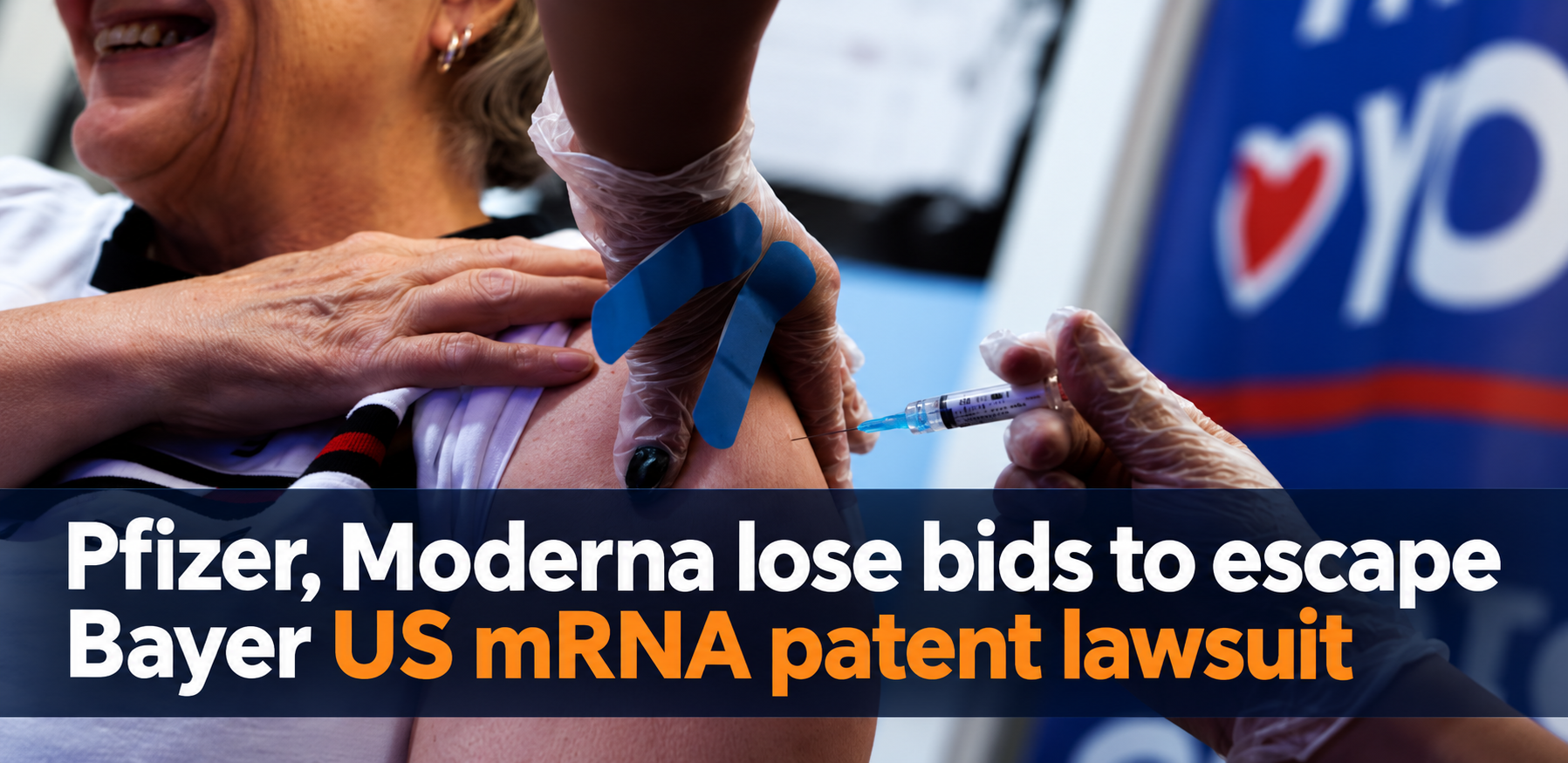
A U.S. federal judge has rejected efforts by Pfizer and Moderna to avoid a patent lawsuit brought by German healthcare company Bayer over technology used in their COVID-19 vaccines.
The decision allows Bayer’s lawsuit to move forward.
Bayer's pharmaceutical business, through its acquisition of BioNTech partner CureVac, claims that Pfizer and Moderna’s COVID-19 vaccines use technology covered by patents developed by CureVac.
The case is part of a larger series of patent disputes surrounding the technology used to create messenger RNA, or mRNA, vaccines.
What Is mRNA Vaccine Technology?
mRNA vaccines use genetic instructions to teach the body's cells how to produce a protein that triggers an immune response.
Instead of putting a weakened or inactive virus into the body, the vaccine delivers messenger RNA containing instructions for making a specific protein.
The immune system then learns to recognize that protein and can respond more quickly if it encounters the actual virus later.
The technology became widely known during the COVID-19 pandemic through vaccines developed by Pfizer-BioNTech and Moderna.
Why Is Bayer Suing?
Bayer's lawsuit involves patents that cover certain aspects of mRNA vaccine technology.
CureVac, which Bayer acquired, has developed mRNA technology for years.
Bayer argues that Pfizer and Moderna used patented technology in their COVID-19 vaccines without obtaining the appropriate rights.
The companies have disputed Bayer's claims and sought to have the lawsuit dismissed.
The latest ruling means those arguments will now continue as part of the broader litigation.
What Did Pfizer and Moderna Argue?
Pfizer and Moderna challenged Bayer's lawsuit on legal grounds, arguing that the patents at issue should not be used to pursue the claims against them.
They also argued that Bayer's allegations did not provide a sufficient basis for the lawsuit to continue.
The court rejected their efforts to end the case at this stage.
That does not mean the court has determined that Pfizer or Moderna infringed Bayer's patents.
It simply means the lawsuit can proceed and the underlying patent questions can continue to be examined.
Why Are These Patents Important?
The COVID-19 vaccine market generated billions of dollars in revenue during the pandemic.
That made intellectual property surrounding mRNA technology extremely valuable.
Patent disputes can affect:
- Licensing payments
- Royalties
- Vaccine manufacturing
- Future mRNA products
- Research partnerships
- Pharmaceutical revenues
For companies developing mRNA medicines and vaccines, understanding which technologies are protected by patents is an important part of commercial planning.
What’s Changing / Business Impact
The ruling keeps the legal dispute between Bayer, Pfizer, and Moderna active.
If Bayer ultimately succeeds, Pfizer or Moderna could potentially face financial obligations related to the use of patented technology.
If the pharmaceutical companies prevail, Bayer's claims could be reduced or rejected.
The case could also affect the broader mRNA industry because patents around foundational technologies can influence which companies are able to develop and commercialize future products.
The legal dispute comes at a time when pharmaceutical companies are expanding mRNA technology beyond COVID-19 vaccines into areas such as cancer vaccines, influenza, respiratory diseases, and other conditions.
Why This Matters
mRNA technology has become one of the most important areas of biomedical research.
The technology demonstrated its potential during the COVID-19 pandemic, but companies are now attempting to apply it to a much broader range of diseases.
That makes control over key patents increasingly important.
Patent litigation can influence how much companies pay to use particular technologies and can also affect decisions about partnerships, acquisitions, research investments, and commercialization.
The case therefore extends beyond the COVID-19 vaccine market and could have implications for the future development of mRNA medicines.
Looking Ahead
The lawsuit will now continue in federal court.
The court will eventually have to consider the underlying questions about the patents, including whether they are valid and whether the Pfizer and Moderna vaccines use technology covered by those patents.
The companies could potentially reach a settlement before the case reaches a final trial decision.
Meanwhile, Bayer, Pfizer, and Moderna will continue developing their broader vaccine and pharmaceutical businesses.
What This Means for Healthcare Marketers
The case creates several important signals for healthcare marketers working with pharmaceutical, biotechnology, and vaccine companies:
- Patent disputes: Litigation can reveal which technologies and intellectual property are strategically important to pharmaceutical companies.
- mRNA expansion: Investment in mRNA is moving beyond COVID-19 into additional therapeutic areas.
- Licensing opportunities: Patent ownership can influence future licensing and partnership decisions.
- Pipeline development: Companies investing in new mRNA programs may eventually require clinical, regulatory, commercial, and market-access support.
- M&A signals: Acquisitions of biotechnology companies can give large pharmaceutical companies access to valuable technology and intellectual property.
- Competitive intelligence: Patent filings and lawsuits can reveal where companies are developing overlapping technologies.
- Commercial risk: Intellectual-property disputes can affect launch timing, costs, pricing, and commercialization plans.
For B2B healthcare marketers, patent litigation can be an early indicator of where pharmaceutical companies see strategic value. Tracking patent disputes alongside clinical development and licensing activity can reveal emerging areas of investment before products reach the market.
Key Takeaways
- A U.S. judge rejected efforts by Pfizer and Moderna to escape Bayer's patent lawsuit over mRNA vaccine technology.
- The lawsuit involves patents developed by CureVac, which is now owned by Bayer.
- Bayer claims Pfizer and Moderna's COVID-19 vaccines use technology covered by its patents.
- The ruling allows the lawsuit to continue but does not determine that Pfizer or Moderna infringed the patents.
- mRNA technology is increasingly being developed for diseases beyond COVID-19.
- The outcome could affect licensing, royalties, research partnerships, and future mRNA product development.
- Patent litigation remains an important factor in the commercial strategy of companies developing advanced healthcare technologies.