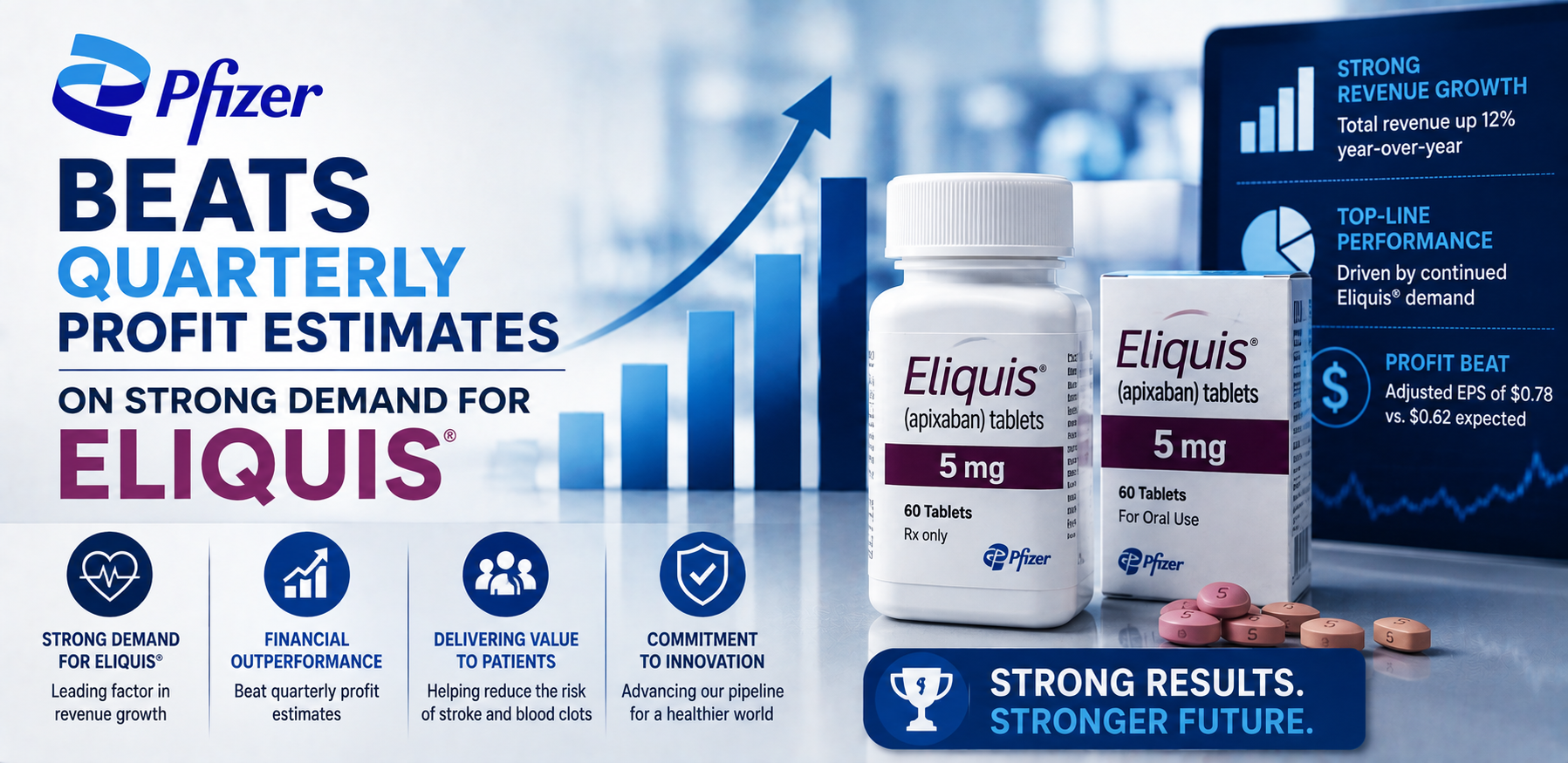
Pfizer Beats Quarterly Profit Estimates on Strong Demand for Eliquis
What's Happening
Pfizer reported better-than-expected second-quarter profit as strong demand for its blood thinner Eliquis helped offset continued declines in COVID-19 product sales.
The pharmaceutical company exceeded Wall Street expectations through robust performance from its portfolio of non-COVID medicines, particularly Eliquis, which is used to reduce the risk of stroke and blood clots in patients with certain cardiovascular conditions.
While revenue from COVID-19 vaccines and antiviral treatments continued to decline as the pandemic transitioned into an endemic phase, Pfizer's diversified product portfolio helped support overall financial performance.
What's Driving the Strong Results
Pfizer's quarterly performance was largely driven by continued demand for Eliquis, one of the world's leading anticoagulant medicines.
The company also benefited from sales across several therapeutic areas, including:
- Cardiovascular disease.
- Oncology.
- Vaccines.
- Rare diseases.
- Internal medicine.
These products helped compensate for reduced sales of COVID-19 vaccines and treatments, which have steadily declined as booster uptake and government purchasing have slowed.
Understanding Eliquis
Eliquis is an oral anticoagulant used to reduce the risk of blood clots and stroke.
It is commonly prescribed for patients with:
- Atrial fibrillation.
- Deep vein thrombosis (DVT).
- Pulmonary embolism (PE).
- Patients recovering from certain orthopedic surgeries.
As cardiovascular disease remains one of the leading causes of death worldwide, demand for anticoagulant therapies continues to support strong commercial performance.
Industry Impact
- Pharmaceutical Companies: Pfizer's results demonstrate how diversified pharmaceutical portfolios can help offset declining demand for pandemic-related products.
- Healthcare Providers: Physicians continue relying on anticoagulant therapies like Eliquis to reduce the risk of serious cardiovascular complications in millions of patients.
- Patients: Strong commercial performance supports continued investment in research and development across oncology, vaccines, cardiovascular disease, and rare diseases.
- Investors: The stronger-than-expected results reinforce confidence that major pharmaceutical companies can successfully transition beyond pandemic-driven revenue.
Looking Ahead
Pfizer plans to continue expanding its research pipeline while investing in oncology, vaccines, obesity, rare diseases, and gene therapies.
The company is also pursuing strategic acquisitions and product launches to replace declining COVID-19 revenue and support long-term growth.
Future clinical trial results and regulatory approvals will remain important drivers of Pfizer's commercial strategy.
Why This Matters
The pharmaceutical industry continues adapting to lower COVID-19 vaccine demand by focusing on innovative therapies across multiple disease areas.
Pfizer's results demonstrate the importance of maintaining a diversified portfolio capable of supporting growth even as pandemic-related revenue declines.
The company's continued investment in research also reflects broader industry efforts to develop the next generation of medicines for chronic and life-threatening diseases.
Key Takeaways
- Pfizer reported better-than-expected second-quarter profit.
- Strong demand for Eliquis helped offset declining COVID-19 product sales.
- The company's diversified pharmaceutical portfolio supported overall financial performance.
- Pfizer continues investing in oncology, cardiovascular medicine, vaccines, obesity, and rare diseases.
- The results demonstrate the company's transition beyond pandemic-driven revenue.
What This Means for Healthcare Marketers
Pfizer's strong quarterly performance highlights continued investment in cardiovascular medicine, oncology, vaccines, and specialty pharmaceuticals. Pharmaceutical companies, healthcare providers, specialty pharmacies, and biotechnology firms continue expanding innovative therapies while diversifying beyond COVID-19 products. For healthcare marketers, organizations involved in cardiovascular care, specialty medicine, vaccines, and pharmaceutical innovation represent high-intent opportunities for physician education, medical affairs, product commercialization, and strategic partnership development.