Processa Acquires Vidya Therapeutics to Expand Immunology Pipeline and Fund Clinical Development
What's Happening
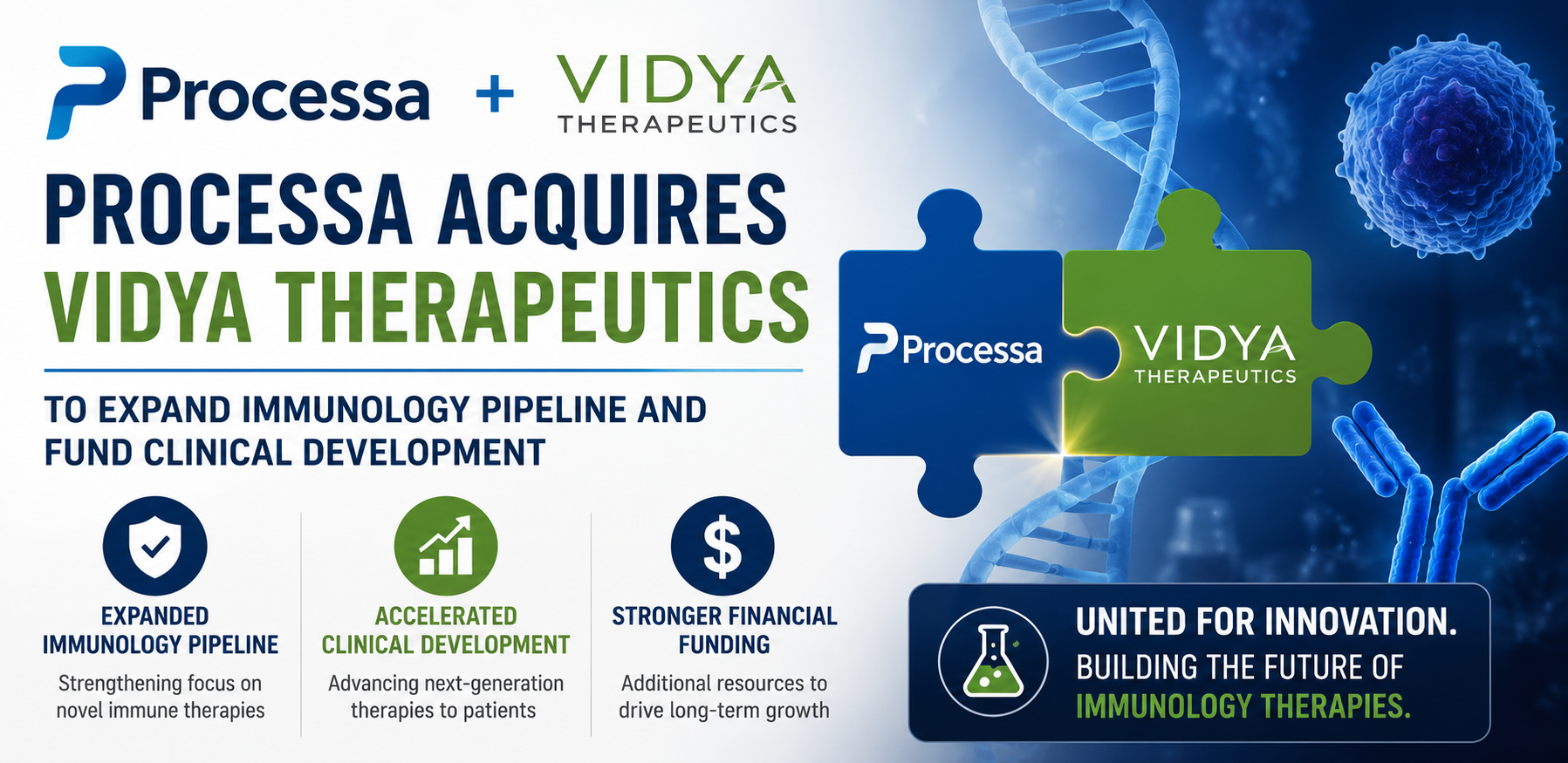
Processa Pharmaceuticals has announced the acquisition of privately held Vidya Therapeutics in an all-stock transaction, giving the company access to Vidya's lead drug candidate focused on treating immune system-related diseases. Alongside the acquisition, Processa also announced plans to raise approximately $200 million through a share offering to support future clinical trials and accelerate development of its expanded pipeline. (Reuters)
The acquisition represents a strategic shift for Processa as it broadens its focus beyond its existing oncology and rare disease programmes into immunology, one of the fastest-growing therapeutic areas in the pharmaceutical industry.
Although the announcement strengthens the company's long-term pipeline, investors reacted cautiously due to concerns about shareholder dilution from the large equity financing, resulting in a sharp decline in the company's share price following the announcement. (Reuters)
Why Pharmaceutical Companies Acquire Biotech Firms
Developing a new medicine from discovery through regulatory approval can take more than a decade and require billions of dollars in investment.
Rather than building every programme internally, many pharmaceutical and biotechnology companies acquire smaller firms that already possess promising drug candidates, specialised technologies, or scientific expertise.
These acquisitions allow companies to:
- Expand their research pipeline.
- Enter new therapeutic areas.
- Reduce early-stage discovery timelines.
- Access specialised scientific talent.
- Diversify future revenue opportunities.
- Strengthen long-term growth strategies.
For smaller biotechnology companies, acquisitions often provide the financial resources and operational support needed to advance promising therapies through expensive clinical trials.
Why Immunology Continues to Attract Investment
Immunology has become one of the pharmaceutical industry's most active areas of research.
The immune system plays a central role in hundreds of diseases, including:
- Autoimmune disorders.
- Inflammatory diseases.
- Rare immune conditions.
- Skin diseases.
- Gastrointestinal disorders.
- Neurological conditions.
- Certain cancers.
Advances in understanding immune pathways have led to the development of highly targeted therapies that can improve outcomes while reducing some of the side effects associated with older treatments.
As scientists continue identifying new immune system targets, pharmaceutical companies are actively expanding their immunology portfolios through acquisitions, licensing agreements, and research partnerships.
The Importance of Clinical Trial Funding
Bringing a drug candidate through clinical development requires substantial financial investment.
Clinical trials involve patient recruitment, investigator sites, laboratory testing, regulatory compliance, manufacturing, data analysis, and long-term safety monitoring.
As drug candidates progress into larger Phase II and Phase III studies, development costs increase significantly.
Companies frequently raise additional capital through equity offerings, partnerships, or licensing agreements to ensure that promising therapies continue moving through the regulatory process without interruption.
While raising capital may temporarily affect share prices because additional shares are issued, successful financing can provide the resources needed to support long-term development goals.
Industry Impact
- Biotechnology Companies: The acquisition highlights continued consolidation within the biotechnology sector as companies seek to strengthen their pipelines through strategic acquisitions rather than relying solely on internal research.
- Investors: Biotechnology investors often evaluate acquisitions by balancing future growth opportunities against the immediate financial impact of funding transactions and shareholder dilution.
- Drug Developers: Companies developing therapies for immune-mediated diseases continue attracting significant interest as demand grows for innovative treatments across multiple therapeutic areas.
- Patients: If development progresses successfully, patients with immune-related diseases may eventually benefit from additional treatment options that target underlying disease mechanisms more precisely.
Looking Ahead
Following the acquisition, Processa is expected to focus on integrating Vidya Therapeutics' research programmes while advancing its lead immunology candidate through clinical development.
Key areas to watch include:
- Completion of the acquisition process.
- Progress of clinical trials.
- Regulatory interactions.
- Future development milestones.
- Additional financing activities.
- Partnership opportunities.
- Expansion of the company's immunology portfolio.
The success of the acquisition will ultimately depend on clinical trial outcomes, regulatory progress, and the company's ability to execute its expanded development strategy.
Why This Matters
Strategic acquisitions remain one of the primary ways pharmaceutical and biotechnology companies build future growth.
Rather than waiting years to discover entirely new therapies internally, companies increasingly acquire promising assets that have already demonstrated scientific potential.
The Processa-Vidya transaction reflects this broader industry trend, where acquisitions are being used to accelerate innovation, diversify research portfolios, and improve the likelihood of bringing new therapies to patients.
As investment in immunology continues to increase, similar transactions are expected across the biotechnology sector.
Key Takeaways
- Processa Pharmaceuticals has acquired Vidya Therapeutics through an all-stock transaction to expand into immunology. (Reuters)
- The company also announced plans to raise approximately $200 million to support future clinical trials. (Reuters)
- The acquisition strengthens Processa's research pipeline with a lead candidate targeting immune system-related diseases.
- Pharmaceutical acquisitions continue to play an important role in accelerating drug development and expanding therapeutic portfolios.
- Clinical trial funding remains essential for advancing innovative therapies through regulatory approval.
What This Means for Healthcare Marketers
The acquisition signals continued investment in immunology, biotechnology innovation, and clinical development. Pharmaceutical companies, biotechnology firms, contract research organisations, clinical trial networks, academic medical centres, regulatory consulting firms, and specialised manufacturing partners may see increased demand as immunology programmes advance through development. For healthcare marketers, organisations expanding research pipelines, raising clinical development capital, or pursuing strategic acquisitions represent high-intent opportunities for clinical trial services, patient recruitment, regulatory support, data management, laboratory services, and commercial partnership initiatives.