Progesterone Supplies Tighten as Demand for Menopause Treatments Continues to Grow
What's Happening
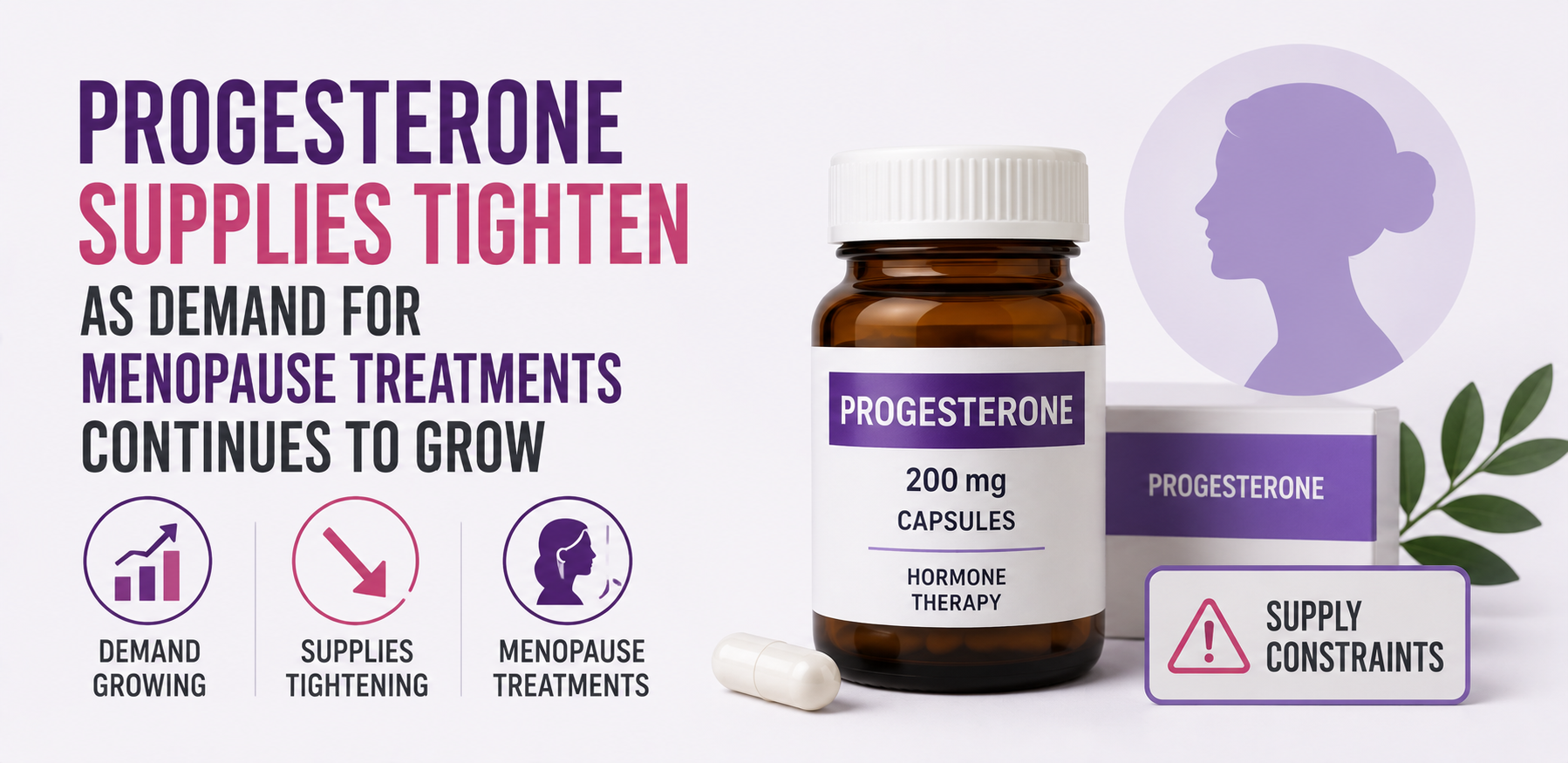
Supplies of progesterone, a hormone commonly used in menopause treatment, are becoming increasingly tight in the United States as demand for hormone therapy continues to rise.
Healthcare providers, pharmacies, and manufacturers are reporting growing pressure on supplies as more women seek treatment for menopause-related symptoms. The shortage is not necessarily the result of a sudden manufacturing failure but rather reflects a rapid increase in demand that has outpaced parts of the supply chain.
The issue highlights a broader trend occurring across women's health, where growing awareness, improved education, and changing attitudes toward menopause treatment are driving increased interest in hormone therapy.
For many years, menopause received relatively little attention compared with other healthcare topics. Today, it has become one of the fastest-growing areas of discussion among healthcare providers, pharmaceutical companies, investors, and patients.
Why Progesterone Is Important
Progesterone is a naturally occurring hormone that plays a critical role in the female reproductive system.
During menopause, hormone levels change significantly, often leading to symptoms such as:
- Hot flashes
- Night sweats
- Sleep disturbances
- Mood changes
- Vaginal dryness
- Fatigue
- Cognitive difficulties
Hormone replacement therapy (HRT) is commonly used to help manage these symptoms. For many women receiving estrogen therapy, progesterone is prescribed alongside estrogen to help protect the uterine lining and reduce certain health risks.
Because of this, progesterone serves as a key component of many menopause-treatment regimens. As more women pursue treatment options, demand for progesterone products has increased substantially.
Why Demand Is Growing
Several factors are contributing to the surge in demand.
- Greater Awareness: Over the past few years, menopause has become a far more visible healthcare topic. Public discussion has expanded through healthcare organizations, women's health advocates, physicians, social media platforms, and educational campaigns. Women are increasingly seeking medical advice and treatment rather than simply accepting symptoms as unavoidable.
- Changing Medical Perspectives: Earlier concerns regarding hormone therapy were heavily influenced by studies published more than two decades ago. Subsequent research has provided a more nuanced understanding of the risks and benefits of menopause treatment. Many healthcare providers now take a more individualized approach when evaluating hormone therapy options. This shift has encouraged more women to discuss treatment with their physicians.
- Demographic Trends: The U.S. population includes millions of women entering or experiencing menopause. As this population grows, demand for menopause-related healthcare services naturally increases. This creates sustained demand rather than a temporary surge.
How Healthcare Supply Chains Become Strained
Drug shortages are not always caused by manufacturing problems. Sometimes demand rises faster than companies expected. When that happens, manufacturers may struggle to increase production immediately.
Several factors can affect supply:
- Raw material availability
- Manufacturing capacity
- Regulatory requirements
- Distribution logistics
- Forecasting accuracy
Hormonal medications often require specialized manufacturing processes, making rapid production increases more difficult than many consumers realize. Even when manufacturers respond quickly, supply chains may require months to fully adjust.
Why Women's Health Is Receiving More Investment
The progesterone shortage reflects a much larger shift occurring across healthcare. Women's health has historically been underfunded relative to many other healthcare sectors.
Over the last several years, however, investors and healthcare companies have dramatically increased their focus on areas such as:
- Menopause care
- Fertility treatment
- Maternal health
- Gynecological conditions
- Women's preventive care
Many organizations now recognize that women's health represents a significant unmet need and a substantial market opportunity. This increased attention has led to new treatment development, expanded healthcare services, greater research investment, and increased patient education. As awareness continues growing, demand for related therapies is likely to remain strong.
What This Means for Patients
For patients currently using hormone therapy, supply constraints can create uncertainty. Healthcare providers may need to consider alternative formulations, adjust treatment plans, monitor medication availability, and work with pharmacies to identify substitute products.
Patients should not stop hormone therapy without consulting their healthcare provider. In many cases, alternative treatment options or equivalent formulations may be available. The situation does, however, highlight the importance of maintaining reliable pharmaceutical supply chains as demand for menopause care expands.
Industry Impact
Pharmaceutical Manufacturers: Drug makers may face pressure to expand production capacity and improve demand forecasting.
Healthcare Providers: Clinicians may encounter increased patient questions regarding treatment availability and alternatives.
Pharmacies: Pharmacists may need to manage inventory carefully and assist patients in locating available products.
Women's Health Companies: Growing demand reinforces the commercial importance of menopause-related healthcare products and services.
Key Takeaways
- Progesterone supplies are tightening as demand for menopause treatments increases.
- Growing awareness and changing medical perspectives are driving more women to seek treatment.
- The issue reflects broader growth in women's health services and investment.
- Drug shortages can occur when demand rises faster than manufacturers anticipate.
- Healthcare providers may need to help patients navigate treatment alternatives if shortages persist.
What This Means for Healthcare Marketers
This story highlights one of the fastest-growing areas in healthcare: women's health. For healthcare marketers, menopause is increasingly becoming a strategic market rather than a niche category.
The supply constraints also create valuable market signals. Rising demand often indicates expanding patient awareness, increased diagnosis rates, stronger provider engagement, and growing healthcare spending within a category. Organizations tracking these trends may identify opportunities before competitors recognize them.
For healthcare intelligence teams, the story reinforces the importance of monitoring demand-side signals rather than focusing solely on new product launches. Changes in prescription patterns, treatment adoption, provider behavior, and patient engagement often reveal emerging market opportunities earlier than traditional industry announcements.
More broadly, the progesterone shortage demonstrates how rapidly healthcare priorities can evolve when awareness, demographics, and patient demand begin moving in the same direction. Women's health is increasingly becoming one of the most important growth areas across the healthcare industry.