Quest Diagnostics Raises 2026 Outlook as Diagnostic Testing Demand Remains Strong
What's Happening
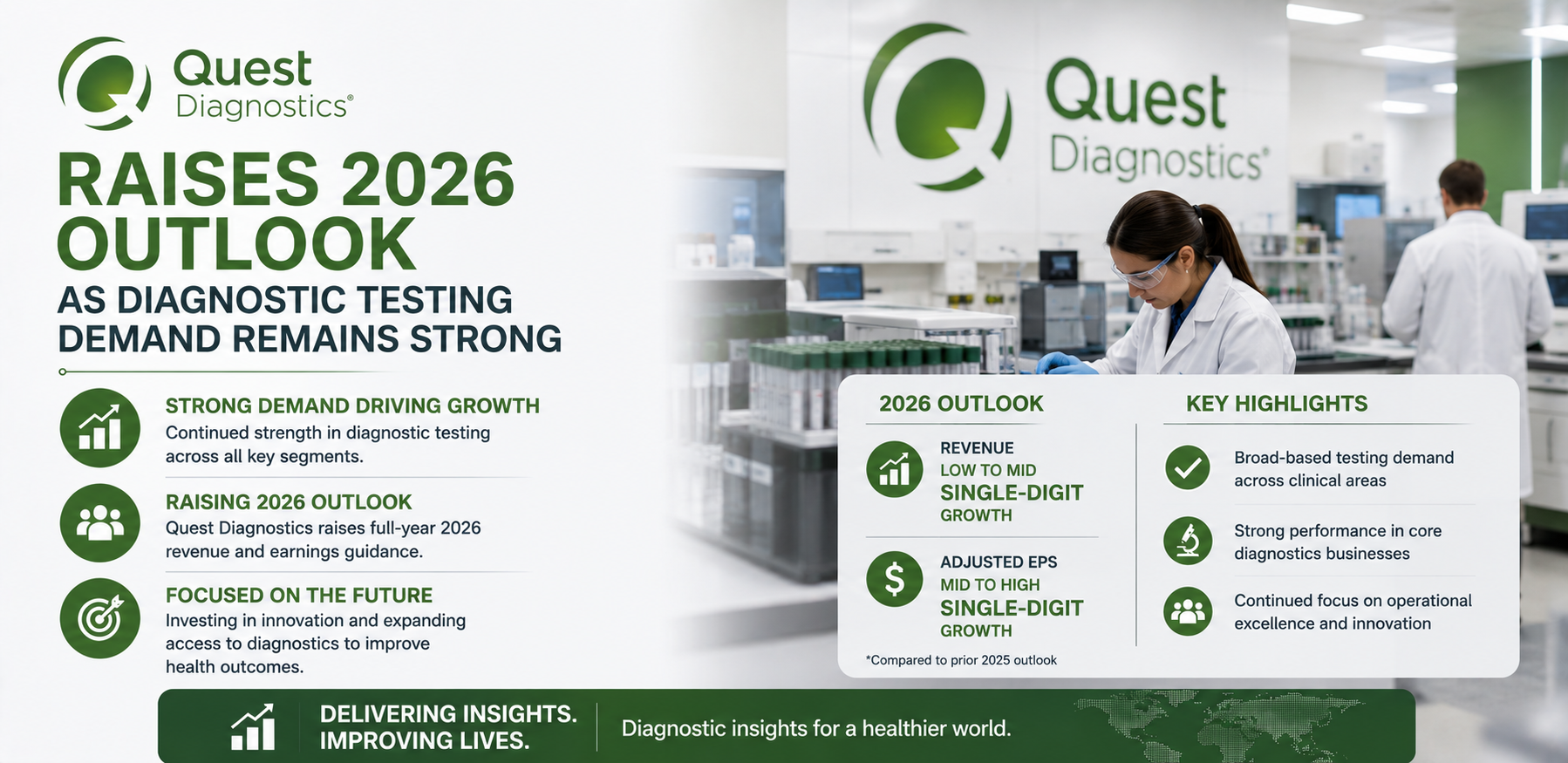
Quest Diagnostics has raised its full-year financial forecast after reporting stronger-than-expected second-quarter results, signaling that demand for diagnostic testing remains resilient despite a healthcare market that has largely moved beyond the pandemic-era testing boom.
The laboratory services provider exceeded Wall Street expectations for both revenue and earnings, driven by higher volumes of routine diagnostic tests, expanding demand for specialized laboratory services, and continued growth across its advanced diagnostics portfolio.
The updated outlook suggests that diagnostic testing is returning to a more sustainable long-term growth trajectory, supported by preventive healthcare, chronic disease management, precision medicine, and an aging population rather than temporary pandemic-related demand.
For healthcare providers, payers, and life sciences companies, Quest's results reinforce the growing role that diagnostic data plays in clinical decision-making and population health management.
A Closer Look at the Results
Quest Diagnostics delivered a solid second quarter across several key financial metrics.
The company reported revenue and adjusted earnings above analyst expectations, prompting management to increase its guidance for the remainder of 2026.
The improved outlook reflects several factors, including:
- Strong demand for routine laboratory testing.
- Continued growth in advanced and specialty diagnostics.
- Stable physician office testing volumes.
- Increased utilization from hospitals and health systems.
- Operational efficiencies that supported profitability.
By raising its annual forecast, Quest signaled confidence that testing demand will remain healthy throughout the second half of the year rather than slowing after seasonal fluctuations.
Why Diagnostic Testing Continues to Grow
Although COVID-19 testing volumes have declined dramatically from their peak, the broader diagnostics industry continues to benefit from long-term healthcare trends.
- Aging Population: The United States continues to experience steady growth in its older adult population, leading to increased demand for routine laboratory monitoring of conditions such as diabetes, kidney disease, cardiovascular disease, and cancer. As patients require more frequent testing over time, diagnostic providers benefit from recurring demand rather than one-time procedures.
- Growth in Chronic Disease: Chronic illnesses account for a significant share of healthcare utilization in the United States. Managing these conditions depends heavily on laboratory testing to monitor treatment effectiveness, detect complications early, guide medication adjustments, and support preventive care. As chronic disease prevalence rises, laboratory testing becomes an increasingly essential component of care delivery.
- Expansion of Precision Medicine: Healthcare is becoming more personalized, with physicians relying on increasingly sophisticated diagnostic tests to guide treatment decisions. Genetic testing, molecular diagnostics, companion diagnostics, and biomarker testing are expanding rapidly across oncology, infectious disease, cardiology, and rare diseases. These higher-value tests generate stronger growth than traditional routine laboratory services and represent an important strategic focus for companies like Quest.
Diagnostics Are Becoming a Strategic Healthcare Asset
Laboratory testing is no longer viewed simply as a clinical service performed after a physician visit.
Today, diagnostic information influences nearly every stage of the patient journey, including:
- Disease screening.
- Risk prediction.
- Early diagnosis.
- Treatment selection.
- Medication monitoring.
- Population health management.
- Value-based care initiatives.
Healthcare organizations increasingly rely on laboratory data to improve clinical outcomes while reducing unnecessary costs.
As healthcare becomes more data-driven, diagnostic companies are evolving into strategic partners for providers, health systems, pharmaceutical companies, and health insurers.
Industry Impact
- Hospitals and Health Systems: Strong testing demand reflects continued patient engagement with preventive care and chronic disease management. Hospitals may continue expanding partnerships with national laboratory providers to improve efficiency and reduce operational costs.
- Physicians: Reliable access to advanced diagnostic testing allows clinicians to make earlier and more informed treatment decisions, particularly in oncology, cardiovascular medicine, infectious disease, and primary care.
- Pharmaceutical Companies: Drug developers increasingly depend on diagnostic testing throughout clinical trials and commercialization. Companion diagnostics and biomarker testing continue to play a growing role in identifying appropriate patients for targeted therapies.
- Health Insurers: Earlier diagnosis and proactive disease monitoring have the potential to reduce downstream healthcare costs by preventing complications and unnecessary hospitalizations.
- Diagnostic Industry: Quest's results indicate that the diagnostics sector remains fundamentally healthy even after the normalization of COVID-related testing. Companies focused on specialty diagnostics and precision medicine are expected to remain well positioned for long-term growth.
Why This Matters
The diagnostics industry has undergone a significant transformation over the past several years.
While the pandemic temporarily increased demand for laboratory services, long-term growth is now being driven by structural healthcare trends rather than public health emergencies.
An aging population, rising chronic disease prevalence, advances in precision medicine, and increasing emphasis on preventive care are creating sustained demand for diagnostic testing across nearly every area of medicine.
Quest Diagnostics' improved outlook suggests these trends are continuing to strengthen, reinforcing the central role diagnostics play in modern healthcare.
For healthcare organizations, laboratory data is becoming more valuable not only for individual patient care but also for improving population health, supporting value-based care, and informing strategic decision-making.
Key Takeaways
- Quest Diagnostics exceeded quarterly revenue and earnings expectations and raised its full-year financial outlook.
- Growth was driven by strong demand for routine laboratory services and expanding utilization of specialty diagnostics.
- Long-term industry growth is increasingly supported by preventive care, chronic disease management, precision medicine, and an aging population.
- Diagnostic testing continues to evolve from a transactional service into a strategic component of modern healthcare delivery.
- The company's results highlight the resilience of the diagnostics market even as pandemic-related testing has normalized.
What This Means for Healthcare Marketers
Quest Diagnostics' performance demonstrates that diagnostic testing continues to be one of the foundational drivers of healthcare decision-making. Organizations involved in laboratory services, precision medicine, population health, pharmaceuticals, and digital health should expect continued investment in diagnostic capabilities as providers seek earlier, more accurate clinical insights. For healthcare marketers, identifying organizations expanding diagnostic programs, emphasizing the clinical value of testing, and engaging decision-makers responsible for laboratory strategy will become increasingly important as diagnostics play a larger role across the healthcare ecosystem.