Repligen to Acquire BioLife Solutions in $1.5 Billion Deal to Expand Cell Therapy Business
What's Happening
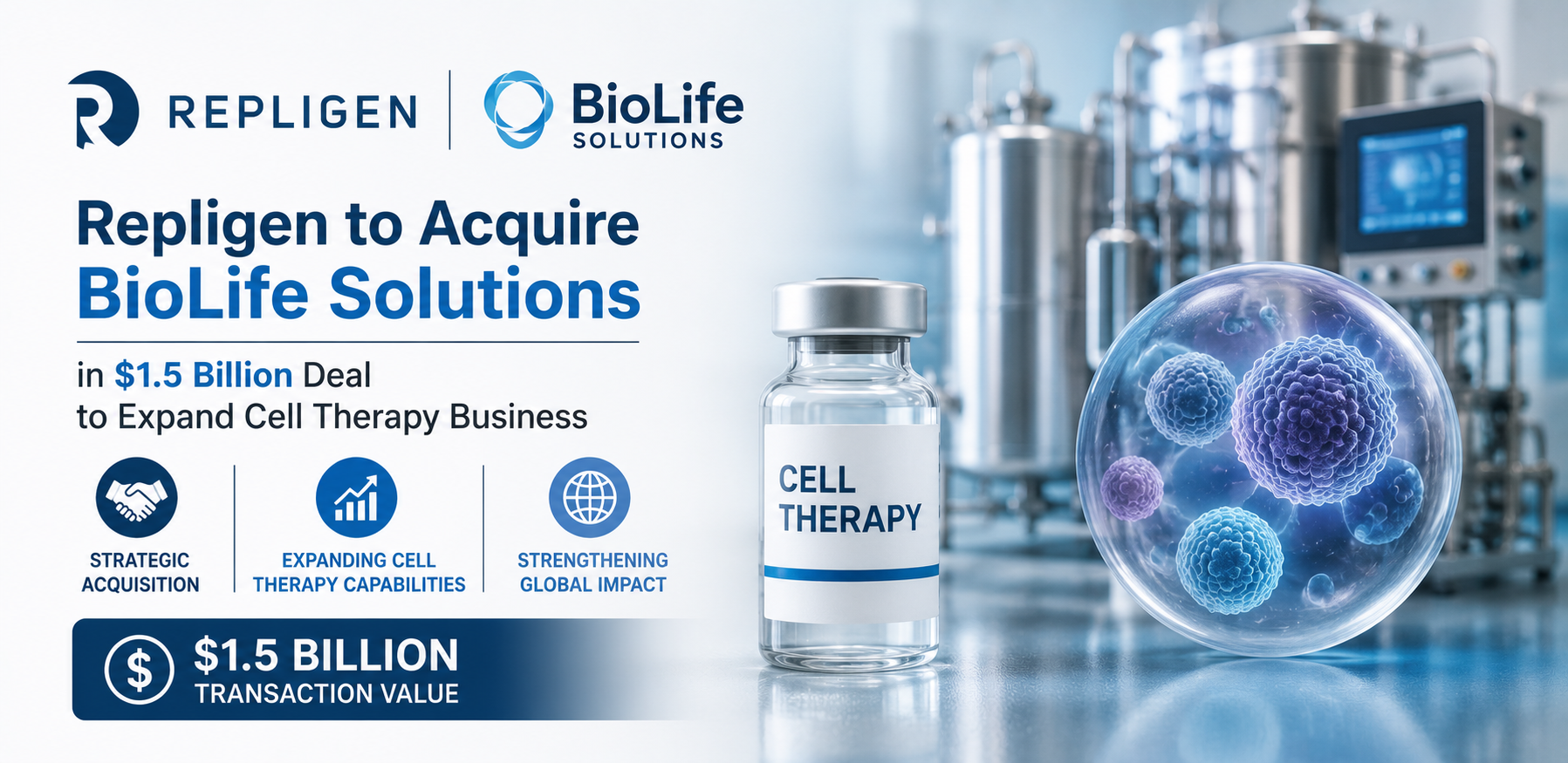
Life sciences company Repligen has announced plans to acquire BioLife Solutions in a cash-and-stock transaction valued at approximately $1.5 billion. The acquisition is designed to strengthen Repligen's position in the rapidly growing cell therapy market by expanding its portfolio of technologies used in manufacturing advanced therapies.
The transaction will give Repligen access to BioLife's cell preservation technologies, cell processing tools, and high-margin consumables business, all of which play a critical role in the manufacturing and transportation of cell therapies. BioLife's products are currently used in approximately 90% of commercially approved cell therapies, making the company a key supplier within the industry.
The boards of both companies have unanimously approved the deal, which is expected to close during the fourth quarter of 2026, subject to shareholder and regulatory approvals.
Who Are Repligen and BioLife Solutions?
Repligen develops technologies used to manufacture biologic medicines, including filtration systems, chromatography products, and other equipment that helps pharmaceutical companies produce complex therapies safely and efficiently.
BioLife Solutions specializes in products that protect living cells during manufacturing, storage, and transportation. Its portfolio includes:
- Cell preservation media.
- Cell processing tools.
- Cryopreservation technologies.
- High-margin consumable products used repeatedly during manufacturing.
These products help ensure that sensitive cell therapies remain viable from production through patient treatment.
Why This Acquisition Matters
Cell therapies are among the fastest-growing areas of modern medicine.
Unlike traditional drugs, cell therapies use living cells to treat diseases such as:
- Blood cancers.
- Genetic disorders.
- Autoimmune diseases.
- Certain rare conditions.
Because living cells are extremely sensitive to temperature changes and handling conditions, manufacturers require specialized equipment throughout production, storage, and transportation.
By acquiring BioLife, Repligen significantly expands its ability to serve companies developing these advanced therapies with a broader range of manufacturing solutions.
A Growing Market for Cell Therapy
The acquisition reflects increasing investment across the biotechnology industry in companies that supply the tools needed to manufacture advanced medicines.
Demand for bioprocessing equipment has begun recovering after a slowdown in research spending and inventory reductions across the pharmaceutical industry. As biotechnology companies restart investments in manufacturing capacity, suppliers of specialized equipment are seeing renewed growth.
Industry consolidation has also accelerated in recent months as larger life sciences companies seek to strengthen their positions in high-growth markets such as cell and gene therapy.
Financial Details of the Deal
Under the agreement:
- BioLife shareholders will receive $11.25 in cash plus 0.1442 shares of Repligen stock for each BioLife share.
- The transaction values BioLife at approximately $31 per share, representing a premium over its previous closing price.
- Repligen expects the acquisition to improve earnings and generate at least $20 million in annual cost savings during the first year after closing through operational efficiencies.
- The company also expects the combined business to benefit from cross-selling opportunities and an expanded global customer base.
Industry Impact
- Cell and Gene Therapy Companies: Drug developers may benefit from a broader portfolio of manufacturing technologies from a single supplier, potentially simplifying production workflows.
- Biopharmaceutical Manufacturers: As manufacturing becomes increasingly complex, demand for integrated solutions covering cell preservation, processing, filtration, and quality control is expected to continue growing.
- Investors: The acquisition reflects continued confidence in the long-term growth of advanced therapies despite recent market volatility across the biotechnology sector.
- Healthcare Innovation: The deal highlights the increasing importance of companies that support drug manufacturing rather than developing medicines themselves. These suppliers play a critical role in bringing new therapies to patients.
Why This Matters
While much attention in biotechnology focuses on companies developing new medicines, the infrastructure supporting drug manufacturing has become equally important.
Cell and gene therapies require sophisticated manufacturing processes that differ significantly from traditional pharmaceutical production. Every stage, from preserving living cells to transporting finished products, depends on specialized technologies that maintain product quality and patient safety.
The acquisition positions Repligen to become a more comprehensive supplier within this ecosystem. It also reflects broader industry confidence that demand for advanced therapies will continue growing as more cell and gene therapies receive regulatory approval and enter commercial production.
Key Takeaways
- Repligen will acquire BioLife Solutions in a $1.5 billion cash-and-stock transaction.
- BioLife's products are used in approximately 90% of commercially approved cell therapies.
- The acquisition expands Repligen's presence in the rapidly growing cell therapy manufacturing market.
- The transaction is expected to close in the fourth quarter of 2026, pending regulatory and shareholder approvals.
- Repligen expects the acquisition to strengthen earnings while generating at least $20 million in first-year cost savings.
What This Means for Healthcare Marketers
The acquisition reflects continued investment in the infrastructure supporting advanced therapies. While pharmaceutical innovation often receives the spotlight, companies providing manufacturing technologies, preservation systems, and bioprocessing equipment are becoming increasingly essential to the commercialization of cell and gene therapies.
For healthcare marketers, the deal highlights growing demand for solutions that improve manufacturing efficiency, product quality, and supply chain reliability. Messaging that demonstrates measurable operational value, scalability, and support for complex biologics manufacturing is likely to resonate with biotechnology companies expanding their advanced therapy pipelines.
For healthcare intelligence teams, this acquisition signals continued consolidation within the life sciences tools market. Monitoring mergers, manufacturing investments, and supplier capabilities can provide valuable insight into where pharmaceutical companies are directing capital and how the advanced therapy ecosystem is evolving.