Replimune Shares Rise After FDA Advisory Panel Supports Experimental Skin Cancer Therapy
What's Happening
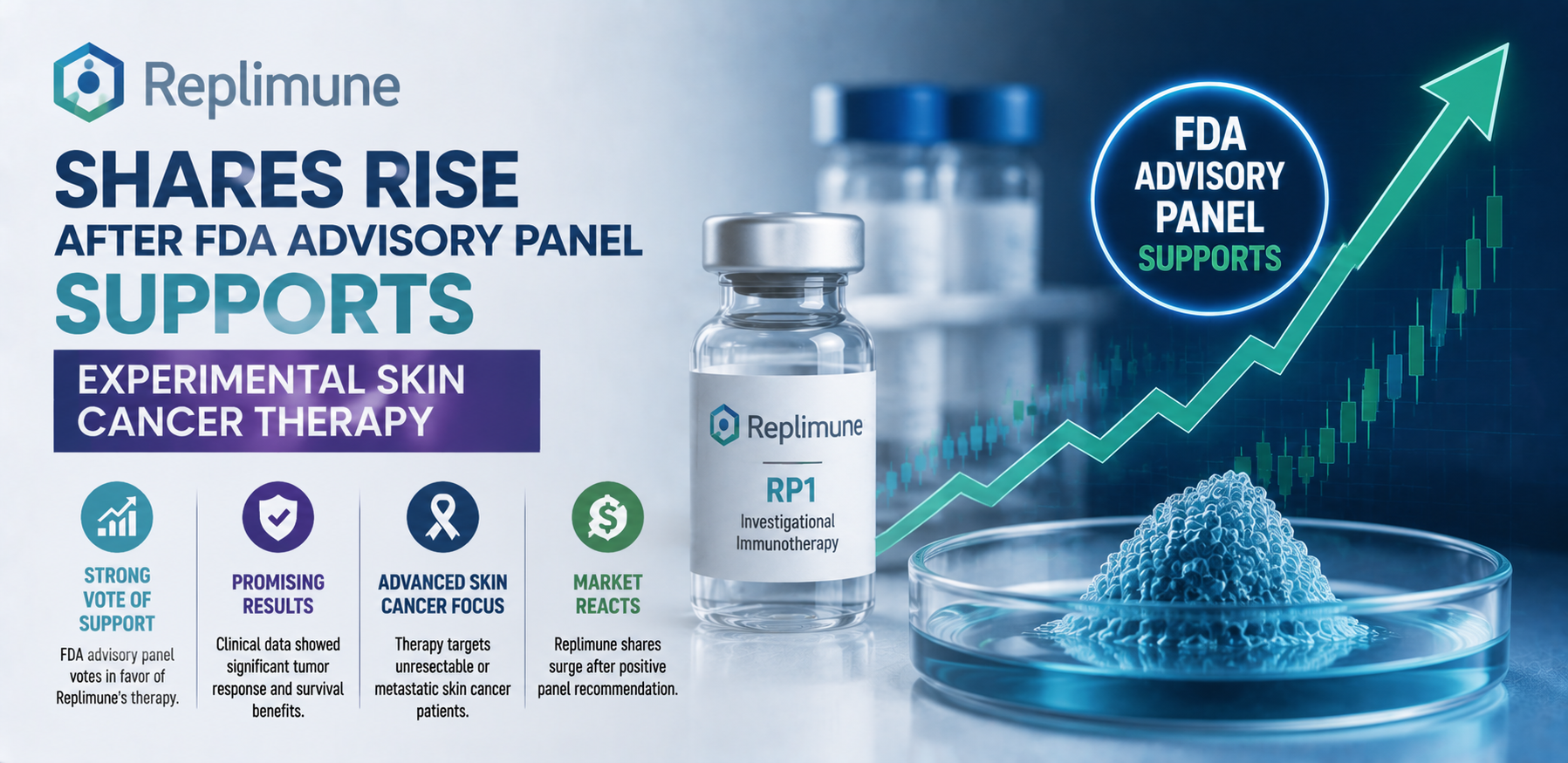
Replimune's shares surged after an advisory committee to the U.S. Food and Drug Administration (FDA) voted in favor of the clinical data supporting the company's experimental treatment for advanced melanoma.
The positive recommendation increased investor confidence that the therapy could receive FDA approval, despite earlier concerns raised by agency reviewers about certain aspects of the clinical trial. Although advisory committee recommendations are not binding, they often carry significant weight during the FDA's final review process.
The market reacted positively to the decision, reflecting optimism about the therapy's commercial potential and Replimune's future growth prospects.
Understanding the Therapy
Replimune's experimental treatment is an oncolytic immunotherapy that uses a genetically modified virus to attack cancer cells while stimulating the body's immune system.
The therapy is injected directly into tumors, where it destroys cancer cells and releases tumor proteins that help activate the immune system to recognize and fight cancer throughout the body.
This dual approach combines direct tumor destruction with immune activation, offering a different treatment strategy than conventional chemotherapy or radiation.
Why the Advisory Panel Decision Matters
The FDA frequently consults independent advisory committees when reviewing new medicines, particularly those involving complex scientific or clinical evidence.
The committee evaluates whether the available data demonstrate that a therapy is safe and effective for its intended use.
Although the FDA makes the final regulatory decision, a favorable advisory committee vote often improves the likelihood of approval and increases confidence among healthcare providers, patients, and investors.
Industry Impact
- Biotechnology Companies: The positive panel recommendation highlights continued innovation in cancer immunotherapy and reinforces industry interest in developing oncolytic virus therapies for difficult-to-treat cancers.
- Healthcare Providers: If approved, oncologists may gain access to another treatment option for patients with advanced melanoma, allowing more personalized treatment strategies.
- Investors: The strong market response demonstrates continued investor interest in biotechnology companies developing innovative oncology therapies with significant commercial potential.
- Patients: Patients with advanced melanoma may benefit from additional treatment options designed to harness the body's immune system to fight cancer.
Looking Ahead
The FDA will review the advisory committee's recommendation before making its final approval decision.
If approved, Replimune will begin commercializing the therapy while continuing to collect long-term safety and effectiveness data.
The decision may also encourage further investment in oncolytic immunotherapies for melanoma and other cancers.
Why This Matters
Cancer immunotherapy continues to transform oncology by developing treatments that activate the immune system to target cancer more effectively.
The advisory committee's support not only strengthens Replimune's regulatory outlook but also reinforces growing confidence in innovative immunotherapy platforms that could expand treatment options for patients with advanced cancers.
The strong investor response reflects broader optimism surrounding next-generation cancer therapies.
Key Takeaways
- Replimune's shares rose sharply after an FDA advisory committee supported the clinical data for its experimental melanoma therapy.
- The treatment is an oncolytic immunotherapy designed to destroy tumors while activating the immune system.
- The favorable recommendation improves the therapy's prospects for FDA approval.
- Investors responded positively as confidence in the company's regulatory outlook increased.
- The decision highlights continued momentum in cancer immunotherapy innovation.
What This Means for Healthcare Marketers
The positive advisory committee outcome reinforces growing investment in oncology, immunotherapy, and precision cancer care. Biotechnology companies, cancer centers, specialty pharmacies, healthcare providers, and life sciences organizations continue expanding innovative treatment portfolios to address unmet clinical needs. For healthcare marketers, organizations involved in cancer therapeutics represent high-intent opportunities for physician education, medical affairs initiatives, patient awareness campaigns, clinical partnerships, investor engagement, and commercial launch strategies.