What's Happening
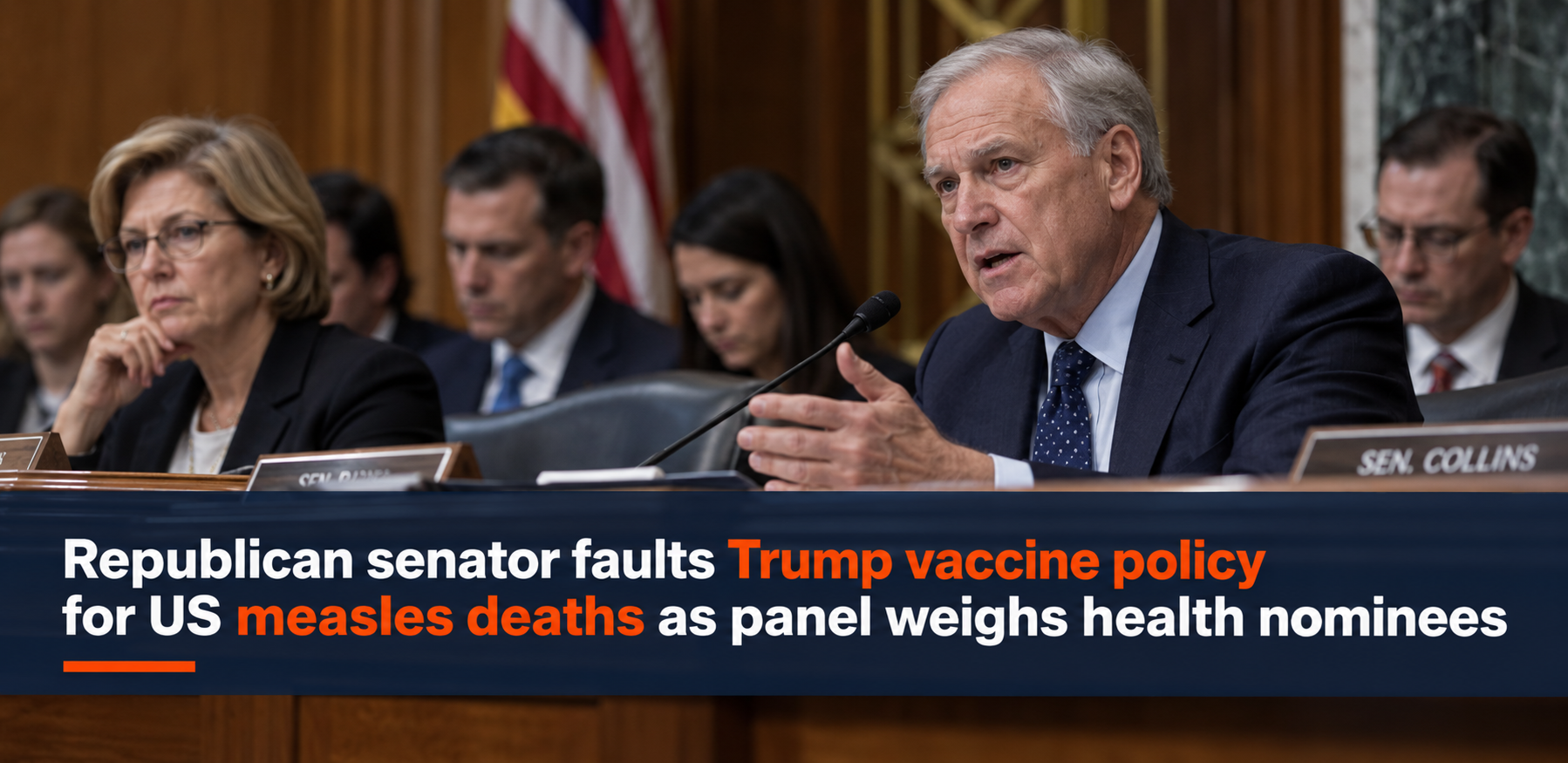
Senator Bill Cassidy of Louisiana, the Republican chairman of the Senate Health, Education, Labor and Pensions Committee, criticized the Trump administration's approach to vaccines during a Senate hearing on September 16, saying that misinformation and recent changes to federal vaccine policy had contributed to measles deaths in Pennsylvania.
Cassidy made the comments while the committee considered three of President Donald Trump's nominees for senior health positions: Chris Klomp for deputy secretary of Health and Human Services, Dr. Nicole Saphier for surgeon general, and Dr. Timothy Westlake to lead the Substance Abuse and Mental Health Services Administration. (Reuters)
Cassidy specifically pressed Saphier on the safety of childhood vaccines and whether she believed vaccines cause autism. Saphier ultimately said, "I do not believe childhood vaccines cause autism." (Reuters)
The hearing came as Pennsylvania reported four measles-associated deaths and more than 700 confirmed cases, while the United States was experiencing its largest measles outbreak in more than 35 years. (Reuters)
Cassidy's Criticism of Federal Vaccine Policy
Cassidy said the recent measles deaths represented the consequences of what he described as misinformation and misguided vaccine policies.
He specifically criticized an executive order from the Trump administration that changed the childhood vaccination schedule, arguing that requiring more vaccines at different points in childhood could make children less protected rather than safer.
Cassidy also criticized the administration's handling of measles deaths, saying that the CDC was now working on how to define measles-associated deaths after decades in which such deaths had been uncommon in the United States. (Reuters)
These are Cassidy's assessments of the administration's policies. The hearing did not establish a direct causal relationship between specific federal policy changes and any individual Pennsylvania death.
The Hearing Focused on Three Health Nominees
The Senate committee's hearing covered three senior positions within the federal health system.
Chris Klomp
Klomp, a former health technology executive, has been running much of the day-to-day work at HHS. He previously served as Medicare director and then became chief counselor to Health Secretary Robert F. Kennedy Jr. (Reuters)
His nomination hearing before the Senate Finance Committee had taken place the previous day. The Health Committee hearing was described as a courtesy hearing.
Klomp received relatively limited opposition from senators during the session.
Dr. Nicole Saphier
Saphier, a radiologist and former Fox News contributor, is Trump's third nominee for surgeon general.
The United States had been without a permanent surgeon general since January 2025, following the departure of the previous officeholder. (Reuters)
She faced the most pointed questioning at the hearing, particularly around vaccines and abortion.
Dr. Timothy Westlake
Westlake was nominated to lead the Substance Abuse and Mental Health Services Administration.
His hearing included discussion of policies surrounding fentanyl test strips, with Democratic Senator Maggie Hassan challenging him on that issue. (Reuters)
No Republican senator indicated opposition to any of the three nominees during the hearing, leaving all three on track to advance. (Reuters)
Saphier Pressed on Vaccines and Autism
Cassidy repeatedly asked Saphier whether she believed the MMR vaccine causes autism.
Initially, Saphier said she had not seen reputable evidence establishing that vaccines cause autism.
Cassidy objected to that wording, saying it left room for ambiguity.
Saphier later stated directly that she did not believe childhood vaccines cause autism and described the MMR vaccine as "our greatest tool for combating measles." (Reuters)
The exchange reflected a broader disagreement over how federal health officials should communicate about vaccine safety.
Hepatitis B Vaccine Also Came Under Discussion
Cassidy also questioned Saphier about the long-standing recommendation to vaccinate newborns against hepatitis B.
Health Secretary Robert F. Kennedy Jr. has sought to change the federal approach to hepatitis B vaccination at birth.
Saphier described universal birth-dose vaccination as "tried and true", but stopped short of saying that it should remain universally recommended. (Reuters)
That exchange demonstrated the broader policy questions surrounding changes to the U.S. childhood immunization schedule.
Cassidy Has Become More Critical of Kennedy
Cassidy's criticism is notable because he previously voted to confirm Robert F. Kennedy Jr. as health secretary.
Since then, Cassidy has become increasingly outspoken about Kennedy's approach to vaccines.
During Wednesday's hearing, Cassidy said the measles deaths could become a damaging legacy for the administration if federal vaccine policy changes contributed to lower protection against measles. (Reuters)
Cassidy is not seeking reelection after losing his Republican primary in May. Reuters noted that this has reduced one potential political constraint on his criticism of the administration. (Reuters)
The Pennsylvania Measles Outbreak
The hearing took place against the backdrop of a significant measles outbreak in Pennsylvania.
Cassidy said three people had died from measles and that a fourth death was under review at the time of the hearing. Pennsylvania subsequently reported four measles-associated deaths, according to the state's health authorities.
The outbreak was described at the hearing as the worst U.S. measles outbreak in more than 35 years. (Reuters)
The resurgence has renewed attention to vaccination coverage, public-health communication and the ability of government agencies to respond to outbreaks.
CDC and Pennsylvania Use Different Approaches to Measles Deaths
The hearing also highlighted a disagreement over how measles deaths should be counted.
Pennsylvania health authorities have classified several deaths as measles-associated based on state epidemiological criteria.
The CDC, however, has not included those deaths in its national count while reconsidering its approach to classifying measles fatalities.
Cassidy referred to that situation during the hearing, saying the CDC was now having to develop a definition for measles-associated deaths after the disease had caused so few deaths in the United States for decades. (Reuters)
The difference between the state and federal reporting systems means national statistics need to be interpreted carefully.
The Broader Vaccine Policy Shift
The administration has been pursuing changes to how vaccines are recommended and scheduled in the United States.
One of the changes criticized by Cassidy involves the childhood vaccination schedule.
The administration's approach has also included questioning long-established vaccine recommendations and reconsidering which vaccines should be routinely recommended for children.
Cassidy argued that changes to the schedule could affect children's protection from vaccine-preventable diseases. (Reuters)
The administration has presented its vaccine-policy changes as an effort to reassess federal recommendations and ensure that government health policy is guided by what officials consider appropriate scientific and medical evidence.
Leadership Vacancies Across Health Agencies
The hearing also highlighted how the federal health system is navigating a significant leadership transition.
The Senate confirmed Dr. Erica Schwartz to lead the CDC on August 5, but the FDA still lacked a permanent commissioner as of the hearing. (Reuters)
The surgeon general position had been vacant since January 2025.
That makes the confirmation process for senior health officials particularly important because those officials help shape federal policy on vaccines, infectious diseases, mental health, drug regulation and public health.
Why Leadership Matters During an Outbreak
Leadership changes can affect how federal health agencies communicate and respond during an outbreak.
The CDC is responsible for national infectious-disease surveillance and guidance.
The FDA regulates vaccines and medicines.
HHS oversees a much broader health-policy system, while the surgeon general's office plays a major role in public-health communication.
When senior positions are vacant or new leaders are being confirmed, agency priorities and communication strategies can change.
The Scientific Debate Over Vaccines
Vaccination was the central scientific issue at the hearing.
The American scientific and medical consensus is that the MMR vaccine does not cause autism. Saphier ultimately stated that she does not believe childhood vaccines cause autism during the hearing. (Reuters)
At the same time, the hearing demonstrated that public officials are still debating how strongly federal health agencies should communicate that conclusion and how vaccine recommendations should be structured.
That distinction matters because public confidence in vaccines can influence vaccination uptake and, consequently, susceptibility to outbreaks.
Public Health Communication Is Becoming More Important
Cassidy's questioning also reflects a broader issue for public-health agencies: how to communicate clearly when political debate surrounds established medical guidance.
During an infectious-disease outbreak, public-health communication needs to address:
- Risk: How serious is the disease and who is most vulnerable?
- Prevention: Which preventive measures have evidence supporting their effectiveness?
- Timing: When should people seek vaccination, testing or medical care?
- Uncertainty: Which parts of the scientific evidence remain uncertain or under investigation?
The answers to those questions can influence whether people act on public-health recommendations.
The Measles Outbreak Adds Pressure
The renewed measles activity makes those communication challenges more immediate.
Measles is highly contagious, and outbreaks can expand rapidly when vaccination coverage falls below the level needed to maintain strong community protection.
The Pennsylvania outbreak, with hundreds of cases and multiple reported deaths, has therefore become a visible test of how federal and state authorities communicate about vaccination and infectious-disease risk.
The Nomination Process Is Part of the Story
Although the hearing was prompted by the nominations, the discussion extended into broader questions about federal healthcare policy.
The committee is responsible for considering nominees who could play major roles in:
- Public-health communication
- Vaccination policy
- Mental-health programs
- Substance-use policy
- Federal healthcare administration
The exchange between Cassidy and Saphier therefore provided an indication of how vaccine policy may continue to be debated as these nominees move through the confirmation process.
Why This Matters
The hearing brings together three issues that are now closely connected in U.S. public health: measles outbreaks, vaccine policy and federal health-agency leadership.
Pennsylvania is reporting hundreds of measles cases and four measles-associated deaths, while federal agencies are simultaneously revisiting aspects of vaccination policy.
The hearing also shows that disagreements over vaccine recommendations are not confined to public-health agencies or researchers. They are now affecting Senate confirmation proceedings for senior federal health officials. (Reuters)
For healthcare organizations, the practical consequence is that changes in federal policy can affect vaccination guidance, public-health messaging, patient communication and outbreak-response planning.
Looking Ahead
The three nominees considered during the hearing were still on track to advance because no Republican senator indicated opposition. (Reuters)
The broader vaccine-policy debate, however, is likely to continue.
The CDC will continue monitoring the measles outbreak and reviewing how measles-associated deaths are classified.
At the same time, Senate scrutiny of federal health nominees may continue to focus heavily on vaccines, infectious diseases and the scientific basis for public-health recommendations.
Pennsylvania's outbreak will also remain an important indicator of how vaccination coverage and public-health response affect measles transmission.
Key Takeaways
- Senate HELP Committee Chairman Bill Cassidy criticized the Trump administration's vaccine approach during a September 16 hearing and linked what he described as misguided policies and misinformation to recent measles deaths in Pennsylvania. (Reuters)
- The hearing considered nominations for Chris Klomp, Dr. Nicole Saphier, and Dr. Timothy Westlake to senior federal health positions. (Reuters)
- Saphier ultimately said, "I do not believe childhood vaccines cause autism." (Reuters)
- Cassidy also questioned Saphier about the hepatitis B vaccine at birth and the administration's efforts to change that recommendation. (Reuters)
- Cassidy criticized changes to the childhood vaccine schedule and said vaccines are overwhelmingly safe and effective.
- Pennsylvania has reported four measles-associated deaths, while the CDC has not incorporated those deaths into its national tally while reviewing its classification approach.
- The U.S. is experiencing its largest measles outbreak in more than 35 years, according to the hearing discussion. (Reuters)
- The CDC confirmed Dr. Erica Schwartz as its leader on August 5, while the FDA still lacked a permanent commissioner at the time of the hearing. (Reuters)
- The United States had been without a permanent surgeon general since January 2025. (Reuters)
- No Republican senator indicated opposition to the three nominees during the hearing, leaving them on track to advance. (Reuters)
What This Means for Healthcare Marketers
For healthcare marketers, the story highlights the importance of tracking policy signals and public-health behavior together.
Changes in federal vaccine recommendations can affect patient communication, provider guidance, vaccination campaigns and demand for preventive services.
For vaccine manufacturers, health systems, pharmacies and public-health organizations, useful signals include vaccination rates, outbreak growth, public confidence, federal guidance and state-level policy changes.
For healthcare intelligence teams, the Senate hearing is also a reminder that leadership changes at agencies such as the CDC, FDA and HHS can influence the regulatory and communications environment in which healthcare organizations operate.