ResMed Sells MatrixCare Software Business for $490 Million to Focus on Core Digital Health Strategy
What's Happening
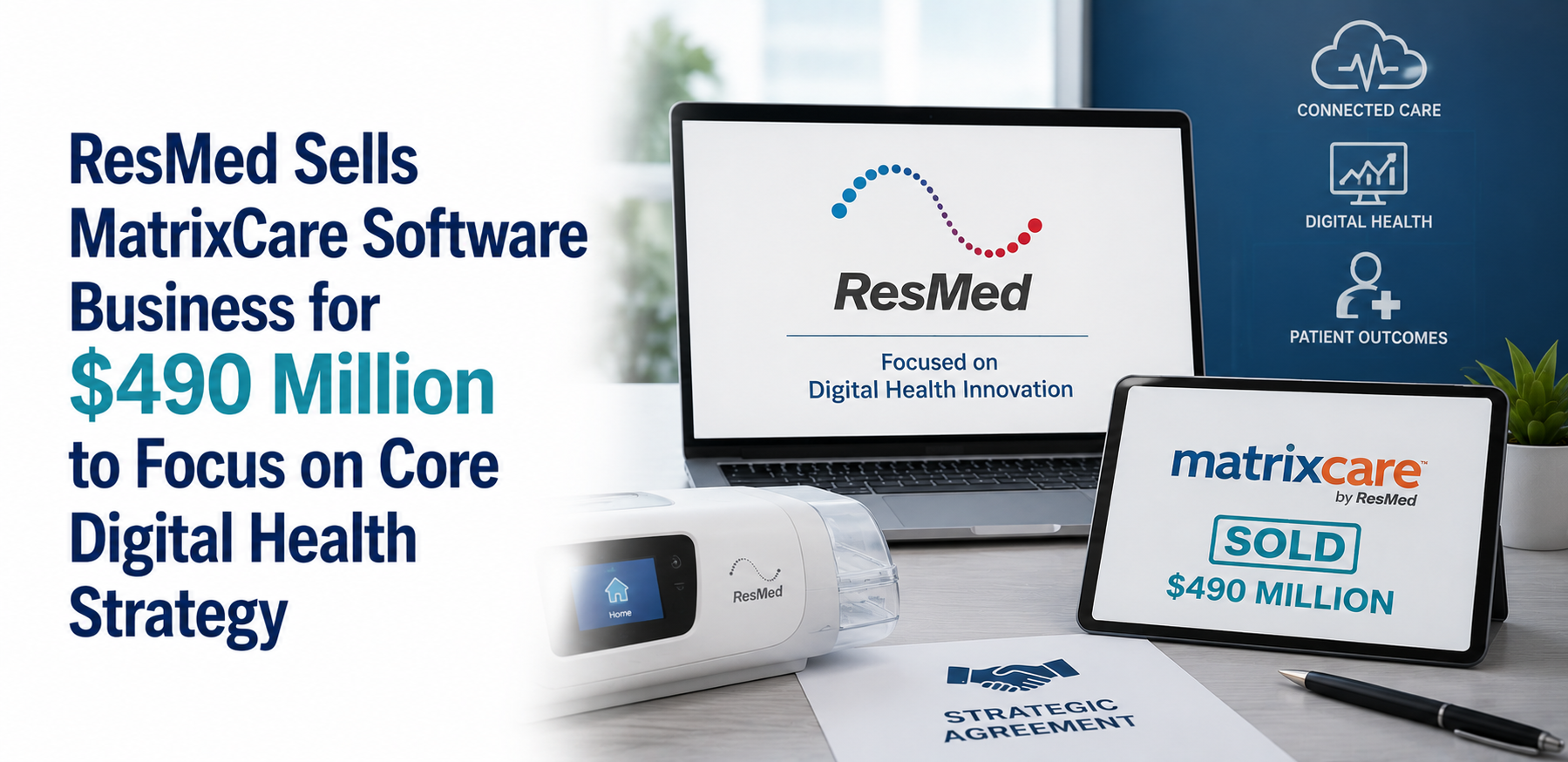
Medical device company ResMed has agreed to sell MatrixCare, its post-acute care software business, to private equity firm Accel-KKR for $490 million. The transaction allows ResMed to sharpen its focus on its core businesses in sleep health, respiratory care, and connected digital health technologies while giving MatrixCare an opportunity to continue growing as an independent healthcare software company. (reuters.com)
MatrixCare develops electronic health record (EHR) and care management software used by organizations across the post-acute care industry, including skilled nursing facilities, home health agencies, hospice providers, senior living communities, and long-term care organizations.
Although MatrixCare has been part of ResMed since its acquisition in 2018, the company determined that the software business no longer aligned closely with its long-term strategic priorities. The sale is expected to close later this year, subject to customary regulatory approvals. (reuters.com)
What Is MatrixCare?
MatrixCare is one of the leading healthcare software platforms serving post-acute care providers. Its cloud-based software helps organizations manage both clinical and administrative operations. The platform supports:
- Electronic health records (EHRs)
- Care planning
- Medication management
- Clinical documentation
- Billing and reimbursement
- Scheduling
- Regulatory reporting
- Care coordination
Thousands of healthcare organizations use MatrixCare to manage patients after they leave hospitals, particularly older adults and individuals requiring ongoing medical support.
What Is Post-Acute Care?
Post-acute care refers to healthcare services patients receive after hospitalization. Many patients are not ready to return directly home after major surgery, illness, or injury. Instead, they may receive care through:
- Skilled nursing facilities
- Rehabilitation centers
- Home health agencies
- Hospice organizations
- Long-term acute care hospitals
- Senior living communities
The primary goals of post-acute care include supporting recovery, preventing hospital readmissions, managing chronic conditions, improving patient independence, and coordinating ongoing treatment. As populations age and chronic diseases become more common, post-acute care has become an increasingly important part of the healthcare system.
Why Healthcare Software Matters
Modern healthcare organizations rely heavily on digital platforms to coordinate patient care. Healthcare software helps providers store medical records, track medications, coordinate multidisciplinary care teams, monitor patient progress, submit insurance claims, meet regulatory requirements, and improve communication across care settings.
Without integrated digital systems, coordinating care across multiple providers becomes significantly more difficult. Healthcare software also helps reduce administrative burden while improving patient safety and operational efficiency.
Why ResMed Is Selling MatrixCare
Although MatrixCare is a successful healthcare software company, ResMed's primary business focuses on sleep apnea treatment, respiratory disease management, connected medical devices, and digital patient monitoring. In recent years, ResMed has invested heavily in technologies that combine medical devices with cloud-based data platforms to monitor patients remotely.
Selling MatrixCare allows the company to focus resources on its core business, simplify operations, strengthen investment in connected healthcare technologies, and improve long-term strategic alignment. Rather than operating multiple healthcare software businesses, ResMed is concentrating on technologies directly connected to respiratory care and sleep medicine.
Why Accel-KKR Wants MatrixCare
Accel-KKR specializes in investing in enterprise software companies. Healthcare software remains an attractive investment because providers continue increasing their use of digital technologies. Demand continues growing for platforms that improve clinical documentation, care coordination, revenue cycle management, regulatory compliance, workforce management, and patient engagement.
As an independent company under Accel-KKR, MatrixCare may have greater flexibility to invest in product development and expand its presence across the post-acute care market.
The Growing Importance of Healthcare IT
Healthcare software has become one of the fastest-growing areas of healthcare investment. Organizations continue adopting digital tools because they help address several major industry challenges: workforce shortages, administrative complexity, rising healthcare costs, aging populations, and increasing regulatory requirements.
Artificial intelligence, cloud computing, predictive analytics, and remote monitoring are becoming increasingly integrated into healthcare software platforms. Companies that successfully combine these technologies may improve efficiency while supporting better patient outcomes.
Industry Impact
- Healthcare Providers: Post-acute care organizations are expected to see continued investment in MatrixCare's software platform following the acquisition.
- Digital Health Companies: The transaction reflects continued investor confidence in healthcare software despite broader market uncertainty.
- Healthcare IT Investors: Private equity firms continue viewing healthcare software as a long-term growth opportunity.
- Patients: Better digital care coordination may improve continuity of care as patients transition between hospitals, rehabilitation facilities, home health agencies, and long-term care providers.
Why This Matters
The sale of MatrixCare reflects a broader trend across healthcare technology. Rather than trying to compete across multiple healthcare segments, companies are increasingly focusing on areas where they have the strongest strategic advantage. For ResMed, that means concentrating on connected respiratory care and digital patient monitoring. For MatrixCare, operating independently may allow greater investment in software innovation specifically designed for post-acute care providers.
The transaction also highlights the growing value of healthcare software. As healthcare systems become increasingly digital, platforms that improve care coordination, documentation, and operational efficiency continue attracting strong investor interest.
Key Takeaways
- ResMed agreed to sell MatrixCare to Accel-KKR for $490 million.
- MatrixCare develops healthcare software used across post-acute care settings.
- ResMed is sharpening its focus on sleep health, respiratory care, and connected digital health technologies.
- Healthcare software remains an attractive investment area because of growing demand for digital care coordination.
- The transaction reflects continued consolidation and specialization within healthcare technology.
What This Means for Healthcare Marketers
The sale of MatrixCare illustrates how healthcare companies are increasingly refining their portfolios around clearly defined strategic priorities. Rather than pursuing broad diversification, many organizations are concentrating resources on business areas where they can deliver the greatest clinical impact and maintain a competitive advantage. For ResMed, that means focusing on connected respiratory care and digital patient monitoring rather than enterprise healthcare software.
For healthcare marketers, the transaction reinforces the growing importance of post-acute care as a distinct healthcare market. As patients increasingly receive care outside hospitals, demand continues rising for technologies that improve care coordination, clinical documentation, and communication across multiple care settings. Companies serving skilled nursing facilities, home health agencies, and senior living providers have significant opportunities to demonstrate how digital solutions improve both operational efficiency and patient outcomes.
For healthcare intelligence teams, the transaction reinforces the growing importance of post-acute care as a distinct healthcare market. As patients increasingly receive care outside hospitals, demand continues rising for technologies that improve care coordination, clinical documentation, and communication across multiple care settings. Companies serving skilled nursing facilities, home health agencies, and senior living providers have significant opportunities to demonstrate how digital solutions improve both operational efficiency and patient outcomes.