
RFK Jr.'s Vaccine Policy Changes Could Reshape U.S. Immunization Strategy
What's Happening
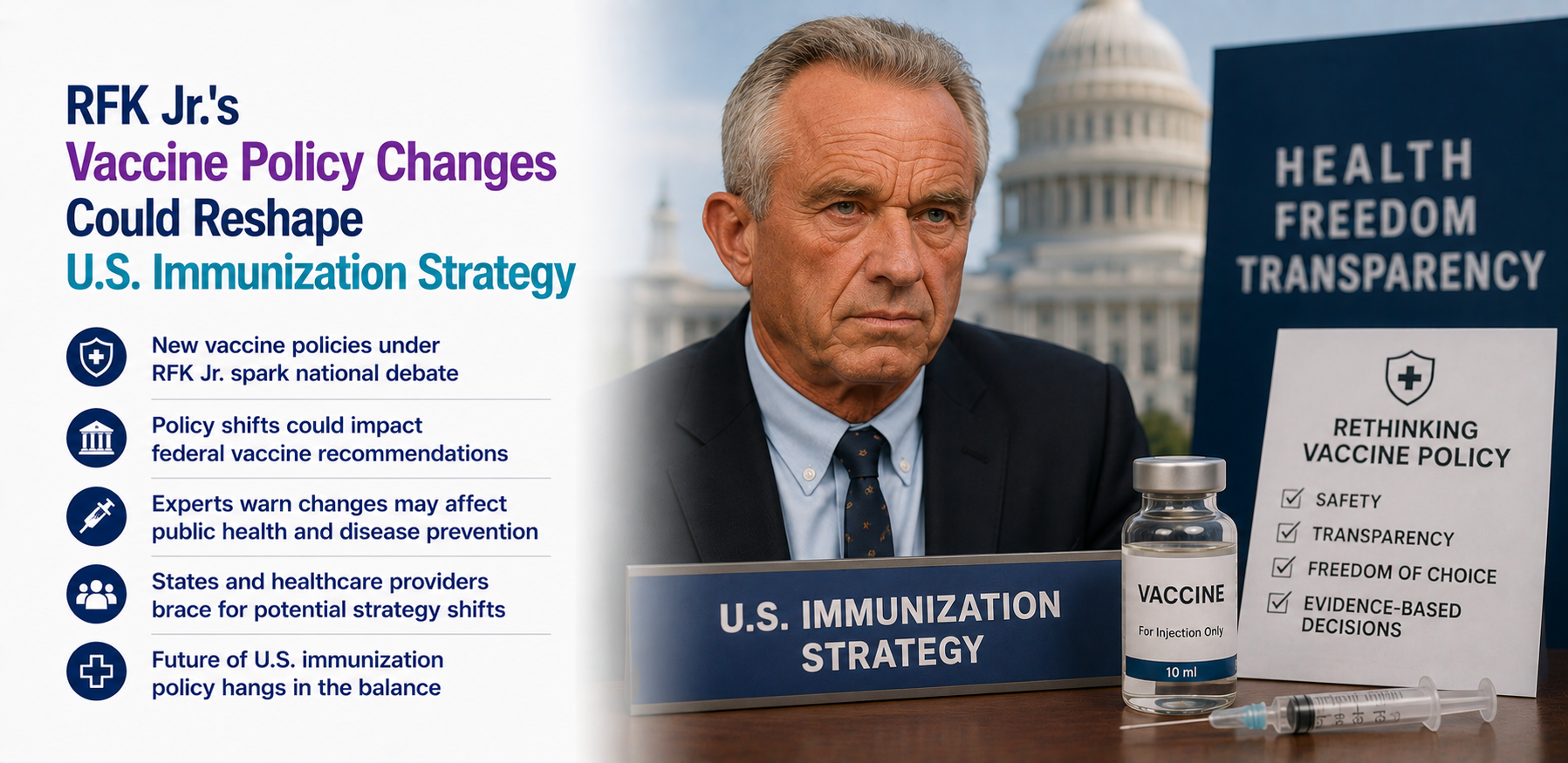
Health Secretary Robert F. Kennedy Jr. (RFK Jr.) is pursuing a series of changes that could significantly reshape long-standing U.S. vaccine policy. The initiatives include changes to how vaccines are evaluated, recommended, and communicated to the public, marking one of the most significant shifts in federal vaccine policy in decades.
The proposals have generated widespread discussion among public health officials, medical organizations, vaccine researchers, and policymakers. Supporters argue the changes could increase transparency and public confidence, while critics warn they could slow vaccine development, reduce immunization rates, and weaken established public health programs.
Many of the proposed changes are still evolving and would require implementation through existing federal processes.
How U.S. Vaccine Policy Is Developed
Vaccine policy in the United States is shaped through collaboration among several federal agencies and independent scientific experts.
Key organizations include:
- Centers for Disease Control and Prevention (CDC)
- Food and Drug Administration (FDA)
- Advisory Committee on Immunization Practices (ACIP)
- National Institutes of Health (NIH)
Together, these organizations evaluate clinical trial results, vaccine safety data, effectiveness studies, disease surveillance, and public health needs. Recommendations are regularly updated as new scientific evidence becomes available.
What Changes Are Being Proposed?
According to reports, the proposed policy direction includes reviewing several long-standing vaccine practices, including:
- How vaccines are recommended.
- The evidence used to support immunization guidance.
- Federal advisory processes.
- Vaccine safety monitoring.
- Public communication regarding vaccines.
Supporters believe these changes could improve transparency and encourage greater public discussion. Others have expressed concern that altering established review systems could create uncertainty around routine vaccination programs. At this stage, many proposals remain under review and have not yet resulted in finalized national policy changes.
Why Vaccination Policy Matters
Vaccination programs have played a major role in reducing the spread of infectious diseases for decades. Routine immunization has helped control or prevent illnesses such as measles, polio, mumps, rubella, whooping cough, and hepatitis B.
National recommendations help healthcare providers determine which vaccines are recommended, appropriate ages for vaccination, booster schedules, and special recommendations for high-risk groups. Consistent guidance supports public health planning while helping maintain high vaccination coverage.
Balancing Scientific Review and Public Trust
Public confidence is an essential component of successful vaccination programs. Health agencies work to strengthen trust by publishing scientific evidence, monitoring vaccine safety, investigating adverse events, updating recommendations when new data emerge, and communicating benefits and potential risks transparently.
Maintaining confidence requires both rigorous scientific review and clear public communication. Changes to vaccine policy therefore receive close attention from healthcare professionals, researchers, and the public.
What Could the Changes Mean?
If implemented, policy changes could influence:
- Federal vaccine recommendations.
- Public health communication.
- Clinical practice guidance.
- Immunization programs.
- Healthcare provider education.
- Future vaccine research priorities.
The overall impact will depend on how specific proposals are finalized and implemented over time. Healthcare providers are expected to continue following current federal recommendations unless official guidance changes.
Industry Impact
- Public Health Agencies: Federal health agencies may update internal review processes and communication strategies if policy changes are implemented.
- Healthcare Providers: Clinicians will continue monitoring official guidance to ensure vaccination recommendations remain aligned with current federal policy.
- Vaccine Manufacturers: Changes in federal vaccine policy could influence future research priorities, regulatory planning, and public communication strategies.
- Patients: Individuals should continue discussing vaccination decisions with their healthcare providers and rely on official public health guidance for current recommendations.
Why This Matters
Vaccine policy influences healthcare decisions affecting millions of Americans each year. Any changes to the nation's vaccine framework have implications for healthcare providers, public health agencies, researchers, manufacturers, and patients.
While policy discussions continue, the existing vaccine review system remains in place, and healthcare providers continue following current recommendations. The ongoing debate also highlights the importance of maintaining strong scientific evaluation, transparent communication, and public confidence as healthcare policies evolve.
Key Takeaways
- Health Secretary Robert F. Kennedy Jr. is pursuing changes that could reshape long-standing U.S. vaccine policy.
- The proposals involve vaccine review processes, recommendations, safety oversight, and public communication.
- Supporters view the changes as an opportunity to increase transparency, while critics have expressed concerns about potential effects on immunization programs.
- Current vaccine recommendations remain in effect unless officially revised through established federal processes.
- The discussions underscore the importance of scientific review and public trust in national vaccination programs.
What This Means for Healthcare Marketers
The ongoing discussion around vaccine policy highlights how public health decisions can influence the broader healthcare ecosystem. Changes to federal guidance, advisory processes, or public communication strategies can affect healthcare providers, manufacturers, health systems, and patients alike. Organizations operating in vaccines, infectious diseases, diagnostics, and public health should closely monitor policy developments while ensuring their communications remain evidence-based and aligned with current regulatory guidance.
For healthcare marketers, trust and transparency are increasingly important in public health communications. As conversations around vaccine policy continue to evolve, organizations should prioritize clear, scientifically grounded messaging that helps healthcare professionals and patients understand current recommendations and emerging developments without contributing to confusion.
For healthcare intelligence teams, monitoring federal health policy provides valuable insight into future priorities across immunization programs, infectious disease prevention, and regulatory oversight. Tracking changes in vaccine recommendations, advisory committee activities, and public health initiatives can help organizations anticipate shifts that may influence research, commercialization, and healthcare delivery across the U.S.