What’s Happening
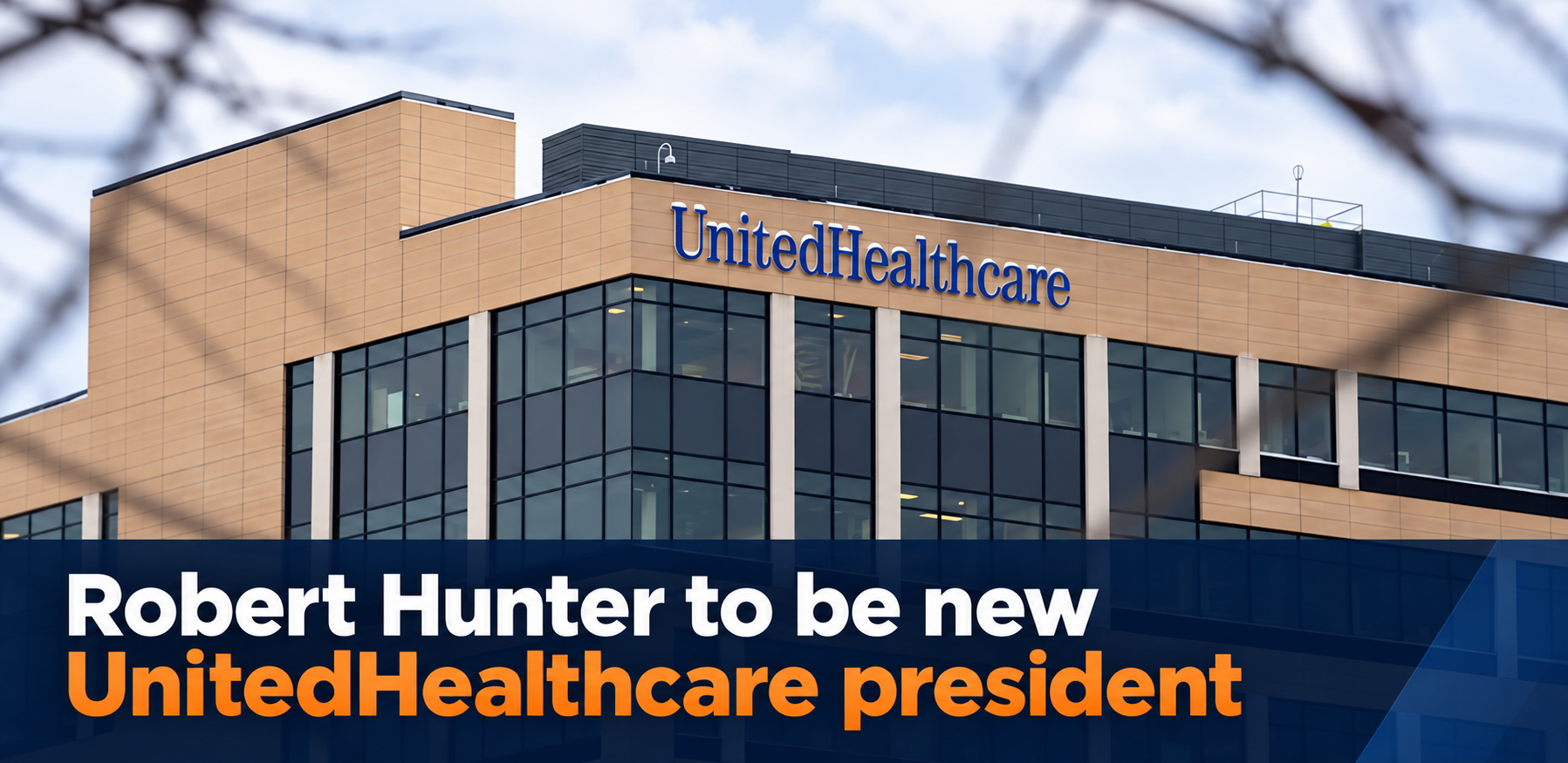
UnitedHealth executive Robert Hunter will become the new president of UnitedHealthcare, the insurance division of UnitedHealth Group.
Hunter announced the move in a LinkedIn post on September 28. He has spent about 15 years at UnitedHealth and has held several leadership positions across the company's insurance business.
UnitedHealthcare CEO Tim Noel will remain in his role, meaning Hunter's appointment adds a new senior leader rather than replacing the division's chief executive.
Hunter said his focus in the new position will include helping accelerate UnitedHealthcare's modernization efforts and making healthcare more connected, easier to navigate, and simpler to understand.
Who Is Robert Hunter?
Hunter is a longtime UnitedHealth executive with experience across several parts of the company's insurance operations.
Before taking the new position, he served as CEO of UnitedHealthcare's government programs, which includes government-sponsored insurance businesses.
He also previously led UnitedHealthcare's Medicare and retirement segment.
His background gives him experience with some of the company's largest and most complex insurance businesses, including programs serving Medicare beneficiaries and other government-insured populations.
What Is UnitedHealthcare?
UnitedHealthcare is the insurance business of UnitedHealth Group.
It provides health coverage to individuals, employers, and government program members across the United States.
Its businesses include areas such as:
- Employer-sponsored health insurance
- Individual health coverage
- Medicare Advantage
- Medicare-related products
- Medicaid and other government programs
- Specialty health benefits
The division works with millions of members, healthcare providers, employers, and government organizations.
What Does the Leadership Change Mean?
Hunter's appointment does not replace UnitedHealthcare's CEO.
Instead, he will serve as president, working alongside Tim Noel as the company continues its broader modernization efforts.
Hunter has said that his focus will be on making healthcare more connected and easier for people to navigate.
That could involve changes to how members interact with their insurance plans, how providers work with UnitedHealthcare, and how technology is used across the insurance business.
The exact responsibilities and priorities associated with Hunter's new position have not been fully detailed.
What’s Changing / Business Impact
The appointment comes as health insurers face pressure to make healthcare easier to understand while managing rising medical costs and increasingly complex healthcare systems.
Modernization efforts across insurers can involve areas such as:
- Digital member experiences
- Claims and payment systems
- Provider connectivity
- Data and analytics
- Artificial intelligence
- Care coordination
- Customer service
- Health plan navigation
For UnitedHealthcare, changes in these areas could affect millions of members and a large network of healthcare providers.
Hunter's previous experience in government programs and Medicare could also be relevant as UnitedHealthcare continues managing government-sponsored health plans.
Why This Matters
Leadership changes at a major health insurer can affect how the company approaches technology, member experience, provider relationships, and insurance operations.
UnitedHealthcare operates at the intersection of payers, providers, employers, government programs, and patients.
That makes its modernization strategy relevant beyond the company itself.
For healthcare organizations that work with UnitedHealthcare, changes in technology platforms, administrative processes, provider engagement, or member services could eventually affect how they interact with the insurer.
Looking Ahead
Hunter will begin his new role as UnitedHealthcare continues its modernization agenda.
The company has not provided a detailed list of initiatives that Hunter will personally oversee.
The key areas to watch will be whether UnitedHealthcare introduces changes to its digital platforms, provider connectivity, member services, data capabilities, and healthcare navigation.
Tim Noel will continue as CEO of UnitedHealthcare, while Hunter takes on the president role.
What This Means for Healthcare Marketers
The leadership change creates several signals for healthcare marketers and B2B healthcare companies:
- Leadership changes: A new senior executive can signal changes in strategic priorities or investment areas.
- Modernization: UnitedHealthcare's focus on modernization could create demand for technology, data, analytics, and digital-health solutions.
- Payer technology: Companies selling solutions to health insurers can watch for new initiatives involving automation, AI, interoperability, and member experience.
- Provider connectivity: Changes to payer-provider technology and workflows could create opportunities for companies supporting healthcare organizations.
- Medicare expertise: Hunter's background in government programs makes Medicare and other government-sponsored insurance areas important areas to monitor.
- Member experience: Efforts to make healthcare easier to navigate can create demand for patient engagement, communication, and digital tools.
- Decision-maker tracking: Changes in senior leadership can help marketers identify new stakeholders and understand where organizational priorities may be shifting.
For B2B healthcare marketers, a leadership appointment combined with a stated modernization agenda can be an early signal of potential technology and transformation investments.
Key Takeaways
- Robert Hunter will become president of UnitedHealthcare.
- Hunter has spent about 15 years at UnitedHealth in various leadership roles.
- He previously led government programs and UnitedHealthcare's Medicare and retirement business.
- Tim Noel will remain CEO of UnitedHealthcare.
- Hunter said his focus will include accelerating UnitedHealthcare's modernization agenda.
- The company's modernization efforts could involve technology, data, provider connectivity, digital experiences, and healthcare navigation.
- The leadership change is relevant to healthcare companies that sell technology, services, and solutions to major health insurers.