Roche Launches New Gene Sequencer to Challenge Illumina's Dominance in DNA Sequencing
What's Happening
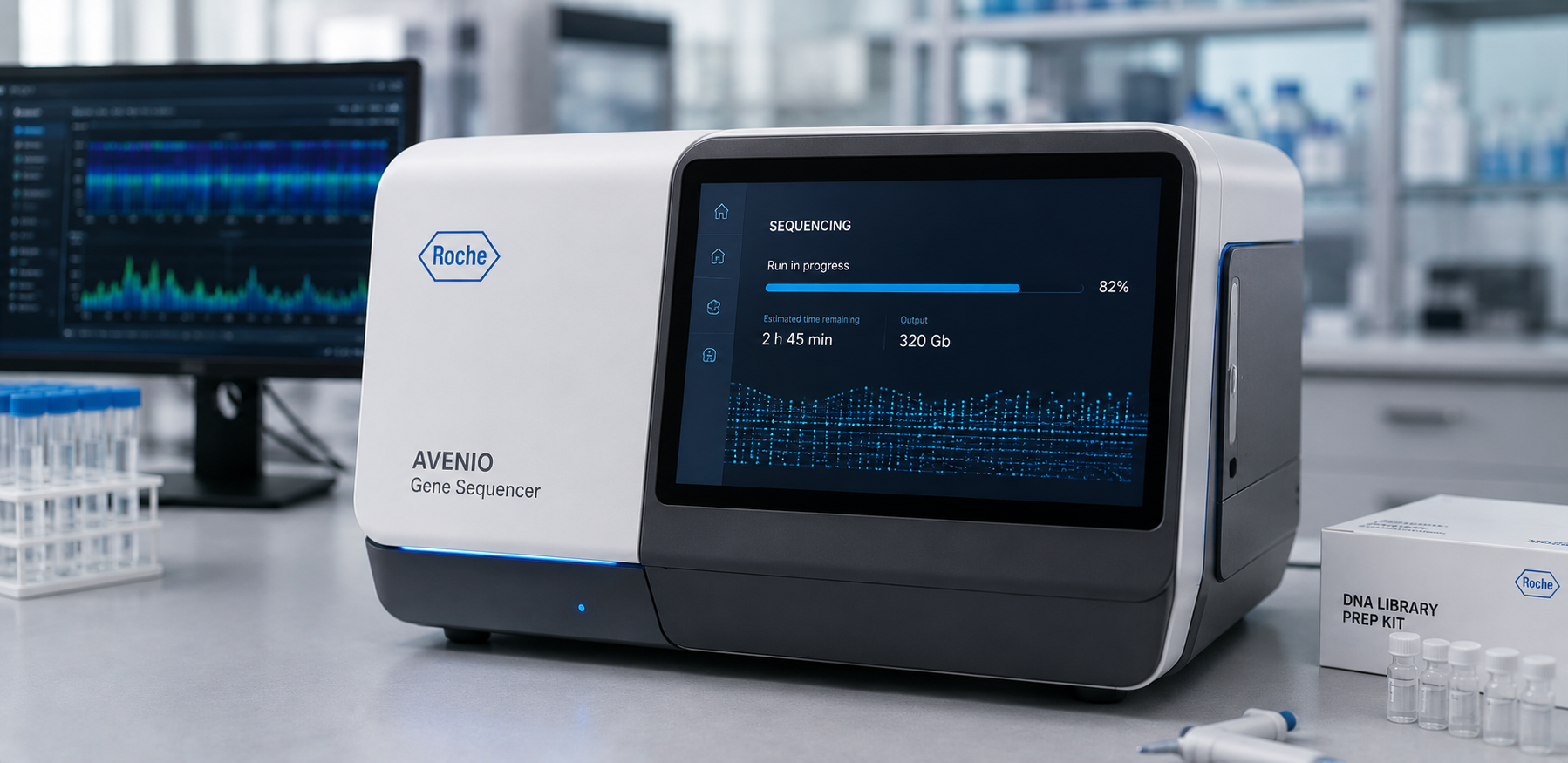
Roche has officially launched its new Axelios DNA sequencing platform, marking the company's strongest effort yet to compete with Illumina, the long-time leader in the global gene sequencing market.
The launch represents a major strategic move for Roche, which hopes to gain market share in one of healthcare's fastest-growing technology sectors. The Axelios platform is designed to perform next-generation sequencing (NGS), a technology that allows scientists and healthcare providers to rapidly analyze DNA and identify genetic variations linked to diseases such as cancer, rare genetic disorders, and infectious diseases.
For years, Illumina has dominated the sequencing industry, supplying instruments used by hospitals, research institutions, pharmaceutical companies, and academic laboratories worldwide. Roche believes its new system offers an opportunity to introduce greater competition by delivering faster workflows, improved automation, and high-quality sequencing results.
The launch reflects the growing importance of genomics in modern healthcare, where understanding a patient's genetic information is increasingly influencing diagnosis, treatment selection, and drug development.
What Is Gene Sequencing?
Gene sequencing is the process of determining the exact order of DNA building blocks that make up a person's genetic code.
DNA contains the instructions that tell cells how to grow, function, and repair themselves.
By reading DNA sequences, scientists can identify:
- Disease-causing mutations
- Inherited genetic disorders
- Cancer-related mutations
- Drug-response markers
- Infection-causing organisms
Advances in sequencing technology have dramatically reduced both the time and cost required to analyze DNA.
What once took years and billions of dollars can now often be completed in days.
Today, gene sequencing has become a routine part of research and is increasingly being integrated into everyday clinical care.
What Is Next-Generation Sequencing (NGS)?
Next-generation sequencing (NGS) is a technology that allows millions of DNA fragments to be analyzed simultaneously.
Compared with older sequencing methods, NGS offers several advantages:
- Faster analysis
- Higher accuracy
- Lower cost per sample
- Ability to process many samples at once
- Detection of complex genetic changes
Because of these advantages, NGS has become the preferred sequencing technology across many areas of medicine.
Healthcare providers now use NGS for:
- Cancer diagnosis
- Rare disease testing
- Prenatal screening
- Infectious disease surveillance
- Precision medicine
- Clinical research
The technology has become a foundational tool in genomic medicine.
Why Roche Wants to Challenge Illumina
Illumina has dominated the DNA sequencing market for more than a decade.
Its sequencing platforms are widely used across healthcare and life sciences because of their accuracy and extensive software ecosystem.
However, the growing importance of genomics has encouraged competitors to develop alternative technologies.
For Roche, entering this market offers several strategic advantages.
The company already has strong businesses in:
- Diagnostics
- Oncology
- Molecular testing
- Personalized medicine
- Pharmaceutical research
Adding its own sequencing platform allows Roche to offer more integrated genomic solutions across its healthcare portfolio.
Rather than relying on third-party sequencing technologies, Roche aims to provide customers with a complete genomics workflow from sample collection to data analysis.
Why DNA Sequencing Is Becoming More Important
Genomic medicine has become one of the fastest-growing fields in healthcare.
Doctors increasingly use genetic information to guide medical decisions.
For example:
- Cancer Care: Sequencing helps identify mutations that determine which targeted therapies are most likely to benefit individual patients.
- Rare Diseases: Many inherited disorders can now be diagnosed through genetic testing, often ending years of uncertainty for patients and families.
- Infectious Diseases: Sequencing allows scientists to identify viruses, bacteria, and emerging variants more quickly.
- Drug Development: Pharmaceutical companies use sequencing to better understand diseases and identify patients most likely to respond to experimental medicines.
As precision medicine expands, demand for sequencing technologies continues to increase.
Competition Could Benefit the Healthcare Industry
Competition in the sequencing market may drive innovation across several areas.
Potential benefits include:
- Lower instrument costs
- Faster technological improvements
- Expanded laboratory access
- Improved software capabilities
- Greater customer choice
Healthcare providers and researchers often welcome additional competition because it can accelerate technological progress while reducing dependence on a single supplier.
As more companies enter the market, laboratories may gain access to a wider range of sequencing platforms tailored to different clinical and research needs.
Challenges Roche Still Faces
Although Roche is one of the world's largest healthcare companies, competing against Illumina will not be easy.
Illumina has built a strong ecosystem that includes:
- Established laboratory customers
- Extensive sequencing software
- Broad clinical validation
- Large installed instrument base
- Long-standing research partnerships
Many laboratories have invested heavily in Illumina systems and may be reluctant to switch platforms.
To gain market share, Roche will need to demonstrate that Axelios offers meaningful advantages in areas such as:
- Performance
- Cost
- Ease of use
- Workflow efficiency
- Clinical utility
The success of the launch will likely depend on how quickly laboratories adopt the new platform.
Why Investors Are Watching
The DNA sequencing market is expected to continue growing rapidly as precision medicine becomes more widely adopted.
Investors view genomics as an important long-term growth opportunity because sequencing supports multiple healthcare markets, including:
- Oncology
- Rare diseases
- Clinical diagnostics
- Drug discovery
- Population health
- Public health surveillance
If Roche successfully expands its sequencing business, it could strengthen both its diagnostics division and its pharmaceutical research capabilities.
At the same time, increased competition may encourage continued innovation throughout the industry.
Industry Impact
- Diagnostics Companies: The launch increases competition in the rapidly expanding genomics market.
- Healthcare Providers: Additional sequencing platforms may provide laboratories with greater flexibility and choice.
- Pharmaceutical Companies: Improved sequencing capabilities support precision medicine and targeted drug development.
- Patients: Greater competition could eventually improve access to advanced genetic testing and personalized treatment.
Why This Matters
Roche's launch of the Axelios sequencing platform represents more than the introduction of a new laboratory instrument.
It signals intensifying competition within one of healthcare's most strategically important technology markets.
Genomic sequencing is becoming essential for diagnosing disease, developing new medicines, and delivering personalized healthcare.
As demand continues growing, competition among sequencing companies is likely to accelerate innovation while expanding access to advanced genomic testing.
For healthcare providers, researchers, and patients, these developments could contribute to faster diagnoses, more targeted treatments, and continued progress toward precision medicine.
Key Takeaways
- Roche has launched its Axelios next-generation DNA sequencing platform.
- The company aims to compete with market leader Illumina.
- DNA sequencing plays an increasingly important role in precision medicine, cancer care, and drug development.
- Greater competition may encourage innovation and improve access to genomic technologies.
- The sequencing market is expected to remain a major area of healthcare investment and growth.
What This Means for Healthcare Marketers
This story highlights the growing importance of genomics as a core component of modern healthcare. DNA sequencing is no longer limited to research laboratories—it is becoming an essential tool across oncology, rare disease diagnosis, infectious disease monitoring, and precision medicine.
For healthcare marketers, the launch reflects increasing convergence between diagnostics, pharmaceuticals, and digital health. Companies are moving beyond selling individual products and are instead building integrated healthcare ecosystems that combine laboratory instruments, software, analytics, and clinical decision support. Marketing strategies increasingly need to demonstrate how these technologies improve workflows, accelerate diagnoses, and support personalized patient care.
For healthcare intelligence teams, competition in the sequencing market provides valuable insight into future trends in precision medicine. Monitoring investments in genomics, laboratory automation, AI-driven analytics, and molecular diagnostics can help organizations identify emerging opportunities across healthcare and life sciences.
More broadly, Roche's entry into the sequencing market demonstrates that genomic medicine is entering a new phase of commercial maturity. As competition increases, healthcare providers may gain access to more advanced technologies that make genetic testing faster, more affordable, and more widely available, ultimately supporting better clinical decision-making and improved patient outcomes.