Samsung Biologics Launches $1.8 Billion Bid for PolyPeptide to Strengthen Peptide Drug Manufacturing
What's Happening
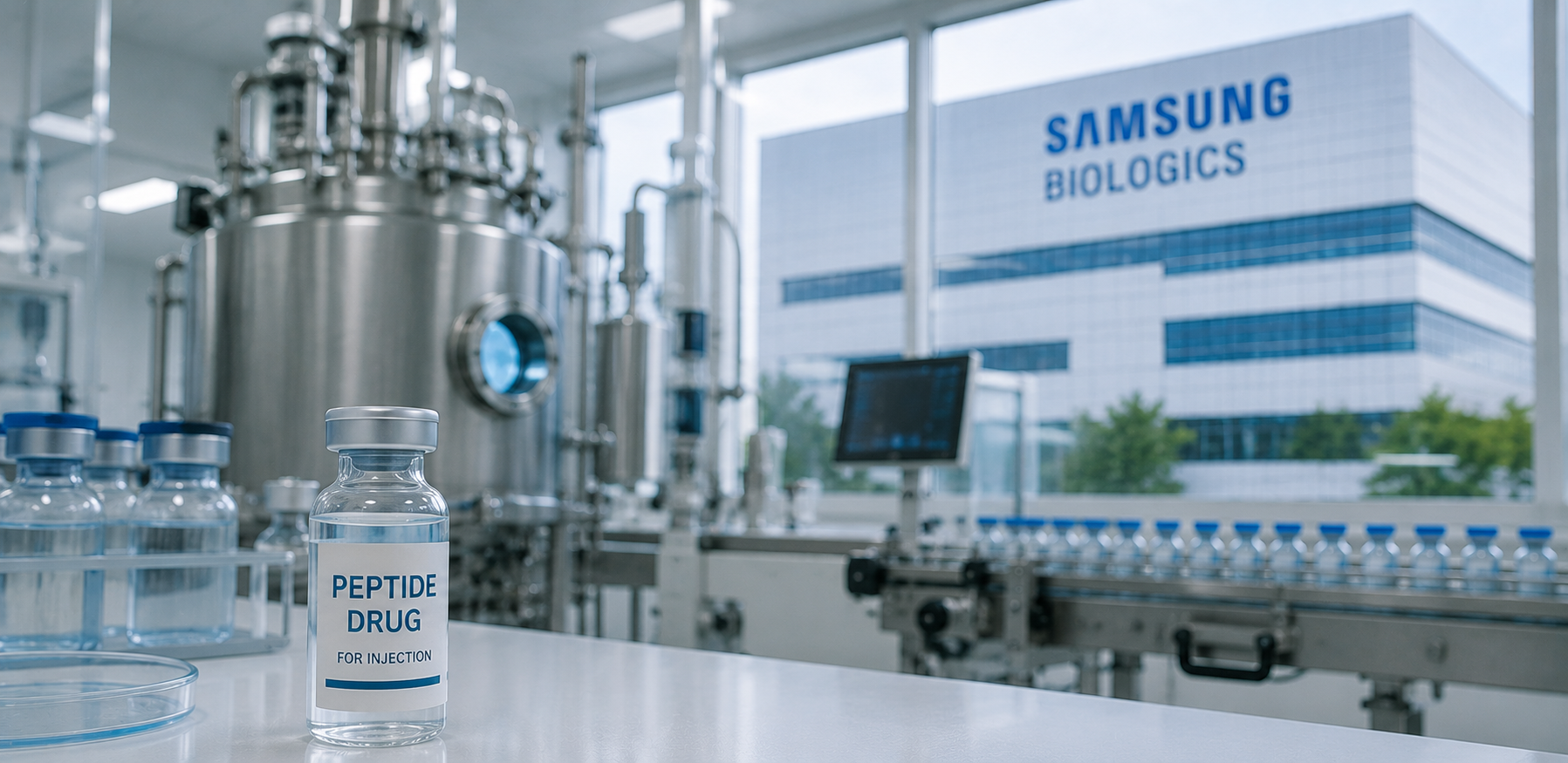
Samsung Biologics has announced a $1.8 billion all-cash bid to acquire Swiss contract drug manufacturer PolyPeptide, a move that would significantly expand its capabilities in one of the fastest-growing areas of pharmaceutical manufacturing.
The offer values PolyPeptide at approximately 1.46 billion Swiss francs ($1.81 billion), with Samsung offering 44.31 Swiss francs per share, representing about a 6.1% premium over the company's previous closing price. The acquisition is expected to strengthen Samsung Biologics' position in manufacturing peptide-based medicines, particularly those used to treat obesity and diabetes, including GLP-1 therapies.
PolyPeptide's board has unanimously recommended that shareholders accept the offer, while the company's largest shareholder, Draupnir Holding, which owns approximately 55.65% of the company, has agreed to tender all of its shares.
What Is PolyPeptide?
PolyPeptide is a global contract development and manufacturing organization (CDMO) specializing in the production of peptide-based active pharmaceutical ingredients (APIs).
Rather than developing its own medicines, the company manufactures complex peptide ingredients for pharmaceutical companies developing innovative therapies.
Its manufacturing network spans facilities in:
- Switzerland.
- Sweden.
- France.
- Belgium.
- India.
- The United States.
These facilities support the production of peptide medicines used in multiple therapeutic areas, including metabolic diseases, oncology, endocrinology, and rare diseases.
Why Peptide Drugs Are Receiving So Much Attention
Peptides are short chains of amino acids that can precisely target biological processes within the body.
Unlike many traditional small-molecule drugs, peptide medicines often offer:
- Greater biological specificity.
- Improved safety profiles.
- Lower off-target effects.
- High effectiveness for complex diseases.
Demand for peptide manufacturing has grown rapidly because many of today's most successful medicines—including several blockbuster obesity and diabetes treatments—are peptide-based.
GLP-1 therapies such as those used to treat obesity and type 2 diabetes have dramatically increased global demand for specialized peptide manufacturing capacity.
Why Samsung Is Making This Acquisition
Samsung Biologics has become one of the world's largest contract manufacturers for biologic medicines.
The company has steadily expanded beyond traditional biologics into multiple advanced manufacturing technologies.
Acquiring PolyPeptide would allow Samsung to:
- Enter large-scale peptide manufacturing.
- Expand its multi-modality CDMO business.
- Increase manufacturing capacity for GLP-1 medicines.
- Strengthen relationships with pharmaceutical clients.
- Expand its global manufacturing footprint across Europe, North America, and Asia.
The acquisition aligns with Samsung's long-term strategy of becoming a comprehensive manufacturing partner for the pharmaceutical industry.
Understanding the CDMO Business
A Contract Development and Manufacturing Organization (CDMO) provides pharmaceutical companies with services such as:
- Drug development.
- Process optimization.
- Clinical manufacturing.
- Commercial-scale production.
- Regulatory support.
- Supply chain management.
Many pharmaceutical companies outsource manufacturing to CDMOs instead of building their own production facilities.
This allows drug developers to:
- Reduce capital investment.
- Scale production more quickly.
- Access specialized manufacturing expertise.
- Accelerate commercialization.
As biologics and peptide medicines become increasingly complex, demand for experienced CDMOs continues to rise.
Deal Structure
Samsung Biologics plans to launch its public tender offer by the end of August 2026, with completion expected by the end of the year, subject to regulatory approvals and shareholder acceptance.
Following completion, Samsung intends to:
- Acquire all remaining outstanding shares.
- Delist PolyPeptide from the SIX Swiss Exchange.
- Operate PolyPeptide as a wholly owned subsidiary.
This structure would allow Samsung to fully integrate PolyPeptide into its global manufacturing network.
Industry Impact
- Contract Manufacturing: The acquisition further consolidates the rapidly expanding CDMO market as manufacturers compete to provide end-to-end services for increasingly complex medicines.
- Pharmaceutical Companies: Drug developers could gain access to larger manufacturing capacity for peptide medicines, helping address growing demand for obesity, diabetes, and other specialty therapies.
- Biotechnology Companies: Smaller biotech firms may benefit from expanded manufacturing capabilities without needing to build their own production facilities.
- Patients: Greater manufacturing capacity may improve the long-term availability of peptide-based medicines as demand continues to rise worldwide.
Why This Matters
Samsung Biologics' proposed acquisition reflects one of the biggest trends shaping the pharmaceutical industry: the rapid expansion of peptide therapeutics.
As demand for GLP-1 medicines and other peptide-based treatments continues to grow, manufacturing capacity has become a strategic asset. Companies with specialized production expertise are increasingly becoming acquisition targets as pharmaceutical manufacturers seek to secure reliable supply chains.
The transaction also demonstrates the growing importance of CDMOs in modern drug development. Rather than serving only as manufacturing partners, leading CDMOs are evolving into strategic collaborators that enable pharmaceutical companies to bring innovative medicines to market more efficiently.
If completed, the acquisition would position Samsung Biologics as an even stronger player in advanced pharmaceutical manufacturing while expanding global capacity for some of the industry's fastest-growing therapies.
Key Takeaways
- Samsung Biologics has launched a $1.8 billion all-cash offer to acquire Swiss CDMO PolyPeptide.
- The acquisition will strengthen Samsung's capabilities in manufacturing peptide-based medicines, including GLP-1 therapies for obesity and diabetes.
- PolyPeptide's board unanimously supports the transaction, while its largest shareholder has agreed to tender its shares.
- Samsung plans to delist PolyPeptide and operate it as a wholly owned subsidiary after the acquisition closes.
- The deal reflects growing global demand for specialized manufacturing capacity as peptide medicines become an increasingly important segment of pharmaceutical innovation.
What This Means for Healthcare Marketers
Samsung Biologics' acquisition demonstrates how pharmaceutical competition is increasingly shifting beyond drug discovery to include manufacturing capabilities. As advanced therapies such as GLP-1 medicines continue experiencing unprecedented demand, companies with specialized production expertise are becoming strategically valuable assets. Manufacturing scale, geographic reach, and technical capabilities are now key differentiators in the life sciences industry.
For healthcare marketers, the announcement highlights the importance of communicating not only scientific innovation but also operational excellence. Pharmaceutical companies and CDMOs are increasingly positioning themselves as long-term strategic partners capable of supporting complex therapies from development through global commercialization.
For healthcare intelligence teams, the transaction signals continued investment in peptide therapeutics, contract manufacturing, and obesity-related medicines. Monitoring acquisitions involving CDMOs, manufacturing capacity, and supply chain expansion can provide early insight into where pharmaceutical companies expect future demand and how the competitive landscape for advanced therapies is evolving.