Sandoz Seeks Dialogue With U.S. After Proposed Tariffs on Generic Drugs Raise Industry Concerns
What's Happening
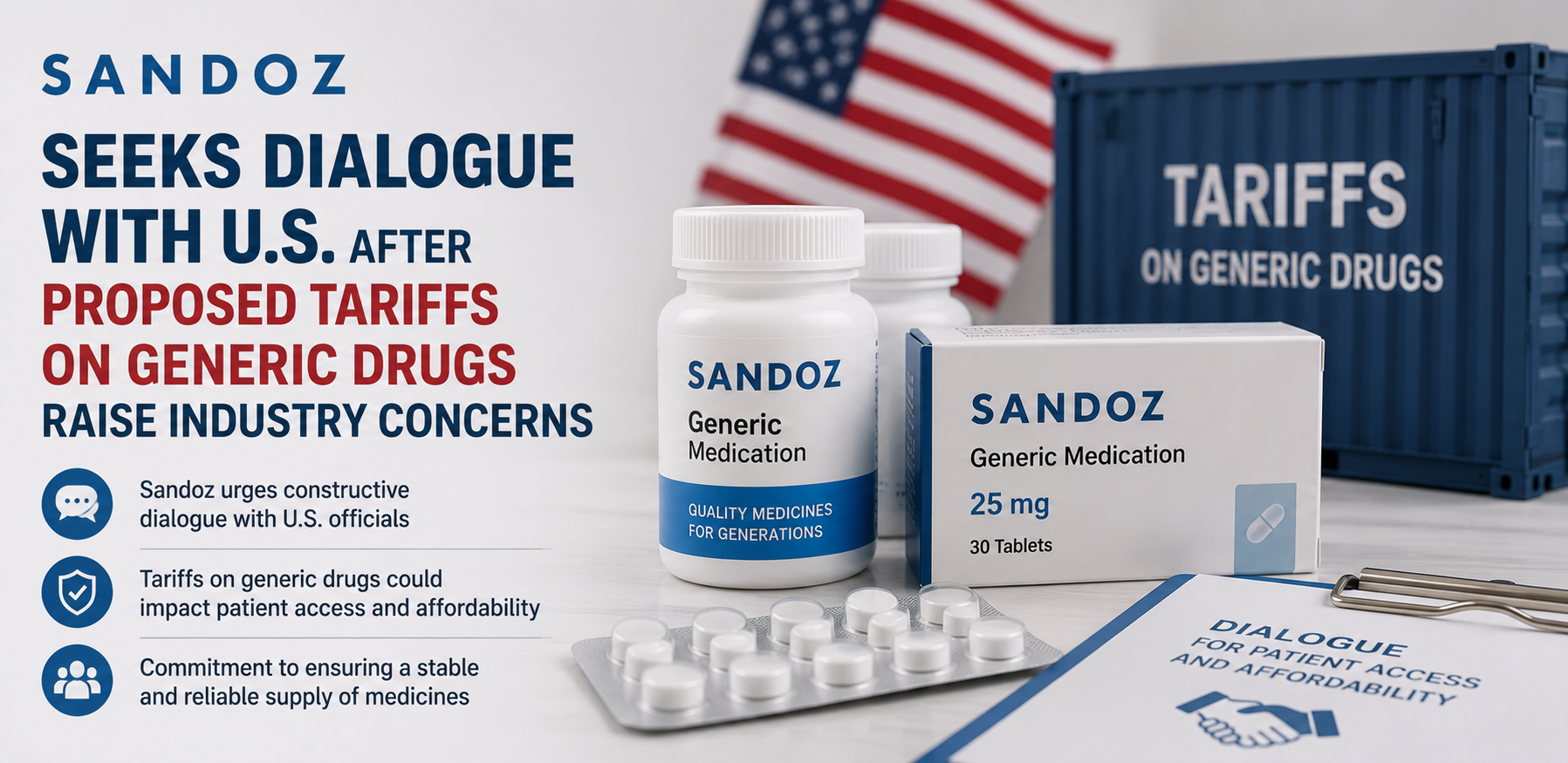
Swiss generic drug manufacturer Sandoz says it will continue engaging with U.S. policymakers after President Donald Trump proposed imposing steep tariffs on imported generic medicines unless companies manufacture those products domestically.
Under the proposal, imported generic drugs would remain tariff-free until August 2028, after which they would face a 100% tariff for one year. The rate would then increase to 200% beginning in 2029 if production has not shifted to the United States.
Sandoz stated that it supports the goal of improving affordability and access to medicines in the United States but said it is too early to determine how the proposal might affect its manufacturing strategy or future investments.
Why Generic Drugs Matter
Generic medicines account for more than 90% of prescriptions dispensed in the United States, according to the FDA.
These medications contain the same active ingredients as their brand-name counterparts and are approved to meet the same standards for quality, safety, and effectiveness. Because they are typically sold at much lower prices, generics play a critical role in reducing healthcare costs and improving patient access to treatment.
The affordability of generic drugs has made them an essential component of healthcare systems, insurers, and pharmacy benefit programs.
Why Manufacturing Is Concentrated Overseas
Over the past several decades, much of the world's generic drug manufacturing has shifted to countries with lower production costs, particularly India and China.
Several factors have contributed to this trend:
- Lower labor costs.
- Established pharmaceutical manufacturing infrastructure.
- Large-scale production capacity.
- Global supply chains for active pharmaceutical ingredients.
- Lower operating expenses.
The proposed tariffs are intended to encourage companies to relocate manufacturing back to the United States, reducing reliance on overseas production.
However, industry analysts note that building new pharmaceutical manufacturing facilities requires significant capital investment, regulatory approvals, workforce development, and several years before production can begin.
Sandoz's Position
Sandoz said it will continue discussions with U.S. policymakers while awaiting additional details about how the proposed tariff policy would be implemented.
The company previously announced plans to close its only U.S. manufacturing facility on Long Island, New York, by the end of 2026. As a result, much of its production serving the U.S. market currently occurs outside the country. Analysts estimate that approximately 22% of Sandoz's revenue comes from North America, making any future tariff policy an important consideration for the company.
Following the announcement, Sandoz shares declined in early trading as investors evaluated the potential financial implications.
Potential Impact on Healthcare Costs
Supporters of domestic manufacturing argue that increasing U.S. production could strengthen supply chain resilience and reduce dependence on foreign manufacturers during future disruptions.
However, many industry experts caution that producing generic medicines domestically is generally more expensive than manufacturing them overseas.
If production costs increase, the result could include:
- Higher prices for certain generic medicines.
- Increased costs for healthcare providers.
- Greater spending by insurers.
- Higher pharmacy costs for some patients.
- Pressure on government healthcare programs.
Because generic medicines operate on relatively thin profit margins, manufacturers may have limited flexibility to absorb additional costs without affecting prices.
Industry Response
The generic pharmaceutical industry has generally expressed support for improving access to affordable medicines while seeking greater clarity on how any tariff policy would be implemented.
Many companies have indicated they plan to continue working with policymakers to identify solutions that strengthen domestic manufacturing without significantly increasing healthcare costs or disrupting medicine availability.
Industry analysts also note that any large-scale relocation of manufacturing would require years of planning, investment, regulatory review, and workforce expansion before meaningful production capacity could be established.
Industry Impact
- Generic Drug Manufacturers: Companies with limited U.S. manufacturing capacity may need to reassess long-term production strategies if the proposed tariffs move forward.
- Healthcare Providers: Hospitals and pharmacies could experience changes in medicine procurement costs depending on how manufacturers respond to future tariff requirements.
- Health Insurers: Higher manufacturing costs could influence reimbursement strategies and pharmacy spending if generic drug prices increase.
- Patients: Generic medicines remain the primary source of affordable prescription drugs for millions of Americans. Any policy affecting production costs may ultimately influence medication affordability and access.
Why This Matters
The proposal highlights the ongoing challenge of balancing supply chain security with affordable healthcare.
The United States relies heavily on imported generic medicines, many of which are produced in countries with well-established pharmaceutical manufacturing industries. Encouraging more domestic production could improve resilience against future supply disruptions, but achieving that goal may require significant investment and time.
At the same time, policymakers must consider how higher manufacturing costs could affect healthcare spending. Because generic medicines are widely used across nearly every area of medicine, even modest price increases could have broad implications for patients, healthcare providers, insurers, and government health programs.
The outcome of discussions between policymakers and manufacturers will likely influence the future of pharmaceutical manufacturing, drug affordability, and supply chain strategy in the United States.
Key Takeaways
- Sandoz plans to continue discussions with U.S. policymakers following the proposed tariffs on imported generic medicines.
- The proposal would introduce a 100% tariff beginning in August 2028, increasing to 200% one year later for companies that continue manufacturing overseas.
- Generic medicines account for more than 90% of prescriptions dispensed in the United States.
- Industry analysts say relocating pharmaceutical manufacturing to the United States would require substantial investment and could increase production costs.
- Manufacturers and policymakers are expected to continue discussions as additional details of the proposal emerge.
What This Means for Healthcare Marketers
The proposed tariff policy underscores how government trade decisions can influence every part of the pharmaceutical supply chain. Companies involved in generic medicines, pharmaceutical manufacturing, supply chain management, and healthcare procurement will be closely monitoring how the proposal evolves and what it could mean for production, pricing, and market access.
For healthcare marketers, the discussion highlights the importance of demonstrating value beyond price alone. Messaging focused on supply reliability, manufacturing quality, regulatory compliance, and long-term partnerships may become increasingly relevant as healthcare organizations evaluate sourcing strategies.
For healthcare intelligence teams, developments surrounding pharmaceutical manufacturing policy can provide early signals about future market shifts. Monitoring trade policy, domestic manufacturing investments, supply chain changes, and pricing trends can help organizations anticipate how the generic drug market may evolve over the coming years.