
Sanofi Sues Pfizer and Moderna Over COVID-19 Vaccine Technology Patents
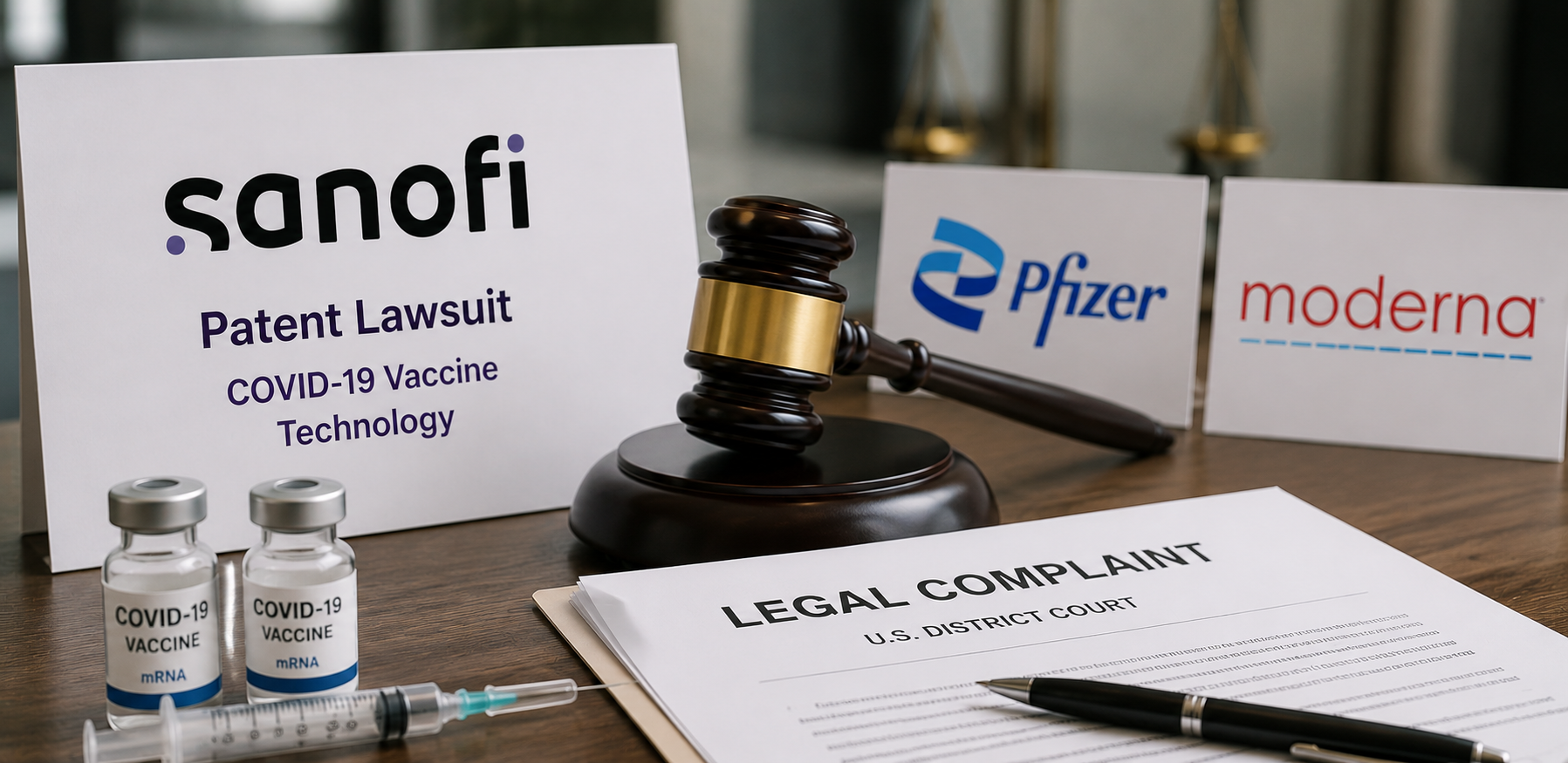
What's Happening
Sanofi has filed a lawsuit against Pfizer and Moderna, alleging that the companies infringed patents related to technology used in their COVID-19 vaccines. The lawsuit centers on intellectual property covering lipid nanoparticle (LNP) technology, which is critical for the delivery of mRNA in vaccines like Comirnaty, Spikevax, and mNexspike [1.1.1].
Sanofi is seeking compensation for the alleged use of patented technology developed by Translate Bio, which Sanofi acquired in 2021 [1.1.1]. Pfizer and Moderna are currently addressing these legal claims, and the case will proceed through the legal process before any determination is made [1.1.1].
The dispute reflects the growing number of patent battles surrounding mRNA technology as pharmaceutical companies seek to protect innovations developed before and during the pandemic [1.1.1, 1.1.5].
What Is mRNA Technology?
Messenger RNA (mRNA) is a genetic molecule that instructs cells to produce specific proteins.
In mRNA vaccines:
- Scientists create synthetic mRNA carrying instructions for a harmless viral protein.
- The body's cells temporarily produce that protein.
- The immune system recognizes it as foreign.
- The body develops an immune response that can help protect against future infection.
Unlike traditional vaccines, mRNA vaccines do not contain live viruses and do not alter a person's DNA [1.1.2, 1.2.3].
The success of COVID-19 vaccines demonstrated the potential of mRNA technology for treating and preventing a wide range of diseases [1.1.2, 1.2.4].
Why Are Patent Disputes Common in Pharmaceuticals?
Developing new medicines requires years of research and significant financial investment.
Patents give companies exclusive rights to certain inventions for a limited period, allowing them to:
- Protect scientific discoveries.
- Recover research and development costs.
- Encourage continued innovation.
- License technologies to other companies.
When multiple organizations contribute to advances in the same field, disagreements can arise over which company owns specific technologies or methods [1.1.5, 1.2.1].
These disputes are often resolved through litigation or licensing agreements [1.1.1, 1.1.5].
Why mRNA Technology Is So Valuable
The COVID-19 pandemic accelerated investment in mRNA research.
Today, pharmaceutical companies are developing mRNA-based therapies for:
- Infectious diseases.
- Cancer.
- Rare genetic disorders.
- Autoimmune diseases.
- Personalized medicine.
Because mRNA has become one of the most promising areas of biotechnology, ownership of key patents, particularly regarding delivery systems like lipid nanoparticles, carries significant scientific and commercial value [1.1.1, 1.2.1, 1.2.4].
As additional therapies enter development, competition over intellectual property is expected to continue [1.2.4].
What Happens During Patent Litigation?
Patent lawsuits generally examine questions such as:
- Whether a valid patent exists.
- Whether another company used the patented technology.
- Whether any licensing agreements apply.
- Whether financial compensation is appropriate.
These cases often involve:
- Scientific experts.
- Technical evidence.
- Extensive legal review.
- Multiple years of litigation.
Many pharmaceutical patent disputes are eventually resolved through settlements or licensing agreements before reaching trial [1.1.1, 1.1.5, 1.2.1].
How Patent Protection Influences Healthcare Innovation
Patent protection plays an important role in encouraging medical research.
By protecting new discoveries, patents help companies justify investments in:
- Drug development.
- Clinical trials.
- Manufacturing.
- Advanced biotechnology.
- Future scientific research.
At the same time, licensing agreements and patent expirations eventually allow broader access to technologies, supporting continued competition and innovation across the healthcare industry [1.1.5, 1.2.1].
Industry Impact
- Pharmaceutical Companies: The lawsuit highlights the strategic importance of intellectual property in emerging biotechnology platforms such as mRNA [1.2.4].
- Biotechnology Industry: Patent disputes may influence future licensing agreements, collaborations, and research partnerships [1.1.5, 1.2.1].
- Researchers: Ownership of foundational technologies can shape future investment in vaccine and therapeutic development [1.2.4].
- Patients: Although the lawsuit does not affect currently available vaccines, intellectual property decisions may influence how future therapies are developed and commercialized [1.2.3].
Why This Matters
The legal dispute demonstrates that competition in modern healthcare extends beyond developing new medicines to protecting the technologies that make those medicines possible [1.2.4].
The rapid success of mRNA vaccines transformed the biotechnology landscape, leading many companies to expand research into vaccines and treatments for numerous diseases [1.2.4].
As innovation accelerates, intellectual property will continue playing a central role in determining how companies collaborate, compete, and invest in future medical breakthroughs [1.2.4].
Regardless of the lawsuit's outcome, the case highlights the long-term commercial importance of mRNA technology well beyond the COVID-19 pandemic [1.1.1].
Key Takeaways
- Sanofi sued Pfizer and Moderna, alleging infringement of patents related to mRNA delivery technology used in COVID-19 vaccines [1.1.1].
- The lawsuit focuses on intellectual property regarding lipid nanoparticles rather than the safety or effectiveness of the vaccines [1.1.1].
- mRNA technology has become one of the most valuable platforms in modern biotechnology [1.2.4].
- Pharmaceutical patent disputes are common as companies seek to protect innovations developed through extensive research [1.1.5, 1.2.1].
- The case may influence future licensing agreements and the commercialization of mRNA-based therapies [1.1.5, 1.2.1].
What This Means for Healthcare Marketers
The lawsuit underscores the strategic importance of intellectual property in today's biotechnology industry. As innovative platforms such as mRNA continue expanding into vaccines, oncology, rare diseases, and personalized medicine, ownership of foundational technologies has become a major competitive advantage [1.2.4]. Scientific innovation is increasingly accompanied by complex patent strategies that influence partnerships, licensing opportunities, and long-term commercialization [1.1.5].
For healthcare marketers, the case highlights that innovation extends beyond the final product to the technologies that enable it. Companies developing novel therapeutic platforms must communicate not only clinical value but also their scientific leadership, research capabilities, and commitment to advancing healthcare through proprietary technologies. Strong intellectual property portfolios can enhance credibility with investors, partners, and healthcare stakeholders [1.2.4].
For healthcare intelligence teams, patent litigation provides valuable insight into emerging areas of pharmaceutical competition. Monitoring intellectual property disputes, licensing agreements, and technology partnerships can help organizations identify evolving innovation trends while anticipating how foundational technologies may shape the future of drug development and commercialization [1.2.4].