What's Happening
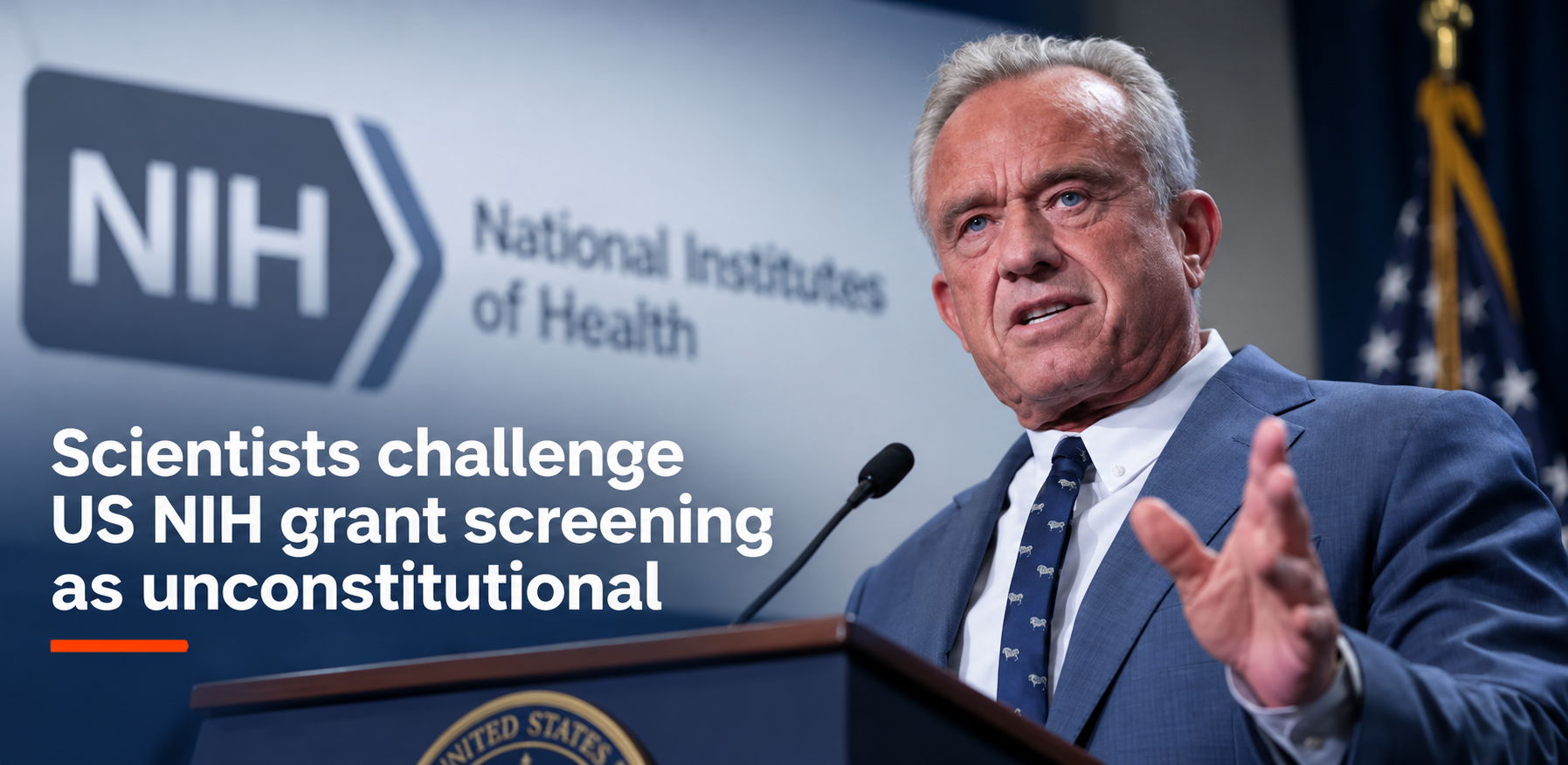
A class-action lawsuit filed by scientists against the U.S. National Institutes of Health (NIH) in the U.S. District Court for the Northern District of California accuses the agency of implementing politically driven keyword screening to block, terminate, or renegotiate research grants. (Investing.com)
The plaintiffs argue that evaluating research proposals and existing awards against a targeted list of 235 politically sensitive terms constitutes unconstitutional viewpoint discrimination that overrides standard scientific peer review. (Investing.com)
What the Lawsuit Challenges
Introduction of political screening layers overriding traditional peer review
The legal action contests an auxiliary evaluation process that flags grants containing disfavored concepts, forcing researchers to modify their language or risk losing federal funding after passing rigorous scientific evaluations. (Investing.com)
The 235-Word Screening List
Keyword-based restrictions target gender, race, and climate topics
The alleged list includes terms associated with gender identity, demographic markers like "Latinx," and climate change, which plaintiffs argue bear no relation to the actual scientific merit of the studies. (Investing.com)
A Research Grant Can Be Targeted After Peer Review
Post-approval evaluations introduce acute instability for active projects
By applying political screening filters to grants that have already cleared scientific review, the agency diverges from longstanding protocols and congressional requirements governing federal funding. (Investing.com)
Researchers Say Funding Has Already Been Lost
Active investigations face termination or forced linguistic alterations
Stanford clinical associate professor Arghavan Salles and other plaintiffs report having grants canceled or threatened over classifications tied to diversity, equity, and inclusion (DEI) frameworks. (Investing.com)
The Effect on Ongoing Research
Mid-stream terminations jeopardize staffing, data continuity, and laboratory operations
Abruptly revoking multi-year awards forces institutions to downsize personnel, halt clinical follow-ups, and disrupt foundational biomedical studies that rely on continuous data collection.
Alzheimer’s Research and Other Health Studies Are Also Affected
Broad collateral effects span health disparities, vaccines, and aging studies
Beyond explicit keyword categories, investigators studying Alzheimer's disease and health disparities report heightened scrutiny regarding demographic terminology, raising barriers for underrepresented research populations.
The Administration's Position
Defense frames funding shifts as alignment with prioritized scientific standards
Federal officials maintain that modifications to grant allocations are intended to correct federal priorities and ensure that taxpayer dollars support scientifically sound work, countering allegations of political censorship.
The First Amendment Argument
Litigation centers on prohibitions against viewpoint-based funding conditions
The lawsuit asserts that conditioning federal research support on the alteration or removal of disfavored ideas violates First Amendment protections against government viewpoint discrimination. (Investing.com)
Earlier Court Battles
Ongoing judicial wrestling matches trace through supreme and appeals court rulings
The new class action builds upon earlier battles, including a May 2026 federal appeals court ruling finding certain DEI grant terminations unconstitutional, a decision the administration has appealed to the Supreme Court. (Investing.com)
Why This Matters to Biomedical Research
Disruptions threaten the operational baseline of the world's largest public health funder
As the primary financial engine for basic science and drug discovery, shifts in NIH grant execution directly impact universities, clinical laboratories, and the broader biomedical ecosystem.
Impact on Universities and Research Institutions
Academic medical centers face fiscal strain across staffing and infrastructure
Federal grant instability compromises salaries for researchers and trainees, laboratory operational budgets, clinical trial recruitment, and indirect-cost support necessary for institutional administration.
Potential Impact on Drug Development
Early-stage academic pipeline contraction risks downstream pharmaceutical innovation
Stifling foundational target identification and academic biomarker research creates a delayed ripple effect that can diminish commercial drug pipelines years into the future.
Why Research Funding Stability Matters
Long-term biomedical inquiry requires predictable, continuous resource flows
Because robust clinical studies and longitudinal cohorts depend on uninterrupted tracking, funding volatility risks destroying years of accumulated scientific data.
The Lawsuit Seeks to Reverse Grant Actions
Legal remedies target policy cessation, reinstatement, and administrative vacation
Plaintiffs are pressing the court to halt keyword-screening protocols, reinstate improperly terminated awards, and invalidate decisions executed under unconstitutional criteria. (Investing.com)
Broader Questions About Government-Funded Science
Tension builds between executive priority-setting and administrative law
The dispute forces judicial evaluation of how executive discretion to direct public funds intersects with statutory and constitutional mandates governing scientific administration.
Why This Matters
This class-action lawsuit directly challenges the mechanisms of federal biomedical funding administration, raising fundamental questions about the limits of executive authority over scientific research. (Investing.com)
Looking Ahead
Impending judicial rulings and Supreme Court appeals will shape future research boundaries
As federal courts weigh the legality of post-review keyword screening, the outcomes will dictate institutional planning strategies and the future trajectory of U.S. health innovation.
Key Takeaways
- Scientists filed a class-action lawsuit against the NIH on September 16, 2026. (Investing.com)
- Lawsuit challenges an alleged 235-keyword screening list used to flag research grants. (Investing.com)
- Targeted terms include words like "gender," "Latinx," and "climate change." (Investing.com)
- Screening reportedly affects grants that have already passed scientific peer review. (Investing.com)
- Plaintiffs allege violations of the First Amendment and federal funding statutes. (Investing.com)
- Administrations defend funding changes as necessary to align with sound scientific priorities. (Investing.com)
- Legal challenges follow a complex series of prior federal court and Supreme Court rulings regarding grant cuts. (Investing.com)
- The litigation carries major implications for universities, clinical research pipelines, and commercial drug discovery.
What This Means for Healthcare Marketers
This story is relevant to healthcare marketers because changes in research funding can eventually reshape the healthcare innovation pipeline.
A shift in NIH funding priorities can affect which diseases receive research attention, which technologies attract academic investment and which early-stage discoveries progress toward commercialization.
For pharmaceutical and biotech companies, tracking NIH funding decisions, clinical research activity, university partnerships and emerging research areas can provide early signals about where future scientific and commercial activity may develop.
It also reinforces the value of distinguishing between an organization's current commercial activity and the research ecosystem feeding its future pipeline.