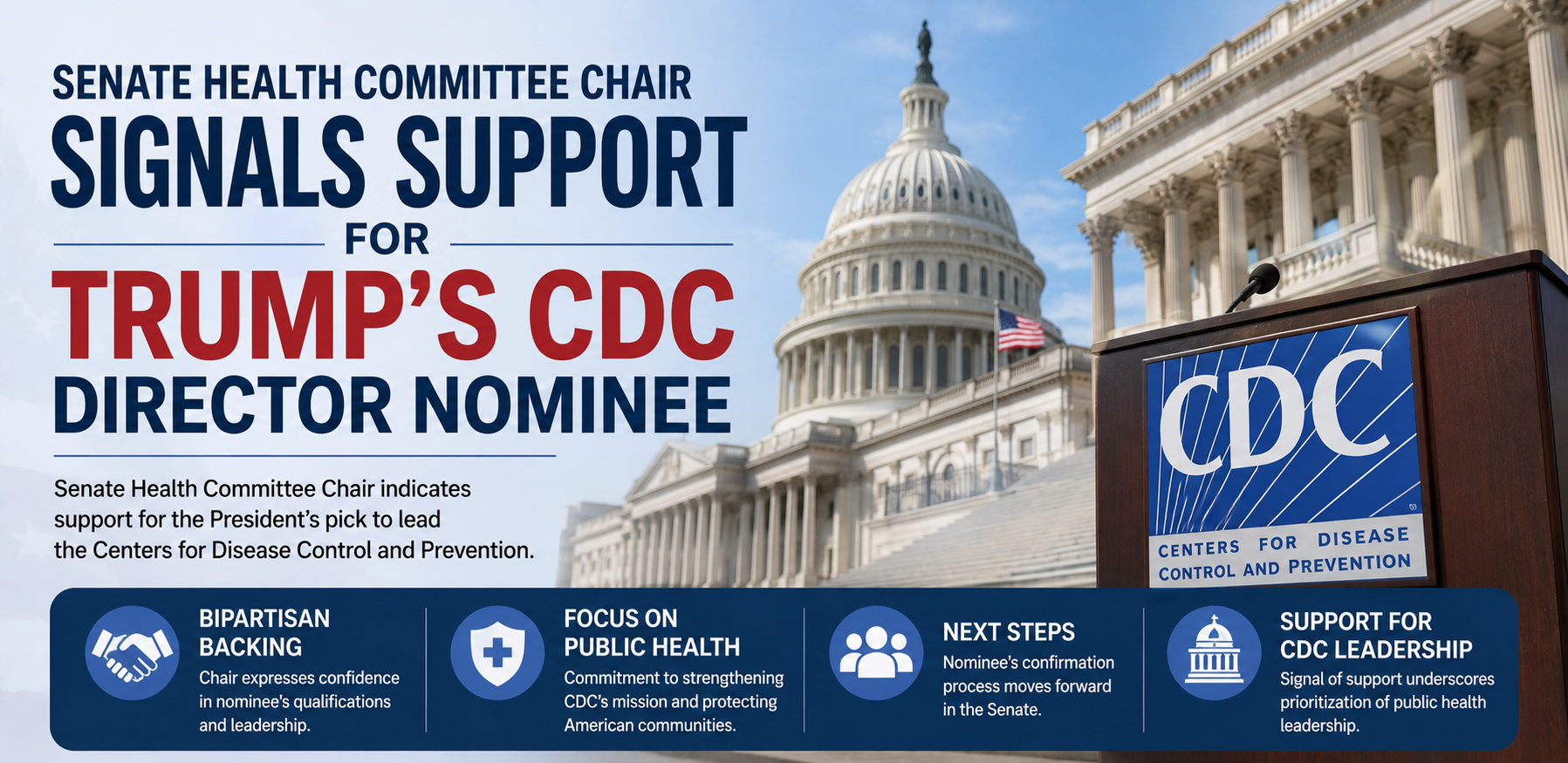
Senate Health Committee Chair Signals Support for Trump's CDC Director Nominee
What's Happening
The confirmation process for the next Director of the U.S. Centers for Disease Control and Prevention (CDC) moved forward after Senator Bill Cassidy, chair of the Senate Health, Education, Labor, and Pensions (HELP) Committee, indicated support for President Donald Trump's nominee, Dr. Erica Schwartz.
Cassidy's evaluation is significant because the Senate HELP Committee is responsible for reviewing and advancing nominations for some of the nation's most important public health leadership positions. His position improves the nominee's prospects as the Senate considers who will lead the country's premier public health agency.
The appointment comes at a time when the CDC continues to rebuild public trust, modernize its data infrastructure, strengthen disease surveillance, and prepare for future public health emergencies following the lessons learned during the COVID-19 pandemic.
Who ultimately leads the agency will influence national priorities ranging from infectious disease preparedness and chronic disease prevention to vaccination programs, laboratory modernization, and emergency response coordination.
Why the CDC Director Matters
The CDC is one of the most influential public health organizations in the world.
Its responsibilities extend far beyond responding to disease outbreaks. The agency helps shape national health policy by:
- Monitoring infectious disease outbreaks.
- Supporting vaccination programs.
- Investigating foodborne illnesses.
- Tracking chronic disease trends.
- Funding state and local public health departments.
- Developing public health guidelines.
- Coordinating emergency preparedness and disaster response.
- Supporting laboratory and epidemiological research.
Because of its broad responsibilities, leadership at the CDC can have far-reaching implications for healthcare providers, state governments, researchers, life sciences companies, and the general public.
A Critical Time for Public Health Leadership
The next CDC Director will assume leadership during a period of significant transformation.
In recent years, public health agencies have faced increasing expectations to:
- Improve the speed of disease detection.
- Modernize public health data systems.
- Strengthen collaboration with healthcare providers.
- Expand genomic surveillance capabilities.
- Improve communication during health emergencies.
- Address workforce shortages across public health agencies.
The agency is also navigating new challenges involving emerging infectious diseases, antimicrobial resistance, climate-related health risks, and growing rates of chronic illness.
Leadership decisions made over the next several years are expected to influence how effectively the CDC responds to these evolving public health priorities.
Why Senate Support Is Important
The confirmation process for senior federal health officials requires Senate approval.
As chair of the Senate HELP Committee, Senator Cassidy plays an important role in evaluating nominees' qualifications, policy priorities, and leadership approach before the full Senate considers confirmation.
Public support from the committee chair often signals that a nominee has a stronger pathway through the confirmation process, although confirmation is not guaranteed.
Committee hearings also provide lawmakers an opportunity to examine how nominees plan to address key issues such as:
- Public health preparedness.
- Vaccine policy.
- Disease surveillance.
- Health equity initiatives.
- Federal-state coordination.
- Emergency response planning.
These discussions often shape expectations for an agency's future direction.
Industry Impact
- Public Health Agencies: Leadership changes at the CDC can influence funding priorities, surveillance initiatives, and collaboration between federal, state, and local health departments. Agencies may adjust strategic planning once new leadership establishes its agenda.
- Healthcare Providers: Hospitals, physician organizations, and health systems rely on CDC guidance for infection prevention, immunization recommendations, outbreak management, and public health reporting. Any shifts in priorities could affect clinical practice and preparedness efforts.
- Pharmaceutical and Biotechnology Companies: The CDC plays a central role in vaccination policy, disease monitoring, and public health recommendations that influence vaccine adoption, infectious disease research, and emergency preparedness investments.
- Health Technology Companies: Organizations developing disease surveillance platforms, public health analytics, laboratory information systems, and digital reporting tools may benefit from continued investment in modernizing the nation's public health infrastructure.
Looking Ahead
Although committee engagement represents an important step in the confirmation process, the nominee must still receive full Senate approval before assuming leadership of the CDC.
If confirmed, the new director will inherit an agency working to strengthen public confidence while expanding its capabilities in data modernization, outbreak detection, laboratory science, and emergency preparedness.
The coming years are expected to focus heavily on improving the speed and accuracy of public health intelligence, strengthening partnerships with healthcare organizations, and ensuring that the nation is better prepared for future health emergencies.
Leadership continuity and a clear strategic vision will be critical as the CDC continues adapting to an increasingly complex public health landscape.
Why This Matters
The CDC sits at the center of the United States' public health system, providing scientific guidance and coordinating responses to many of the country's most significant health challenges.
Changes in agency leadership often shape national priorities for years, influencing everything from disease surveillance and vaccination strategies to public health funding and emergency preparedness.
While leadership transitions do not immediately change public health policy, they establish the direction that federal health agencies are likely to pursue over time.
For healthcare organizations, understanding these leadership shifts provides valuable insight into future regulatory priorities, funding opportunities, and public health initiatives.
Key Takeaways
- Senator Bill Cassidy evaluated President Trump's nominee to lead the CDC.
- Support from the Senate HELP Committee chair strengthens the nominee's path toward confirmation.
- The next CDC Director will oversee national priorities including disease surveillance, emergency preparedness, vaccination programs, and public health modernization.
- Leadership changes at the CDC can influence healthcare providers, public health agencies, pharmaceutical companies, and health technology organizations.
- The appointment comes during a period of continued investment in strengthening the nation's public health infrastructure.
What This Means for Healthcare Marketers
Leadership appointments at major federal health agencies often signal future policy priorities and investment areas across the healthcare ecosystem. Organizations involved in public health technology, infectious disease surveillance, laboratory services, healthcare analytics, and preventive care should monitor changes in CDC leadership closely, as strategic priorities can influence funding, partnerships, and healthcare initiatives nationwide. For healthcare marketers, understanding evolving federal public health priorities can help identify organizations preparing to invest in disease surveillance, data modernization, and population health programs.