Seven American Aid Workers Quarantined in Kenya as U.S. Tightens Ebola Travel Measures
What's Happening
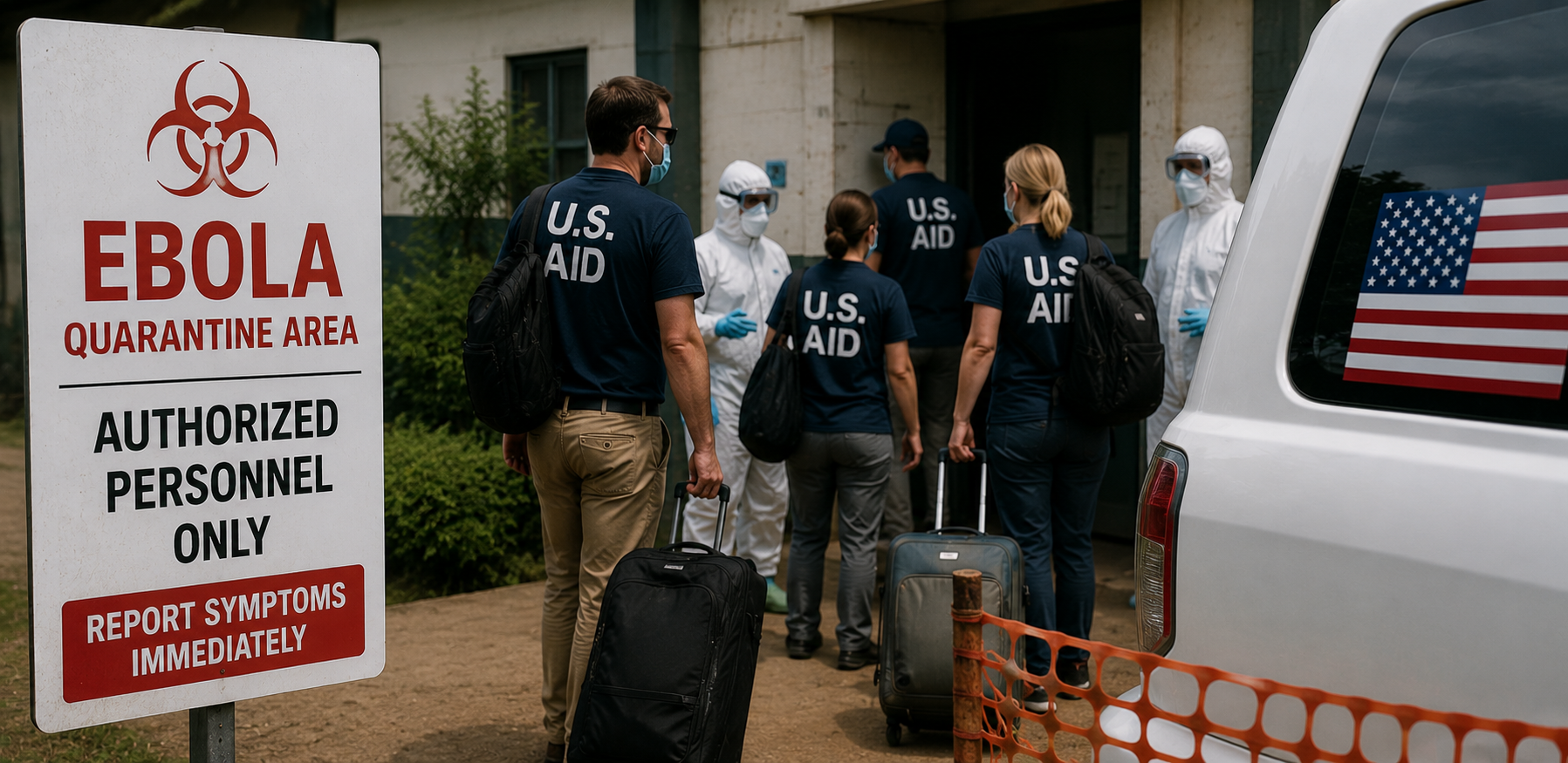
Seven American humanitarian workers who recently assisted with the Ebola response in the Democratic Republic of Congo (DRC) are undergoing a 21-day quarantine at a newly built U.S.-supported bio-isolation facility in Kenya.
The aid workers, employed by the humanitarian organization Samaritan's Purse, are the first known individuals to use the facility. According to the organization, none of the seven workers are showing symptoms of Ebola, and the quarantine is being carried out as a precaution under new U.S. travel rules for Americans returning from Ebola-affected regions.
The quarantine facility has become the center of political and legal controversy in Kenya, where opponents argue that the country should not be used to quarantine Americans exposed to Ebola abroad.
Why Are They Being Quarantined?
The quarantine follows a new U.S. policy requiring American citizens returning from the Democratic Republic of Congo, where an Ebola outbreak is ongoing, to spend 21 days in a third country before being allowed to return to the United States.
Previously, exposed travelers were generally monitored after arriving in the U.S. The revised policy aims to reduce the possibility of importing Ebola into the country by ensuring the incubation period has passed before travelers enter the United States.
The seven aid workers had been helping combat the Ebola outbreak in eastern Congo before traveling to Kenya.
Understanding Ebola
Ebola virus disease is a severe and often life-threatening illness caused by infection with one of several Ebola virus species.
The virus spreads through direct contact with:
- Blood or body fluids of an infected person.
- Contaminated medical equipment.
- Infected animals.
- Surfaces contaminated with infectious fluids.
Common symptoms include:
- Fever.
- Severe headache.
- Muscle pain.
- Weakness.
- Vomiting.
- Diarrhea.
- Internal and external bleeding in severe cases.
People infected with Ebola do not become contagious until symptoms begin, which is why monitoring exposed individuals during the incubation period is an important public health strategy.
Why Kenya?
The quarantine is taking place at a 50-bed bio-isolation facility built with U.S. support on an air force base in central Kenya.
The facility was established to accommodate Americans who may have been exposed to Ebola while working in affected countries such as the Democratic Republic of Congo or Uganda.
However, the project has generated significant opposition within Kenya.
Critics argue that:
- Kenya should not bear the responsibility for quarantining foreign nationals.
- The project moved forward despite legal challenges.
- Local communities were not adequately consulted before construction began.
A Kenyan court previously ordered construction activities to stop while legal proceedings continue, although work reportedly continued afterward.
The Ebola Situation in Central Africa
The current outbreak involves the Bundibugyo strain of the Ebola virus in the Democratic Republic of Congo.
Unlike the better-known Zaire strain, the Bundibugyo variant currently has no widely approved vaccine or targeted treatment, making outbreak control heavily dependent on:
- Rapid diagnosis.
- Isolation of patients.
- Contact tracing.
- Community education.
- Safe burial practices.
- International humanitarian support.
International aid organizations continue to play a critical role by operating treatment centers, training healthcare workers, and supporting local public health authorities.
Why Quarantine Matters
Ebola's incubation period can last up to 21 days.
During this period, someone who has been exposed may not have symptoms but could later become ill.
A precautionary quarantine allows healthcare teams to:
- Monitor individuals for symptoms.
- Perform rapid testing if illness develops.
- Prevent potential transmission.
- Protect healthcare systems from unexpected imported cases.
According to Samaritan's Purse, all seven American aid workers remain healthy and symptom-free while under observation.
Industry Impact
- Humanitarian Organizations: Aid agencies may face additional logistical and staffing challenges as stricter travel policies increase the time required for international deployments and post-mission quarantine.
- Public Health Authorities: The situation highlights the complexity of balancing disease prevention with international humanitarian operations during active outbreaks.
- Governments: The controversy illustrates how infectious disease preparedness can raise diplomatic, legal, and political questions when multiple countries are involved.
- Healthcare Workers: Healthcare professionals responding to outbreaks may experience longer deployment timelines and additional travel restrictions, potentially affecting future recruitment for emergency response missions.
Why This Matters
The quarantine of the seven American aid workers reflects the increasingly cautious approach governments are taking toward high-risk infectious diseases.
Although none of the workers are ill, the incident demonstrates how outbreak response now extends beyond medical care to include border policies, international agreements, quarantine infrastructure, and public communication.
The controversy surrounding the Kenyan facility also highlights the broader challenges of managing global health emergencies. Effective outbreak response depends not only on medical expertise but also on cooperation between governments, humanitarian organizations, and local communities.
As emerging infectious diseases continue to pose international risks, countries are likely to further strengthen quarantine protocols while balancing public health protection with the need to support frontline healthcare workers responding to global outbreaks.
Key Takeaways
- Seven American aid workers are completing a 21-day precautionary quarantine in Kenya after assisting with Ebola response efforts in the Democratic Republic of Congo.
- None of the workers have shown symptoms of Ebola.
- The quarantine follows a new U.S. policy requiring exposed Americans to remain in a third country before returning home.
- The U.S.-supported quarantine facility has become the subject of legal and political controversy within Kenya.
- The situation highlights the growing intersection of infectious disease preparedness, international travel policy, and humanitarian response efforts.
What This Means for Healthcare Marketers
This development illustrates how global infectious disease response increasingly depends on more than vaccines and treatments. Quarantine infrastructure, cross-border coordination, travel policies, and humanitarian logistics have become essential components of modern public health preparedness. Organizations involved in infectious disease management, laboratory diagnostics, emergency response, and global health infrastructure are likely to see continued investment as governments strengthen their readiness for future outbreaks.
For healthcare marketers, the story reinforces the importance of demonstrating expertise in outbreak preparedness, infection control, and public health collaboration. Healthcare buyers are placing greater value on organizations that support resilient healthcare systems through surveillance technologies, diagnostics, biosafety solutions, and emergency response capabilities.
For healthcare intelligence teams, monitoring developments such as travel restrictions, quarantine policies, humanitarian deployments, and international outbreak responses provides valuable insight into evolving global health priorities. These signals can help identify emerging opportunities across infectious disease management, public health infrastructure, and international healthcare partnerships.