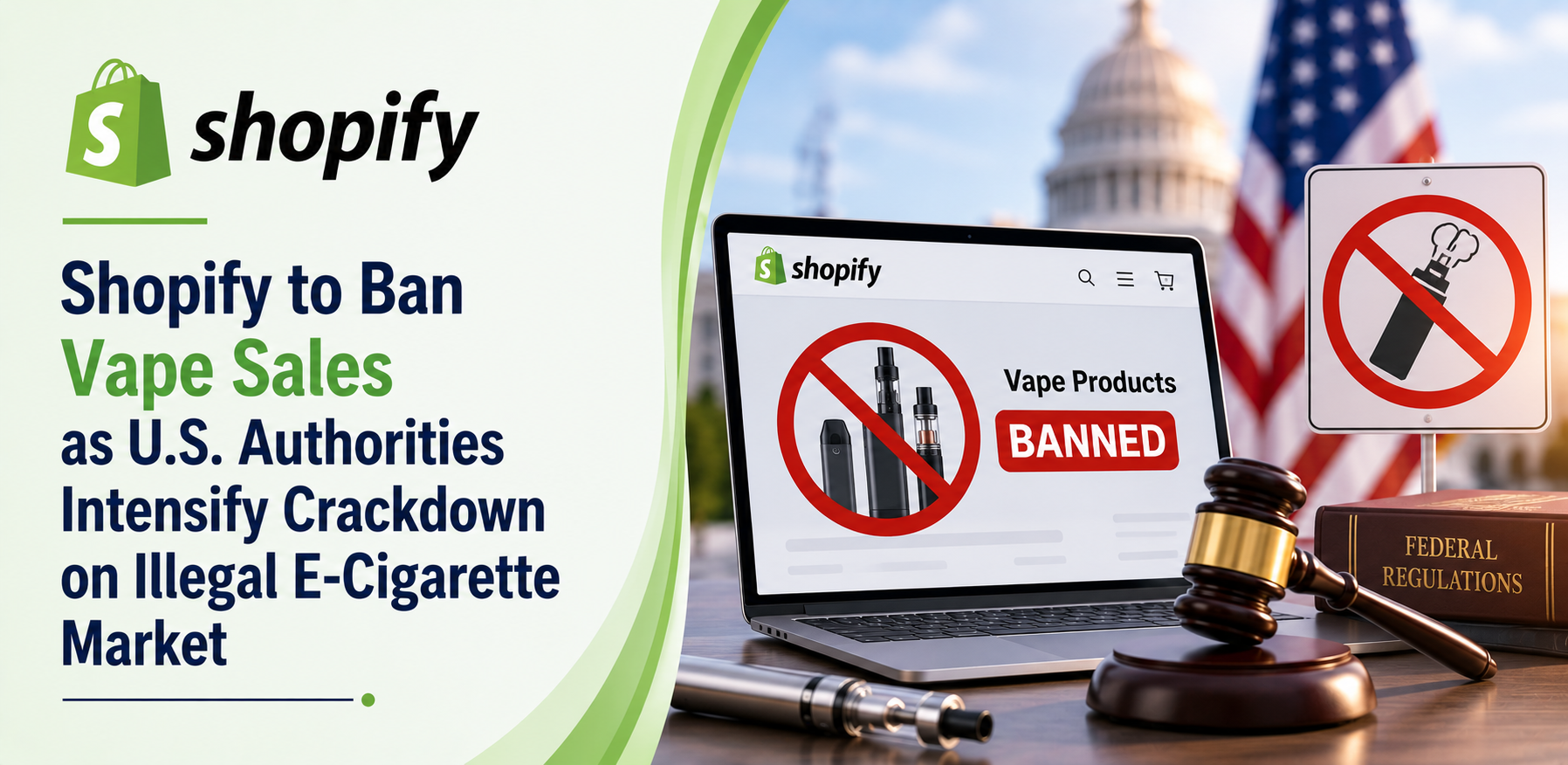
Shopify to Ban Vape Sales as U.S. Authorities Intensify Crackdown on Illegal E-Cigarette Market
What's Happening
Shopify announced that it will prohibit the sale of vaping products on its e-commerce platform as U.S. regulators increase efforts to combat the illegal e-cigarette market.
The decision comes amid growing concern among federal authorities about the sale of unauthorized vaping products, particularly flavored disposable e-cigarettes that have become increasingly popular among young consumers. U.S. regulators, including the Food and Drug Administration (FDA), have spent the past several years attempting to reduce the availability of vaping products that have not received authorization to be marketed in the United States.
By removing vape sales from its platform, Shopify is joining broader efforts to limit access to products that regulators believe may violate federal laws and regulations. The move could affect thousands of online sellers who have relied on e-commerce platforms to market and distribute vaping products directly to consumers.
Why Regulators Are Focused on Vaping
E-cigarettes were originally introduced as an alternative to traditional cigarettes. Supporters argued that vaping products could potentially help adult smokers reduce or quit combustible tobacco use. However, concerns grew as vaping became increasingly popular among teenagers and young adults. Public health officials began reporting sharp increases in youth vaping rates, particularly involving flavored products that appealed to younger consumers. Health authorities became concerned about:
- Nicotine addiction among youth
- Marketing practices targeting younger audiences
- Access to unregulated products
- Product safety and quality
- Long-term health effects
As a result, vaping has become one of the most heavily scrutinized areas of tobacco regulation.
How FDA Authorization Works
In the United States, vaping products must generally receive authorization from the FDA before they can legally be marketed. Manufacturers are required to demonstrate that their products are appropriate for the protection of public health. The FDA evaluates factors such as:
- Product ingredients
- Health risks
- Marketing practices
- Impact on youth use
- Potential benefits for adult smokers
Only a limited number of vaping products have received authorization through this process. Despite these requirements, regulators say many unauthorized products continue to enter the U.S. market through various channels. Enforcement efforts have therefore become a major focus for federal agencies.
Why Disposable Vapes Have Become a Major Concern
Much of the recent regulatory attention has focused on disposable vaping products. These devices are often:
- Pre-filled
- Single-use
- Relatively inexpensive
- Available in numerous flavors
Many public health experts believe flavored disposable products have contributed significantly to youth vaping rates. Regulators have also expressed concerns regarding products imported from overseas manufacturers that may not have undergone FDA review. Because many of these products are sold online, e-commerce platforms have increasingly come under pressure to strengthen compliance efforts. Shopify's decision reflects the growing role that technology companies are playing in tobacco-control efforts.
The Role of Online Marketplaces
Online sales have become an important distribution channel for vaping products. E-commerce platforms provide sellers with access to large consumer audiences and streamlined payment systems. However, regulators argue that online sales can make age verification and compliance enforcement more challenging. As a result, technology companies have faced increasing scrutiny regarding:
- Product listings
- Seller verification
- Age restrictions
- Regulatory compliance
- Consumer protection measures
Many platforms have adopted stricter policies in response to evolving regulatory expectations. Shopify's decision represents one of the most significant examples of a major platform voluntarily limiting vape-related commerce.
Why This Matters for Public Health
Public health officials generally support efforts aimed at reducing youth access to nicotine products. Research has shown that nicotine exposure during adolescence can affect brain development and increase the likelihood of long-term addiction. At the same time, vaping remains a complex issue because some healthcare experts argue that e-cigarettes may help certain adult smokers transition away from traditional cigarettes. This has created ongoing debates regarding how regulators should balance:
- Youth protection
- Adult smoking cessation
- Consumer choice
- Product safety
- Market access
The challenge for policymakers is creating regulations that address youth vaping concerns while considering potential harm-reduction benefits for adult smokers.
What This Means for the Vaping Industry
The decision could create significant challenges for vape sellers that depend on online commerce. Companies may need to:
- Seek alternative sales channels
- Adjust marketing strategies
- Improve regulatory compliance
- Focus on authorized products
The broader vaping industry is already facing increased pressure from enforcement actions, import restrictions, warning letters, and legal challenges. As regulatory oversight intensifies, businesses operating in the sector may encounter higher compliance costs and greater operational complexity. The trend suggests that the market may continue consolidating around companies able to meet increasingly stringent regulatory requirements.
Industry Impact
- E-Commerce Platforms: Technology companies are facing growing expectations to enforce healthcare and consumer-protection regulations.
- Vape Manufacturers: Companies must navigate increasingly strict compliance and authorization requirements.
- Public Health Agencies: Regulators continue focusing on reducing youth access to nicotine products.
- Consumers: Changes may affect product availability and purchasing channels.
Why This Matters
The Shopify decision highlights the growing intersection between healthcare regulation, public health policy, and digital commerce. Increasingly, online platforms are being asked to play a larger role in enforcing health-related regulations. The move also reflects broader concerns about youth nicotine use and the challenges of regulating products in a digital marketplace. As regulators continue addressing unauthorized vaping products, additional actions involving e-commerce companies, manufacturers, and retailers may follow. The outcome could help shape how healthcare-related products are sold and regulated online in the future.
Key Takeaways
- Shopify will prohibit vape sales on its platform.
- The decision comes amid increased U.S. enforcement against unauthorized vaping products.
- Regulators remain concerned about youth vaping and nicotine addiction.
- Many vaping products sold online have not received FDA authorization.
- The move reflects growing pressure on digital platforms to strengthen regulatory compliance.
What This Means for Healthcare Marketers
This story demonstrates how healthcare regulation increasingly extends beyond traditional healthcare organizations and into the digital economy. For healthcare marketers, regulatory actions involving online marketplaces can significantly affect product distribution, consumer access, and marketing strategies. Companies operating in regulated categories must pay close attention not only to healthcare regulators but also to platform policies that can reshape entire markets.
The decision also highlights the growing importance of compliance as a competitive advantage. Organizations that can successfully navigate evolving regulations may be better positioned to maintain market access while competitors face restrictions. For healthcare intelligence teams, enforcement actions involving vaping products provide insight into broader regulatory priorities related to nicotine, consumer protection, youth health, and digital commerce. These developments can help organizations anticipate future policy shifts affecting other healthcare-related products. More broadly, the story reflects a healthcare environment where technology platforms are becoming increasingly important participants in public health and regulatory enforcement efforts.