
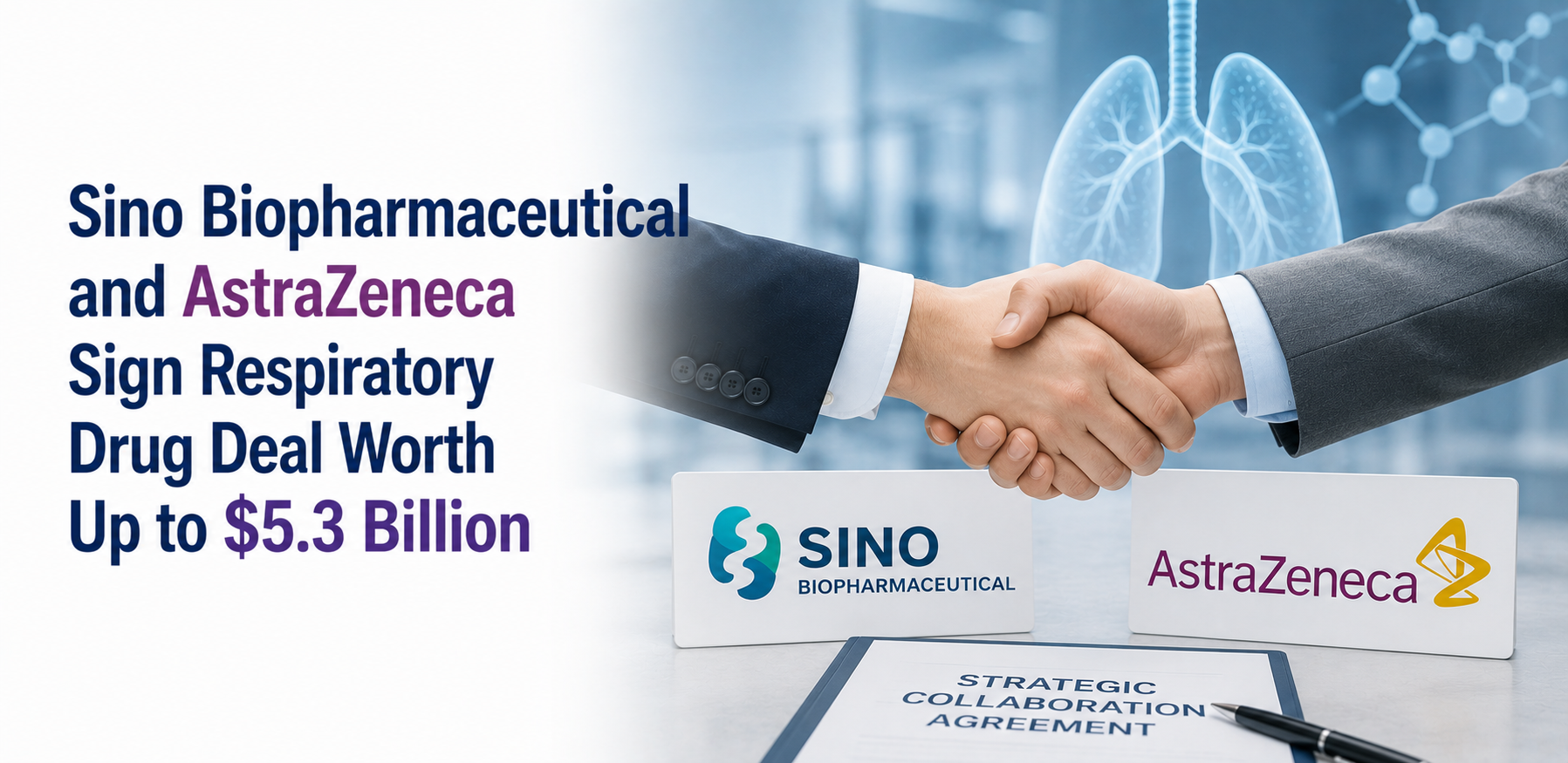
Sino Biopharmaceutical and AstraZeneca Sign Respiratory Drug Deal Worth Up to $5.3 Billion
What's Happening
Sino Biopharmaceutical has signed a global licensing agreement with AstraZeneca worth up to $5.3 billion to develop and commercialize an experimental treatment for chronic respiratory diseases. The deal includes an upfront payment, future development and commercial milestone payments, and royalties if the therapy successfully reaches the market. (reuters.com)
The agreement centers on SIM0505, an investigational therapy being developed for chronic respiratory conditions. AstraZeneca will obtain worldwide rights to develop, manufacture, and commercialize the drug outside certain agreed markets, while Sino Biopharmaceutical will continue contributing scientific expertise during the collaboration.
The partnership is one of the largest respiratory licensing agreements announced this year and highlights the pharmaceutical industry's continued investment in innovative treatments for chronic lung diseases.
Why Respiratory Diseases Remain a Global Health Challenge
Chronic respiratory diseases affect hundreds of millions of people worldwide and are among the leading causes of illness and death. Some of the most common conditions include:
- Chronic obstructive pulmonary disease (COPD)
- Asthma
- Pulmonary fibrosis
- Chronic bronchitis
- Emphysema
These diseases often require lifelong treatment and can significantly reduce quality of life by causing shortness of breath, persistent coughing, wheezing, reduced exercise tolerance, and frequent hospitalizations. Although many effective medicines are already available, many patients continue to experience uncontrolled symptoms, creating demand for newer treatment approaches.
What Is SIM0505?
SIM0505 is an experimental biologic therapy designed to target inflammatory pathways involved in chronic respiratory diseases. While the medicine is still in clinical development, researchers believe it may help reduce the inflammation that contributes to ongoing lung damage and worsening symptoms.
Unlike traditional inhaled therapies that primarily manage symptoms, newer biologic medicines aim to interfere with specific immune pathways responsible for chronic disease progression. This precision approach has become increasingly important in respiratory medicine, particularly for patients whose disease remains poorly controlled despite standard treatments.
Why Pharmaceutical Companies Are Investing in Respiratory Medicine
Respiratory diseases represent one of the largest therapeutic markets worldwide. Several factors continue driving investment:
- Aging populations
- Rising rates of chronic lung disease
- Air pollution
- Smoking-related illness
- Growing recognition of severe asthma subtypes
- Advances in precision medicine
Large pharmaceutical companies increasingly focus on biologic medicines capable of treating specific patient populations rather than using a one-size-fits-all approach. This has led to significant innovation in severe asthma, COPD, and inflammatory lung diseases over the past decade.
Why AstraZeneca Is Interested
Respiratory medicine has long been one of AstraZeneca's core therapeutic areas. The company already markets several important medicines for asthma, COPD, severe eosinophilic asthma, and chronic respiratory inflammation. Adding SIM0505 strengthens AstraZeneca's respiratory pipeline while complementing its existing portfolio.
Rather than developing every therapy internally, AstraZeneca frequently partners with biotechnology companies that have promising early-stage science. This strategy allows the company to expand its pipeline while sharing development risk.
Understanding Pharmaceutical Licensing Deals
Drug development is one of the most expensive activities in healthcare. Developing a new medicine often requires more than 10 years of research, multiple phases of clinical trials, regulatory approval in multiple countries, large-scale manufacturing, and significant commercial investment. To reduce financial risk, biotechnology companies often license promising therapies to larger pharmaceutical companies. These agreements typically include:
- Upfront Payment: The smaller company receives an immediate payment when the agreement is signed.
- Milestone Payments: Additional payments are earned if the therapy reaches important development, regulatory, or commercial milestones.
- Royalties: If the medicine is successfully launched, the original developer receives a percentage of future sales.
This structure allows innovative companies to continue funding research while benefiting from the global development capabilities of larger pharmaceutical organizations.
Why China Is Becoming an Important Source of Drug Innovation
Over the past decade, Chinese biotechnology companies have become increasingly active in global drug discovery. Many companies now develop innovative therapies rather than focusing primarily on generic medicines. International pharmaceutical companies are signing a growing number of licensing agreements with Chinese biotechnology firms because they recognize the increasing quality of scientific research and drug development occurring in China. The AstraZeneca-Sino Biopharmaceutical partnership reflects this broader shift toward global collaboration in pharmaceutical innovation.
Challenges Ahead
Although the agreement is worth up to $5.3 billion, much of that value depends on future success. SIM0505 must still complete clinical trials, demonstrate safety and effectiveness, receive regulatory approvals, and successfully enter commercial markets. Many investigational medicines fail during clinical development. As a result, milestone payments will only be made if the therapy continues achieving important scientific and regulatory objectives.
Industry Impact
- Pharmaceutical Companies: The agreement reinforces continued investment in respiratory medicine and biologic therapies.
- Biotechnology Companies: Chinese biotechnology firms continue attracting major international licensing partnerships.
- Healthcare Providers: Future biologic therapies may expand treatment options for patients with difficult-to-control respiratory diseases.
- Patients: If successful, SIM0505 could eventually provide another treatment option for people living with chronic lung diseases.
Why This Matters
The AstraZeneca-Sino Biopharmaceutical agreement reflects two important trends shaping modern drug development. First, pharmaceutical companies continue prioritizing chronic diseases with large unmet medical needs, including respiratory illnesses that affect millions of patients worldwide. Second, innovation is becoming increasingly global. Rather than relying solely on internal research, multinational pharmaceutical companies are partnering with biotechnology firms across multiple countries to access promising new technologies earlier in development.
As respiratory medicine moves toward more personalized biologic therapies, collaborations like this will likely become increasingly common. These partnerships help accelerate innovation while providing patients with the possibility of more targeted and effective treatments in the future.
Key Takeaways
- Sino Biopharmaceutical and AstraZeneca signed a respiratory drug licensing agreement worth up to $5.3 billion.
- The partnership focuses on the investigational respiratory therapy SIM0505.
- AstraZeneca will obtain global development and commercialization rights under the agreement.
- Respiratory diseases remain one of the largest areas of unmet medical need worldwide.
- The deal highlights the growing role of Chinese biotechnology companies in global pharmaceutical innovation.
What This Means for Healthcare Marketers
This agreement underscores the growing globalization of pharmaceutical innovation. Increasingly, breakthrough therapies are emerging from biotechnology companies around the world, with large pharmaceutical organizations serving as global development and commercialization partners. For healthcare marketers, this means competitive intelligence can no longer focus solely on traditional Western pharmaceutical companies, innovation pipelines are becoming far more geographically diverse.
For healthcare marketers working in respiratory medicine, the deal also highlights the continued evolution toward precision therapies. As biologics become available for more respiratory conditions, commercial strategies will increasingly focus on identifying the right patient populations, educating specialists about targeted mechanisms of action, and demonstrating value through improved clinical outcomes.
For healthcare intelligence teams, large licensing agreements remain one of the strongest indicators of future market direction. Monitoring partnerships, acquisitions, and licensing activity helps identify which therapeutic areas are attracting investment and where pharmaceutical companies believe the next generation of innovation will emerge. The AstraZeneca, Sino Biopharmaceutical collaboration suggests that chronic respiratory disease will remain a major area of research, investment, and commercial opportunity over the coming decade.