
Sionna Halts Development of Experimental Cystic Fibrosis Drug After Mid-Stage Trial Setback
What's Happening
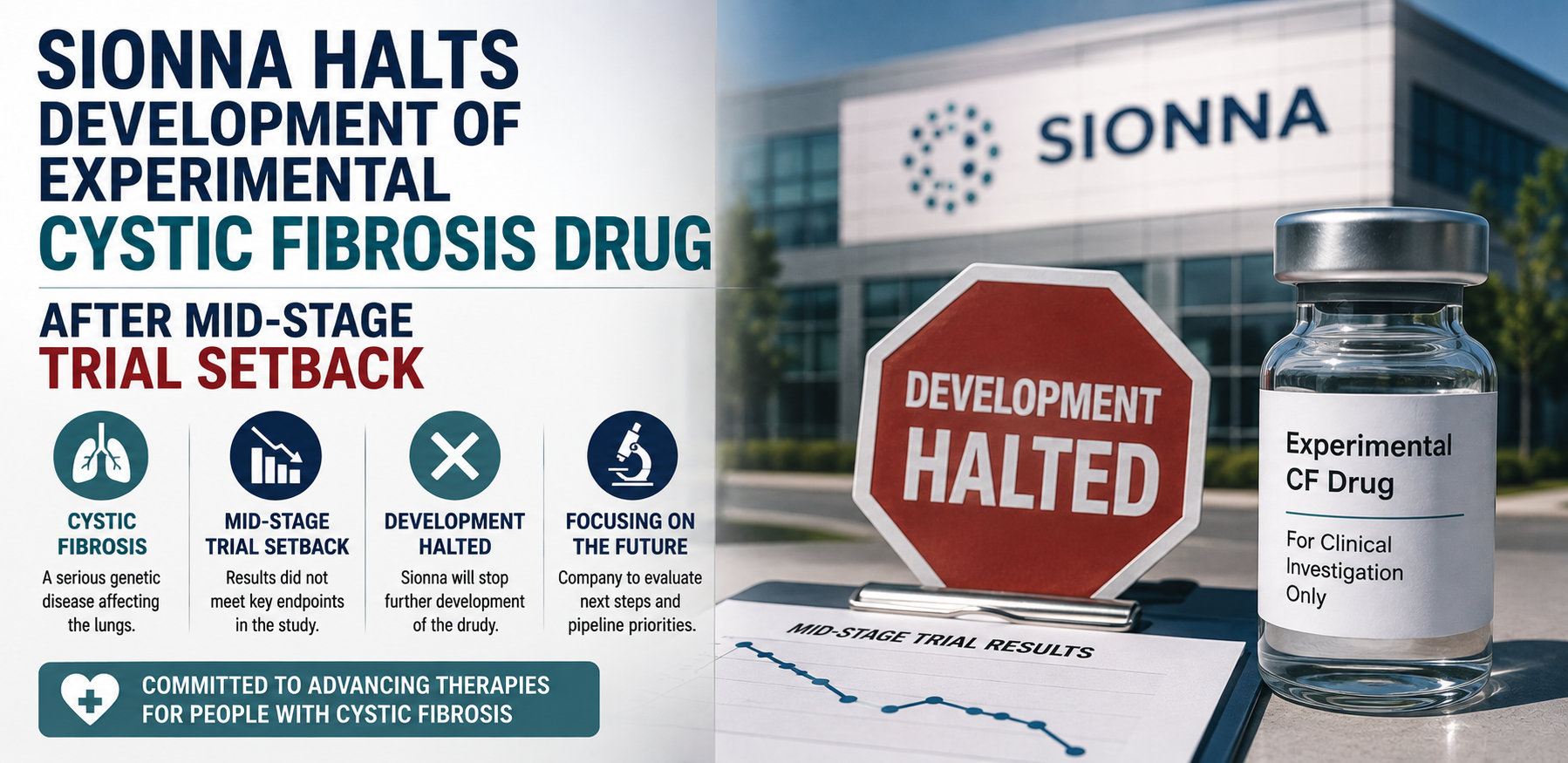
Sionna Therapeutics has discontinued development of its experimental cystic fibrosis drug SION-719 after the treatment failed to demonstrate a meaningful benefit in a mid-stage clinical trial.
The therapy was being evaluated as an add-on treatment to Vertex Pharmaceuticals' Trikafta, the current standard of care for cystic fibrosis. After the disappointing trial results, Sionna said it would stop further development of SION-719, sending the company's shares down nearly 92%.
Despite the setback, the company said it will continue evaluating other cystic fibrosis drug candidates within its pipeline.
Understanding Cystic Fibrosis
Cystic fibrosis is a rare inherited disease caused by mutations in the CFTR gene.
The condition primarily affects the:
- Lungs.
- Digestive system.
- Sweat glands.
Common symptoms include:
- Persistent lung infections.
- Thick mucus buildup.
- Difficulty breathing.
- Poor nutrient absorption.
- Reduced lung function over time.
Although treatments have significantly improved outcomes, researchers continue developing therapies that further improve CFTR protein function.
Why the Trial Failed
SION-719 was designed to enhance the effectiveness of Vertex's Trikafta by further improving CFTR protein function.
However, in the Phase 2a study:
- The drug failed to significantly reduce sweat chloride levels, an important biomarker used to evaluate cystic fibrosis treatments.
- The results did not meet the trial's primary objective.
- The company cited unexpected variability in patient test results and differences in Trikafta exposure as possible factors affecting the outcome.
The drug was generally well tolerated, with no serious safety concerns reported. Based on these findings, Sionna decided not to continue developing SION-719 as an add-on therapy.
Industry Impact
- Biotechnology Companies: The setback highlights the challenges of developing next-generation therapies in diseases where effective treatments already exist.
- Healthcare Providers: Cystic fibrosis specialists will continue relying on currently approved therapies while monitoring future innovations in the treatment landscape.
- Patients: Although SION-719 will not move forward, research into additional cystic fibrosis therapies continues, offering hope for future treatment options.
- Investors: The trial failure significantly reduced investor confidence, leading to one of the largest single-day declines in Sionna's share price.
Looking Ahead
Sionna will continue analyzing the clinical data to better understand why the study did not achieve its primary endpoint.
The company is also advancing a separate cystic fibrosis program combining SION-451 and SION-2222, which has shown encouraging early-stage safety and pharmacokinetic results in healthy volunteers. Future development decisions will depend on additional data and ongoing analysis.
Why This Matters
Clinical trial setbacks are a normal part of pharmaceutical research, particularly in complex genetic diseases such as cystic fibrosis.
Sionna's decision illustrates both the scientific challenges of improving on existing breakthrough therapies and the importance of rigorous clinical testing before new medicines reach patients.
The outcome also reinforces Vertex Pharmaceuticals' strong position in the cystic fibrosis treatment market while highlighting the continued need for innovative therapies.
Key Takeaways
- Sionna has stopped developing SION-719 after a Phase 2a trial failed to meet its primary endpoint.
- The drug was being tested alongside Vertex's Trikafta for cystic fibrosis.
- No major safety concerns were identified during the study.
- Sionna will continue developing other cystic fibrosis programs.
- The setback highlights the challenges of developing next-generation treatments for rare genetic diseases.
What This Means for Healthcare Marketers
Sionna's trial setback highlights the competitive landscape in rare diseases, cystic fibrosis, and precision medicine. Biotechnology companies, pharmaceutical manufacturers, specialty pharmacies, and academic research organizations continue investing in next-generation genetic therapies despite high clinical development risks. For healthcare marketers, organizations involved in rare diseases, respiratory medicine, precision therapeutics, and clinical research represent high-intent opportunities for physician education, scientific communications, patient advocacy partnerships, and commercialization planning.