Taco Bell Cyclospora Outbreak Weighs on Sales, but Analysts Expect a Temporary Impact
What's Happening
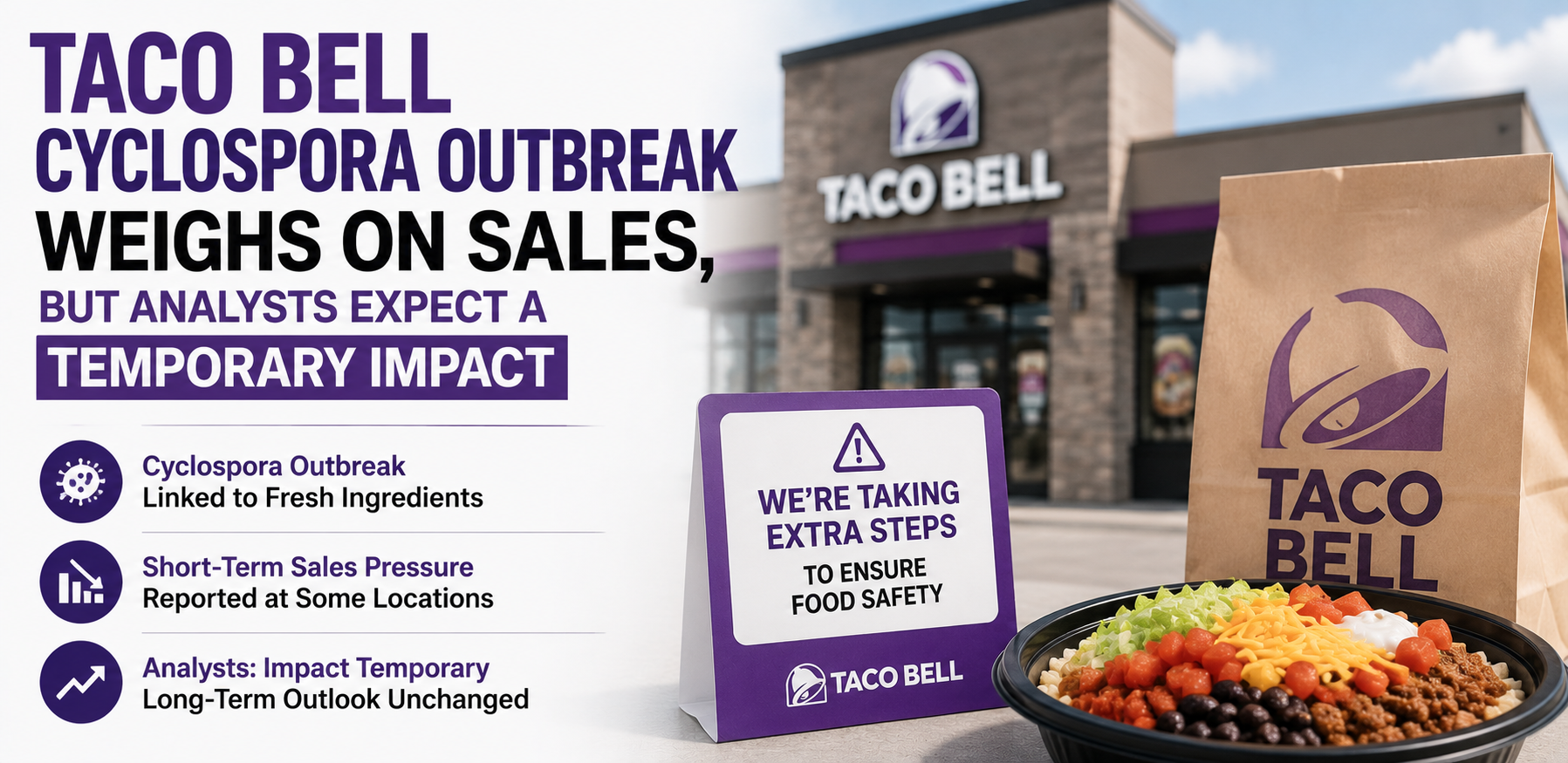
A recent Cyclospora outbreak linked to shredded iceberg lettuce served at some Taco Bell restaurants has reduced customer traffic and weighed on the performance of parent company Yum Brands. While the incident has created short-term concerns for the restaurant chain, industry analysts believe it is unlikely to have a lasting impact on Taco Bell's brand or long-term sales.
Health officials have linked the outbreak to shredded iceberg lettuce supplied through Taylor Farms' operations in central Mexico. As a precaution, Taco Bell removed the affected lettuce from restaurants nationwide and stopped sourcing iceberg lettuce from the supplier while the investigation continues.
Analysts point to Taco Bell's swift response and previous examples from the restaurant industry, where companies recovered after implementing effective food safety measures and communicating transparently with customers.
Understanding Cyclospora
Cyclospora is a microscopic parasite that causes an intestinal illness known as cyclosporiasis.
People typically become infected by consuming contaminated food or water, particularly fresh produce such as lettuce, herbs, berries, and leafy greens.
Common symptoms include:
- Watery diarrhea
- Stomach cramps
- Nausea
- Fatigue
- Loss of appetite
- Weight loss
Symptoms usually begin about one week after exposure and can persist for several weeks if untreated.
Why Foodborne Outbreaks Affect Restaurant Sales
Consumer confidence is one of the most valuable assets in the restaurant industry.
When a foodborne illness is linked to a restaurant chain, customers often temporarily reduce visits while waiting for more information about the outbreak. Investors also tend to react quickly because they anticipate weaker sales during the investigation.
However, analysts note that these effects are often temporary when companies:
- Remove the suspected ingredient immediately.
- Cooperate with public health authorities.
- Clearly communicate the actions being taken.
- Demonstrate improvements to food safety practices.
Past outbreaks involving other major restaurant chains have shown that customer traffic often returns once the source is identified and corrective measures are implemented.
Taco Bell's Response
Following guidance from health officials, Taco Bell acted quickly by removing shredded iceberg lettuce associated with the investigation from its restaurants.
The company also suspended purchases of iceberg lettuce from the supplier involved while authorities continue tracing the contamination source. These actions are intended to reduce further risk and reassure customers that food safety remains the company's top priority.
Industry analysts believe these proactive measures will help limit long-term damage to the brand.
Broader Supply Chain Implications
The outbreak highlights how a single ingredient can affect multiple organizations across the food supply chain.
Fresh produce suppliers, restaurant operators, distributors, regulators, and public health agencies all play important roles in identifying contamination and preventing additional illnesses.
The incident also reinforces the importance of:
- Supply chain traceability.
- Rapid food recalls.
- Strong supplier oversight.
- Routine food safety testing.
- Transparent communication during public health events.
As food supply chains become increasingly global, the ability to quickly identify contaminated products is becoming a critical capability for both regulators and food companies.
Industry Impact
- Restaurant Chains: Restaurants may experience temporary declines in customer visits following food safety incidents, even when the contamination originates from a supplier rather than restaurant operations.
- Food Suppliers: Produce suppliers face increased scrutiny regarding food safety practices, quality control, and product traceability.
- Public Health Agencies: The outbreak demonstrates the importance of rapid epidemiological investigations and coordinated responses between federal, state, and industry partners.
- Consumers: Public awareness of foodborne illness outbreaks often influences purchasing decisions, although consumer confidence generally improves once the source has been identified and corrective actions are completed.
Why This Matters
Foodborne illness outbreaks can have immediate financial consequences for restaurants, suppliers, and investors, even when companies respond quickly.
The Taco Bell incident demonstrates how supply chain issues can rapidly become business challenges that affect consumer behavior and brand perception. At the same time, it highlights the value of strong crisis management, transparent communication, and rapid corrective action.
Analysts believe that because Taco Bell acted quickly and the contamination appears linked to a specific supplier rather than widespread operational failures, the company is well positioned to recover once the investigation concludes and consumer confidence returns.
Key Takeaways
- The Cyclospora outbreak has temporarily reduced customer traffic at Taco Bell.
- Health officials linked the outbreak to shredded iceberg lettuce supplied through Taylor Farms' operations in central Mexico.
- Taco Bell removed the affected lettuce nationwide and suspended sourcing from the supplier involved.
- Analysts expect the financial impact to be temporary because of the company's rapid response and historical recovery patterns following similar food safety events.
- The incident underscores the importance of supply chain traceability and rapid food safety response systems.
What This Means for Healthcare Marketers
Food safety incidents extend beyond restaurants and have important implications for public health, diagnostics, laboratory testing, epidemiology, and supply chain intelligence. Organizations that provide outbreak surveillance, food safety analytics, laboratory services, and healthcare data solutions have an opportunity to demonstrate how timely information supports faster public health responses.
For healthcare marketers, this event reinforces the importance of communicating trust, transparency, and measurable outcomes during periods of uncertainty. Organizations that can clearly demonstrate their role in identifying risks, improving surveillance, or supporting faster decision-making are likely to build greater credibility with healthcare and public health stakeholders.