Taco Bell Removes Lettuce in Several States as Cyclospora Investigation Continues
What's Happening
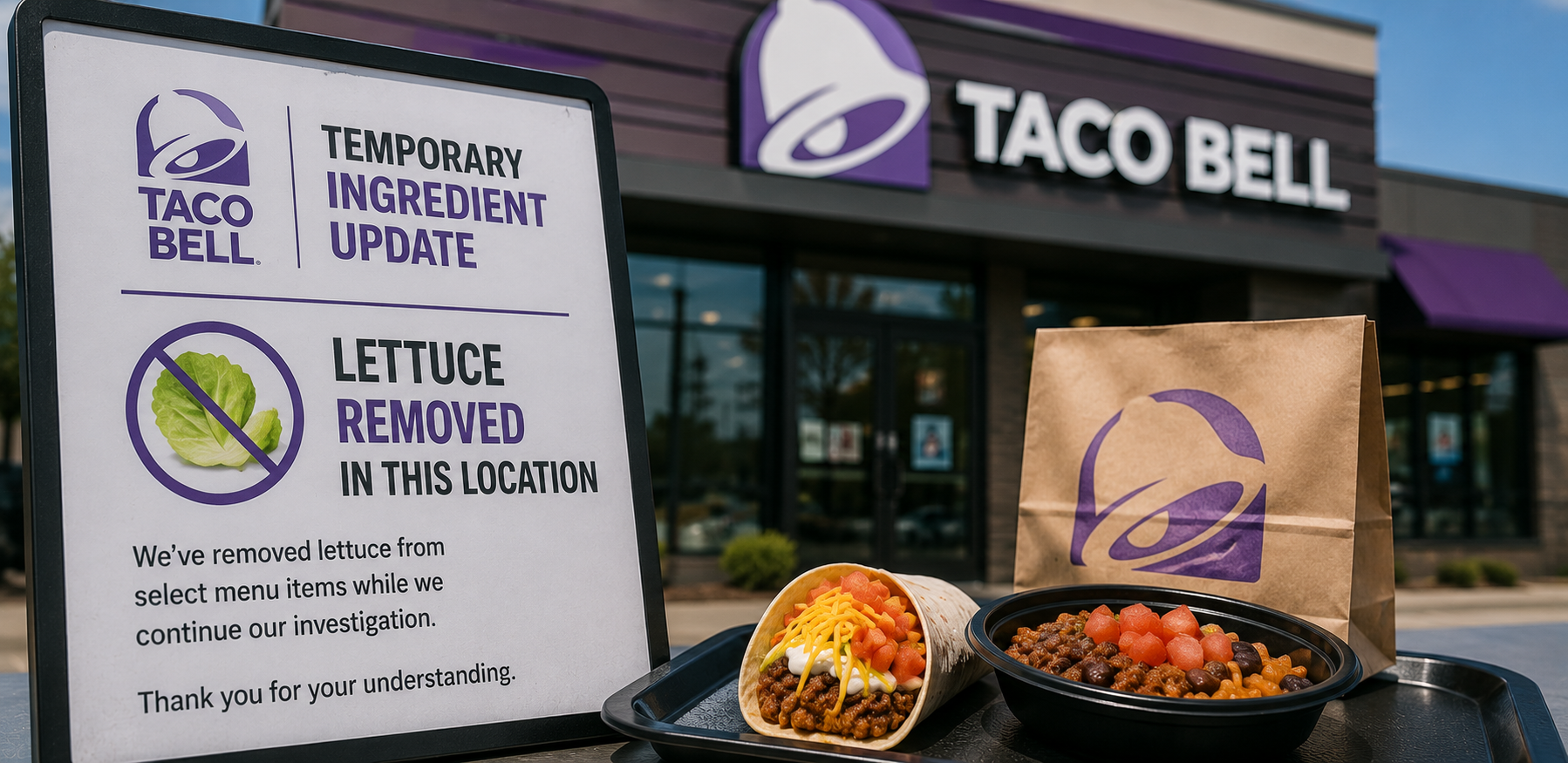
Taco Bell has removed shredded iceberg lettuce from restaurants in several U.S. states after federal health officials linked the ingredient to an ongoing cyclospora (cyclosporiasis) outbreak.
The company said it voluntarily stopped serving lettuce supplied by the distributor identified during the investigation and replaced the ingredient with lettuce from alternative sources where possible. The decision was made as a precaution while public health authorities continue working to identify the exact source of the contamination. (reuters.com)
The move follows an investigation by the U.S. Food and Drug Administration (FDA) and other health agencies into a multistate outbreak of cyclospora infections believed to be associated with contaminated fresh produce.
What Is Cyclospora?
Cyclospora is a microscopic parasite that causes the intestinal illness cyclosporiasis.
People become infected after consuming food or water contaminated with the parasite. Unlike many bacterial foodborne illnesses, Cyclospora infections are most commonly associated with fresh fruits and vegetables that are eaten raw.
Symptoms typically appear about one week after exposure and may include:
- Persistent watery diarrhea.
- Stomach cramps.
- Nausea.
- Fatigue.
- Loss of appetite.
- Weight loss.
- Low-grade fever.
Without treatment, symptoms can last for several weeks and may return after temporarily improving.
Why Lettuce Is Being Investigated
Fresh leafy vegetables are among the foods most commonly examined during foodborne illness investigations because they are generally consumed without cooking.
Health officials believe contaminated shredded iceberg lettuce may have entered the food supply before reaching restaurants.
Investigators are reviewing:
- Agricultural production practices.
- Irrigation systems.
- Processing facilities.
- Distribution networks.
- Restaurant supply chains.
The objective is to determine exactly where contamination occurred so additional illnesses can be prevented.
According to Reuters, Taco Bell removed lettuce from affected restaurants even though the investigation remains ongoing, reflecting a precautionary approach to food safety. (reuters.com)
Taco Bell's Response
The company said it acted quickly after learning that one of its suppliers had been identified during the investigation.
Its response includes:
- Removing lettuce supplied by the affected distributor.
- Switching to alternative lettuce suppliers where available.
- Cooperating with public health investigators.
- Continuing to monitor developments as the investigation progresses.
Restaurants in unaffected regions continue operating normally using different supply sources.
The company has emphasized that protecting customer safety remains its highest priority.
Why Supply Chain Traceability Matters
Modern restaurant chains source ingredients through extensive supplier networks that serve thousands of locations.
When contamination occurs, companies need to rapidly determine:
- Which supplier provided the ingredient.
- Which restaurants received affected products.
- When shipments occurred.
- Whether additional products may be involved.
Digital traceability systems have become increasingly important because they allow businesses to isolate potentially contaminated products without unnecessarily disrupting unaffected operations.
The faster contaminated products can be identified and removed, the lower the likelihood of additional illnesses.
Public Health Response
Federal and state health officials continue working together to identify the exact source of the outbreak.
Their investigation includes:
- Interviewing infected individuals.
- Reviewing food purchase histories.
- Testing food samples.
- Examining supplier records.
- Tracing produce distribution routes.
Public health agencies may issue additional recommendations if new information becomes available during the investigation.
Industry Impact
- Restaurant Chains: The incident highlights the importance of rapid response, supplier management, and transparent communication during food safety investigations.
- Food Suppliers: Produce suppliers face increased inspections and tighter quality assurance requirements as regulators continue examining contamination risks.
- Public Health Agencies: The outbreak demonstrates the importance of coordinated surveillance systems that enable health officials to identify foodborne illness clusters and trace contaminated products quickly.
- Consumers: Customers benefit from rapid precautionary actions that reduce exposure while investigators work to determine the precise source of contamination.
Why This Matters
Taco Bell's decision to remove lettuce before the investigation is complete reflects a growing emphasis on preventive risk management across the food industry.
Rather than waiting for definitive conclusions, many companies now choose to act early whenever there is credible evidence linking an ingredient to a potential health risk. This approach can reduce additional illnesses while helping preserve public trust.
The incident also highlights the increasing importance of food supply chain visibility. As restaurant operations become more complex and nationally distributed, companies that can rapidly identify affected suppliers and products are better equipped to protect both consumers and their businesses.
Key Takeaways
- Taco Bell removed shredded iceberg lettuce from restaurants in several states after it was linked to an ongoing cyclospora investigation. (reuters.com)
- The company replaced lettuce from the identified supplier with alternative sources where possible.
- Cyclospora is a foodborne parasite commonly associated with contaminated fresh produce.
- Public health officials continue investigating the exact source of the contamination.
- The incident demonstrates the importance of supply chain traceability and rapid food safety response.
What This Means for Healthcare Marketers
Taco Bell's response illustrates how organizations increasingly prioritize proactive risk management during public health events. Quickly removing potentially affected products, communicating transparently, and cooperating with regulators have become essential practices for maintaining public confidence. These same principles apply across healthcare, where rapid response and clear communication are critical during safety-related events.
For healthcare marketers, the story reinforces the importance of trust, preparedness, and operational transparency. Whether responding to infectious disease outbreaks, product recalls, or cybersecurity incidents, organizations that communicate clearly and act decisively are better positioned to maintain credibility with patients, providers, and regulators.
For healthcare intelligence teams, this development highlights the value of monitoring food safety investigations, regulatory actions, and supply chain disruptions alongside broader public health trends. Together, these signals provide insight into emerging risks that can influence healthcare utilization, disease surveillance, diagnostics, and preventive health initiatives.