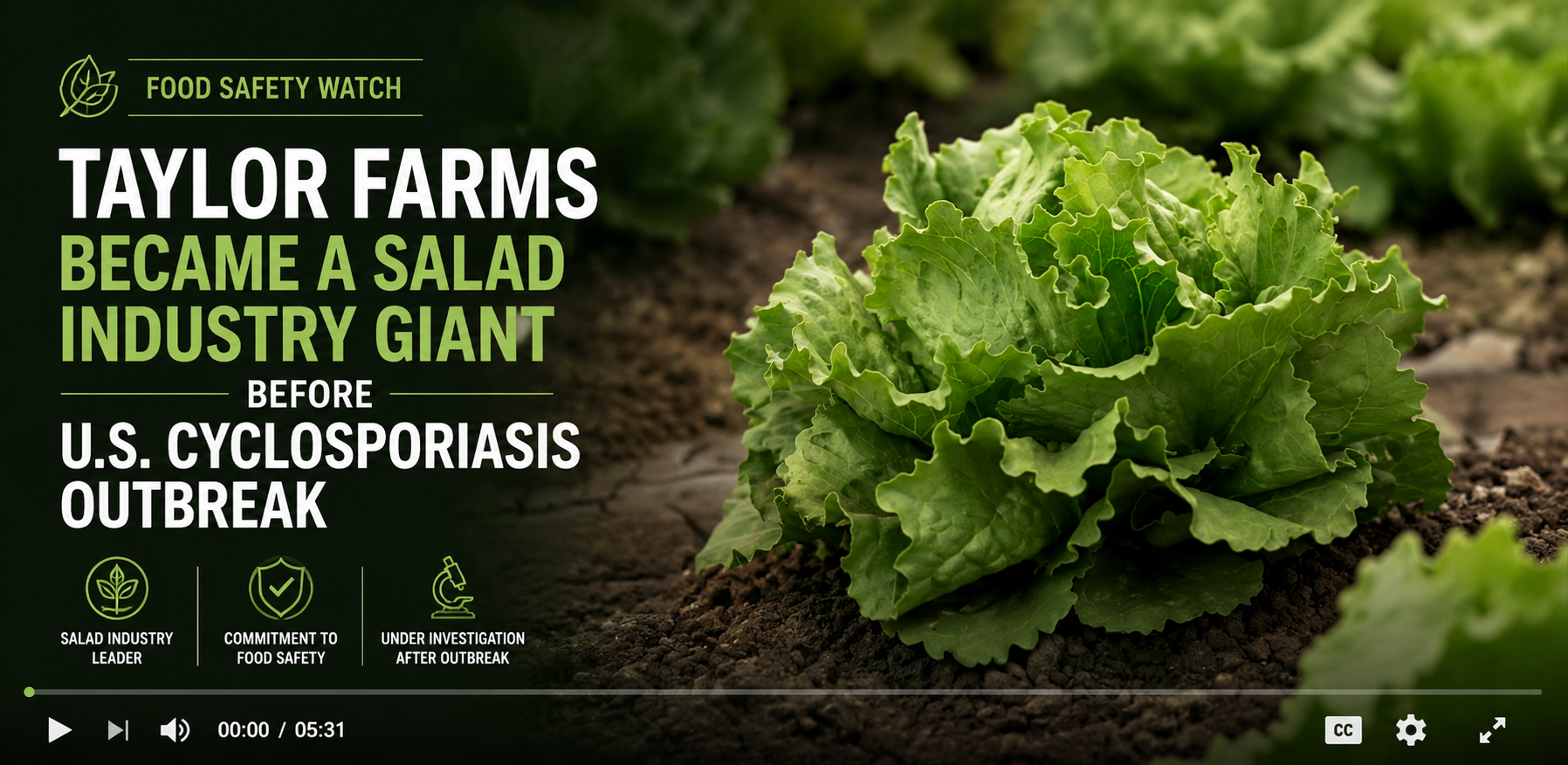
Taylor Farms Became a Salad Industry Giant Before U.S. Cyclosporiasis Outbreak
What's Happening
Taylor Farms has grown into one of the three largest suppliers of fresh-cut salads in the United States, with products reaching major retailers, restaurants, and food-service companies nationwide. This enormous scale has now come under intense scrutiny following a U.S. cyclosporiasis outbreak linked by investigators to iceberg lettuce processed at its facility in Guanajuato, Mexico, which has sickened more than 15,000 people and caused two deaths.
How Taylor Farms Became So Large
Founded in 1995 by Bruce Taylor, the company built its business model around pre-cut, packaged produce tailored for grocery retailers, fast-food chains, and institutional food-service companies. Growing into a roughly $7 billion business with over 25,000 employees, Taylor Farms now controls a substantial share of the U.S. fresh-cut salad market.
The Cyclosporiasis Outbreak
U.S. officials traced the outbreak to iceberg lettuce processed at Taylor Farms' Mexican facility, prompting a temporary shutdown and corrective safety measures. Cyclosporiasis, an intestinal infection caused by the parasite Cyclospora, is acquired through contaminated food or water and causes prolonged gastrointestinal illness. Beyond the direct health impact, consumer confidence in fresh produce has fallen, forcing widespread changes in sourcing practices.
Why Taylor Farms' Size Matters
The company's extensive distribution network creates both operational advantages and systemic risks. While large suppliers can invest heavily in processing infrastructure and food-safety systems, contamination can spread widely across multiple states before the source is identified.
Industry Impact
- Food Producers: Produce companies face heightened scrutiny over agricultural water, processing facilities, sanitation protocols, and traceability.
- Restaurants & Retailers: Businesses are increasingly diversifying suppliers to reduce exposure to food-safety vulnerabilities.
- Public Health Agencies: The outbreak highlights the critical need for rapid pathogen detection, seamless supply-chain tracing, and interagency coordination.
- Consumers: Trust in fresh produce has diminished, impacting overall consumption trends.
Looking Ahead
The incident is expected to drive ongoing discussions regarding food-safety oversight for imported produce, particularly from Mexico. Restoring trust will require Taylor Farms and regulatory authorities to demonstrate robust, transparent safety enhancements across international supply chains.
Why This Matters
This event illustrates how highly concentrated food supply chains can transform a localized contamination issue into a nationwide public-health emergency, emphasizing the growing necessity of advanced food traceability, pathogen surveillance, and transparency.
Key Takeaways
- Taylor Farms is one of the three largest U.S. fresh-cut salad suppliers, generating roughly $7 billion in revenue.
- A major U.S. cyclosporiasis outbreak has sickened over 15,000 people and caused two deaths.
- Investigators linked the outbreak to iceberg lettuce processed at the company's facility in Mexico.
- Major distributors have altered sourcing practices following the contamination.
- The incident is intensifying scrutiny over U.S. food-safety oversight and international supply chains.
What This Means for Healthcare Marketers
The outbreak highlights critical opportunities across public health surveillance, food-safety diagnostics, laboratory testing, epidemiology, supply-chain traceability, and outbreak-response technology. Public health organizations and healthcare agencies increasingly demand faster, more efficient ways to identify outbreaks and trace sources before contamination spreads further. For healthcare marketers, positioning technologies and services in diagnostics, epidemiological tracking, and public health communications addresses high-intent market needs.