Tempus to Acquire Personalis in $1.5 Billion Deal to Expand AI-Driven Precision Oncology
What's Happening
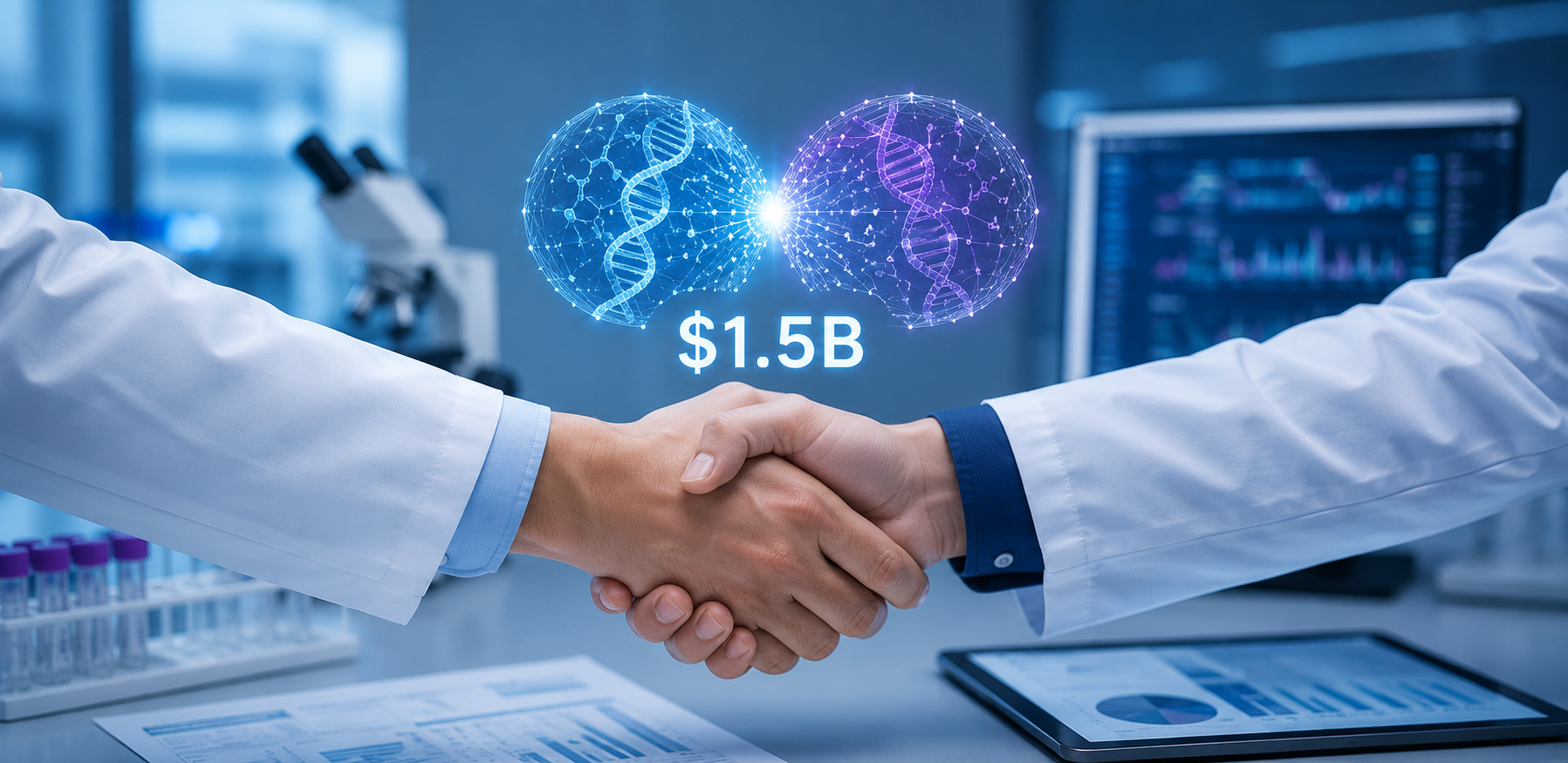
Tempus AI has announced plans to acquire cancer diagnostics company Personalis in a deal valued at approximately $1.5 billion, marking one of the largest acquisitions in the rapidly growing precision oncology market.
The acquisition will strengthen Tempus' artificial intelligence-powered healthcare platform by adding Personalis' advanced molecular residual disease (MRD) testing technology, which helps detect tiny traces of cancer that remain after treatment or signal that a cancer has returned.
The transaction builds on an existing partnership between the two companies and reflects the growing convergence of artificial intelligence, genomic sequencing, and personalized cancer care.
Who Are Tempus and Personalis?
Tempus AI
Tempus is a healthcare technology company that combines:
- Artificial intelligence.
- Clinical data.
- Genomic information.
- Medical imaging.
- Electronic health records.
Its platform helps physicians make more personalized treatment decisions while supporting pharmaceutical companies in cancer research and drug development.
Personalis
Personalis specializes in advanced genomic testing for cancer.
Its flagship platform, NeXT Personal, uses whole-genome sequencing to identify a patient's unique tumor DNA signature. Physicians can then use simple blood tests to monitor whether microscopic amounts of cancer remain in the body after treatment or if the disease returns months before it becomes visible on imaging scans.
What Is Molecular Residual Disease (MRD)?
After surgery, chemotherapy, or radiation therapy, extremely small numbers of cancer cells may still remain inside the body.
These remaining cells are called minimal (or molecular) residual disease (MRD).
Although patients may appear cancer-free on imaging, these microscopic cancer cells can eventually grow and cause a recurrence.
MRD testing allows clinicians to:
- Detect recurrence earlier.
- Monitor treatment effectiveness.
- Personalize follow-up care.
- Guide decisions about additional therapy.
- Improve long-term disease management.
Instead of waiting for tumors to become visible on CT or MRI scans, physicians can often identify recurrence through highly sensitive blood tests.
Why This Acquisition Matters
Tempus has been expanding beyond AI-powered clinical decision support into a broader precision oncology ecosystem.
By integrating Personalis' technology, the company expects to provide oncologists with a more comprehensive platform covering the entire cancer journey, including:
- Diagnosis.
- Genomic profiling.
- Treatment selection.
- Clinical trial matching.
- Response monitoring.
- Recurrence detection.
According to Tempus, the U.S. market for MRD testing represents an opportunity exceeding $20 billion, with adoption still in its early stages.
Deal Structure
Under the agreement:
- Personalis shareholders will receive $16.25 per share.
- The transaction is valued at approximately $1.5 billion, excluding Tempus' existing ownership stake.
- Most of the consideration will be paid in Tempus stock, with the company retaining the option to pay up to 50% in cash.
- The acquisition is expected to close in late 2026 or early 2027, subject to shareholder and regulatory approvals.
Although strategically significant, investors reacted cautiously because of the stock-heavy structure of the deal. Shares of both companies declined following the announcement.
Why AI Is Becoming Central to Cancer Care
Cancer care increasingly depends on analyzing enormous amounts of complex information.
Artificial intelligence helps clinicians process:
- Tumor genetics.
- Pathology reports.
- Laboratory results.
- Imaging data.
- Treatment history.
- Clinical outcomes.
Combining AI with genomic testing enables physicians to identify patterns that would be difficult to detect manually, supporting more personalized treatment decisions.
As genomic testing becomes more common, platforms capable of integrating multiple data sources are expected to play an increasingly important role in precision medicine.
Industry Impact
- Precision Oncology: The acquisition strengthens one of the fastest-growing segments of cancer care by combining AI-powered analytics with advanced molecular diagnostics.
- Pharmaceutical Companies: Drug developers may gain access to richer genomic and clinical datasets that can improve clinical trial design, biomarker discovery, and personalized therapy development.
- Healthcare Providers: Oncologists could benefit from a more integrated platform that supports diagnosis, treatment planning, and long-term patient monitoring within a single ecosystem.
- Patients: Earlier detection of cancer recurrence may allow physicians to begin treatment sooner, potentially improving outcomes for many patients.
Why This Matters
The Tempus–Personalis acquisition reflects the rapid evolution of oncology from reactive treatment toward continuous, data-driven disease management.
Rather than relying solely on imaging or periodic clinical visits, cancer care is increasingly incorporating genomic blood tests capable of detecting recurrence at extremely low levels. Combining those diagnostics with artificial intelligence allows clinicians to monitor patients more closely and make treatment decisions using larger, more comprehensive datasets.
The deal also highlights how AI is expanding beyond administrative healthcare applications into core clinical decision-making, positioning precision medicine as one of the industry's most active areas for investment and innovation.
Key Takeaways
- Tempus will acquire Personalis in a transaction valued at approximately $1.5 billion.
- The acquisition adds Personalis' molecular residual disease testing platform to Tempus' AI-enabled precision oncology portfolio.
- MRD testing enables physicians to detect tiny amounts of remaining cancer through personalized blood tests.
- The transaction expands Tempus' capabilities across the full cancer care continuum, from diagnosis through recurrence monitoring.
- The deal is expected to close after shareholder and regulatory approvals, likely in late 2026 or early 2027.
What This Means for Healthcare Marketers
The acquisition demonstrates how rapidly artificial intelligence and precision diagnostics are converging within oncology. Healthcare organizations are increasingly looking for integrated platforms that combine genomic testing, clinical decision support, and longitudinal patient monitoring rather than standalone technologies. Companies able to unify these capabilities are likely to become more influential partners for health systems, cancer centers, and biopharmaceutical organizations.
For healthcare marketers, the announcement reinforces the growing importance of communicating complete clinical ecosystems rather than individual products. Buyers increasingly value platforms that improve care across the patient journey, from diagnosis and treatment selection to recurrence monitoring and real-world evidence generation.
For healthcare intelligence teams, the transaction signals continued consolidation within precision medicine. Monitoring acquisitions involving AI, molecular diagnostics, genomics, and oncology provides valuable insight into where healthcare investment is accelerating and which technologies are likely to shape the future of personalized cancer care.