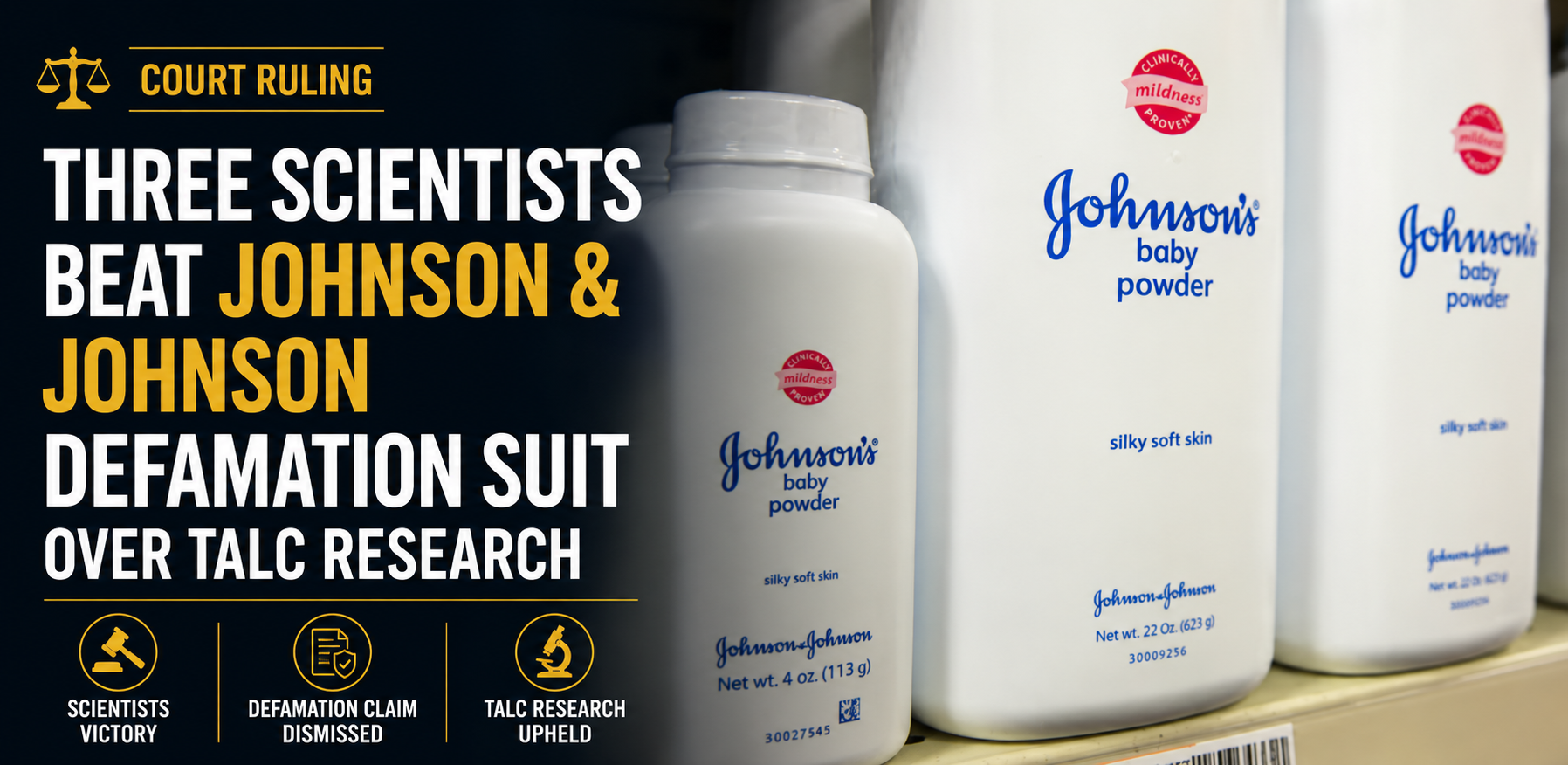
Three Scientists Beat Johnson & Johnson Defamation Suit Over Talc Research
What's Happening
A U.S. judge has dismissed a defamation lawsuit brought by Johnson & Johnson against three scientists who published research linking cosmetic talcum powder to mesothelioma. The ruling serves as a major victory for the researchers, protecting their published work amidst the company's broader, long-running legal defense over talc safety.
What the Lawsuit Was About
The three scientists published studies investigating potential connections between talc-based products and mesothelioma. Johnson & Johnson argued that these findings constituted false and defamatory claims about its products. The judge ultimately rejected J&J's claims, confirming the researchers face no liability for their published conclusions.
Why Talc Research Matters
This dispute occurs against the backdrop of thousands of lawsuits alleging that J&J's talc products caused cancer. While J&J consistently maintains that its products are safe, asbestos-free, and do not cause cancer—and discontinued talc-based baby powder in the U.S. in 2020—questions regarding asbestos contamination remain a central battleground in ongoing litigation.
Scientific Research vs. Corporate Litigation
The case underscores a critical tension in healthcare between independent scientific inquiry and corporate legal challenges. When research impacts pharmaceutical or consumer-health brands, litigation can sometimes become an avenue for challenging scientific claims. This dismissal reinforces the essential protection for researchers to publish safety findings without facing automatic defamation liability.
Industry Impact
- Johnson & Johnson: The ruling represents another legal hurdle as the company continues to manage extensive talc litigation.
- Researchers: The decision safeguards scientists conducting and publishing controversial health and safety findings.
- Public Health: Research examining cancer risks in widely used products directly informs regulators, physicians, and consumer safety evaluations.
- Healthcare Industry: Highlights the paramount importance of credible scientific evidence in product safety and consumer health disputes.
Looking Ahead
While this ruling does not resolve the broader portfolio of cancer claims facing J&J, it establishes an important legal precedent for academic freedom and scientific publishing in health research.
Why This Matters
At its core, this case concerns scientific research into cancer risk, consumer-product safety, and the vital ability of researchers to communicate health findings freely. The outcome carries significant weight for researchers, healthcare professionals, regulators, and consumer health companies alike.
Key Takeaways
- A U.S. judge dismissed Johnson & Johnson's defamation lawsuit against three researchers.
- The targeted research linked cosmetic talc use to mesothelioma.
- J&J maintains the safety of its products, having phased out talc baby powder in the U.S. in 2020.
- The decision reinforces protections for independent scientific inquiry against corporate legal challenges.
What This Means for Healthcare Marketers
The case highlights the importance of scientific credibility, product safety, cancer research, and evidence-based health communication. Companies operating in consumer health, oncology, medical research, regulatory affairs, and healthcare communications will continue to monitor how scientific findings are evaluated and communicated when they have potential implications for product safety. For healthcare marketers, prioritizing rigorous clinical evidence and transparent risk communication remains essential for navigating complex regulatory and public landscapes.