Trump Administration Asks Appeals Court to Allow Kennedy's Vaccine Panel Appointments
What's Happening
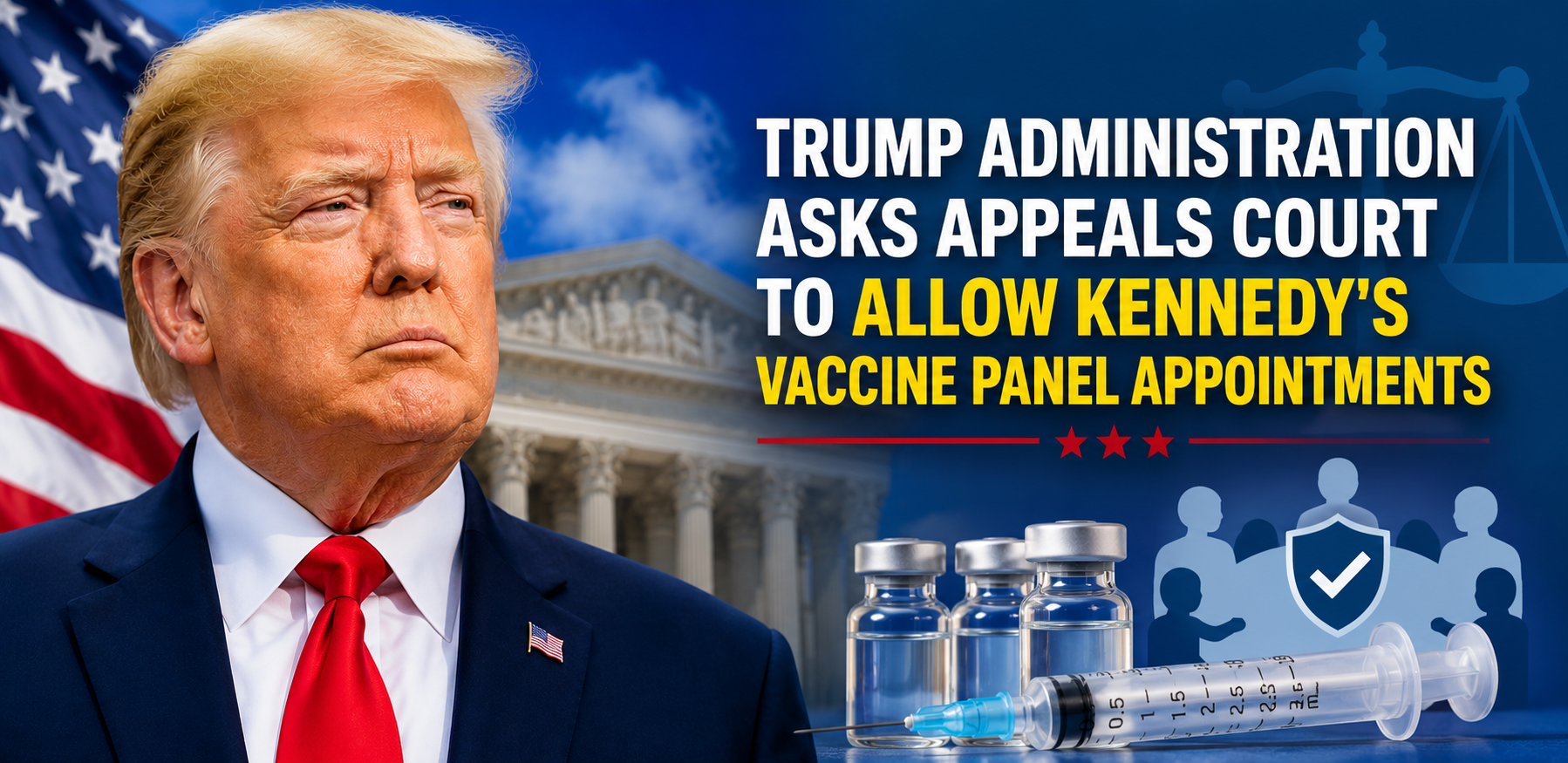
The Trump administration asked a federal appeals court to allow Health Secretary Robert F. Kennedy Jr. to move forward with appointments he made to a key federal vaccine advisory panel while legal challenges continue.
The dispute centers on the Advisory Committee on Immunization Practices (ACIP), one of the most influential groups in U.S. public health. The committee helps determine how vaccines are used across the country by providing recommendations that influence clinical practice, insurance coverage, government vaccination programs, and public-health policy.
The legal challenge emerged after Kennedy removed existing members of the committee and appointed new members, a move that immediately generated controversy among public-health experts, physicians, vaccine advocates, and policymakers.
The administration argues that the Health Secretary has the authority to appoint committee members and that courts should not interfere with those decisions while litigation proceeds.
Opponents argue that the changes could significantly alter vaccine policymaking and potentially undermine confidence in the advisory process.
The appeals court now faces the question of whether Kennedy's appointees can continue serving while the broader legal dispute is resolved.
What Is ACIP and Why Is It Important?
Most Americans have never heard of ACIP, but its recommendations influence nearly every vaccination decision made in the United States.
The committee is composed of medical and public-health experts who review evidence regarding:
- Vaccine safety
- Vaccine effectiveness
- Disease burden
- Public-health benefits
- Cost-effectiveness
After reviewing scientific data, the committee votes on recommendations regarding who should receive specific vaccines and under what circumstances. Those recommendations frequently determine:
- Insurance coverage requirements
- CDC vaccination schedules
- Public-health guidance
- School vaccine recommendations
- Federal vaccine programs
Because of this, ACIP is often considered one of the most influential advisory bodies in American healthcare.
Why Kennedy's Changes Generated Controversy
Kennedy has long been one of the most recognizable and controversial figures in vaccine policy debates. Supporters argue that he is bringing greater scrutiny, transparency, and independent thinking to vaccine oversight. Critics argue that some of his past positions on vaccines have raised concerns among public-health experts.
When Kennedy replaced committee members and appointed new advisers, the decision immediately attracted national attention because of ACIP's role in shaping vaccination policy. The controversy is less about a specific vaccine recommendation and more about who should be responsible for evaluating vaccine evidence. Many healthcare organizations worry that changes in committee membership could influence future recommendations involving:
- Childhood vaccines
- Adult immunizations
- Pandemic preparedness
- Emerging infectious diseases
As a result, the legal battle has implications far beyond the committee itself.
Why Courts Are Becoming Involved
The legal dispute reflects a broader trend in healthcare where courts increasingly play a role in resolving policy disagreements. The central legal question is not whether vaccines work. Instead, the case focuses on:
- Administrative authority
- Appointment powers
- Federal governance procedures
- Agency decision-making
The administration argues that the Health Secretary possesses broad authority to appoint advisory committee members. Opponents contend that the manner in which the changes occurred raises legal and procedural concerns. The appeals court will determine whether Kennedy's appointees may continue participating while those larger legal questions are considered.
Why Vaccine Policy Matters Beyond Public Health
Vaccination policy affects much more than healthcare providers. Recommendations influence:
- Insurance Coverage: Many health plans rely on federal recommendations when determining vaccine coverage.
- Pharmaceutical Companies: Manufacturers often depend on favorable recommendations to support vaccine adoption.
- Healthcare Systems: Hospitals and physician groups use federal guidance when developing immunization protocols.
- Public Health Programs: Federal, state, and local agencies frequently align vaccination campaigns with CDC recommendations.
Because of these connections, changes affecting advisory committees can have widespread consequences throughout the healthcare ecosystem.
What Stakeholders Are Watching
Healthcare leaders are monitoring several questions. First, will the court allow Kennedy's appointees to continue serving? Second, could the legal challenge affect future committee votes? Third, will vaccine recommendations change under the new membership structure?
At this stage, there is no indication that existing vaccination schedules will immediately change because of the litigation. However, the outcome could influence how future vaccine recommendations are developed and reviewed. The uncertainty has attracted significant attention because healthcare organizations depend on predictable and credible guidance when making clinical and operational decisions.
Industry Impact
- Public Health Agencies: Federal and state health officials continue monitoring how the legal challenge may affect future vaccine guidance.
- Healthcare Providers: Clinicians depend on vaccine recommendations when making immunization decisions and advising patients.
- Vaccine Manufacturers: Pharmaceutical companies are watching closely because committee recommendations influence product adoption and reimbursement.
- Insurers: Health plans often rely on federal vaccine recommendations when determining coverage policies.
Why This Matters
The case is ultimately about more than committee appointments. It highlights the growing intersection of healthcare, public policy, law, and public trust. Advisory committees serve an important role because they help translate scientific evidence into practical healthcare recommendations.
When disputes arise regarding how those committees are structured, questions naturally emerge about governance, transparency, and decision-making. Regardless of the court's ultimate ruling, the case demonstrates how healthcare policy increasingly extends beyond hospitals, laboratories, and regulatory agencies into the legal system. The outcome may help shape how future administrations approach advisory committees and public-health decision-making.
Key Takeaways
- The Trump administration asked an appeals court to allow Kennedy's vaccine-panel appointments to remain in place.
- The dispute involves the influential Advisory Committee on Immunization Practices (ACIP).
- The case focuses on appointment authority and administrative procedures rather than vaccine effectiveness.
- ACIP recommendations influence vaccination policy, insurance coverage, and public-health programs.
- The court's decision could affect how future vaccine guidance is developed.
What This Means for Healthcare Marketers
This story highlights how policy and governance decisions can create major ripple effects throughout healthcare markets. For healthcare marketers, vaccine advisory committees represent important decision-making centers because their recommendations influence adoption, reimbursement, provider behavior, and public-health priorities. Organizations involved in vaccines, infectious diseases, diagnostics, and public health should closely monitor changes affecting these groups.
The legal dispute also demonstrates the growing importance of policy intelligence. Regulatory and governance developments often create market impacts long before changes appear in product demand or purchasing activity.
For healthcare intelligence teams, tracking advisory committee membership, federal health leadership decisions, and policy litigation can provide valuable signals regarding future healthcare priorities and stakeholder behavior. More broadly, the case illustrates how healthcare decision-making increasingly involves not only scientific evidence but also legal, political, and administrative processes that can influence entire sectors of the industry.