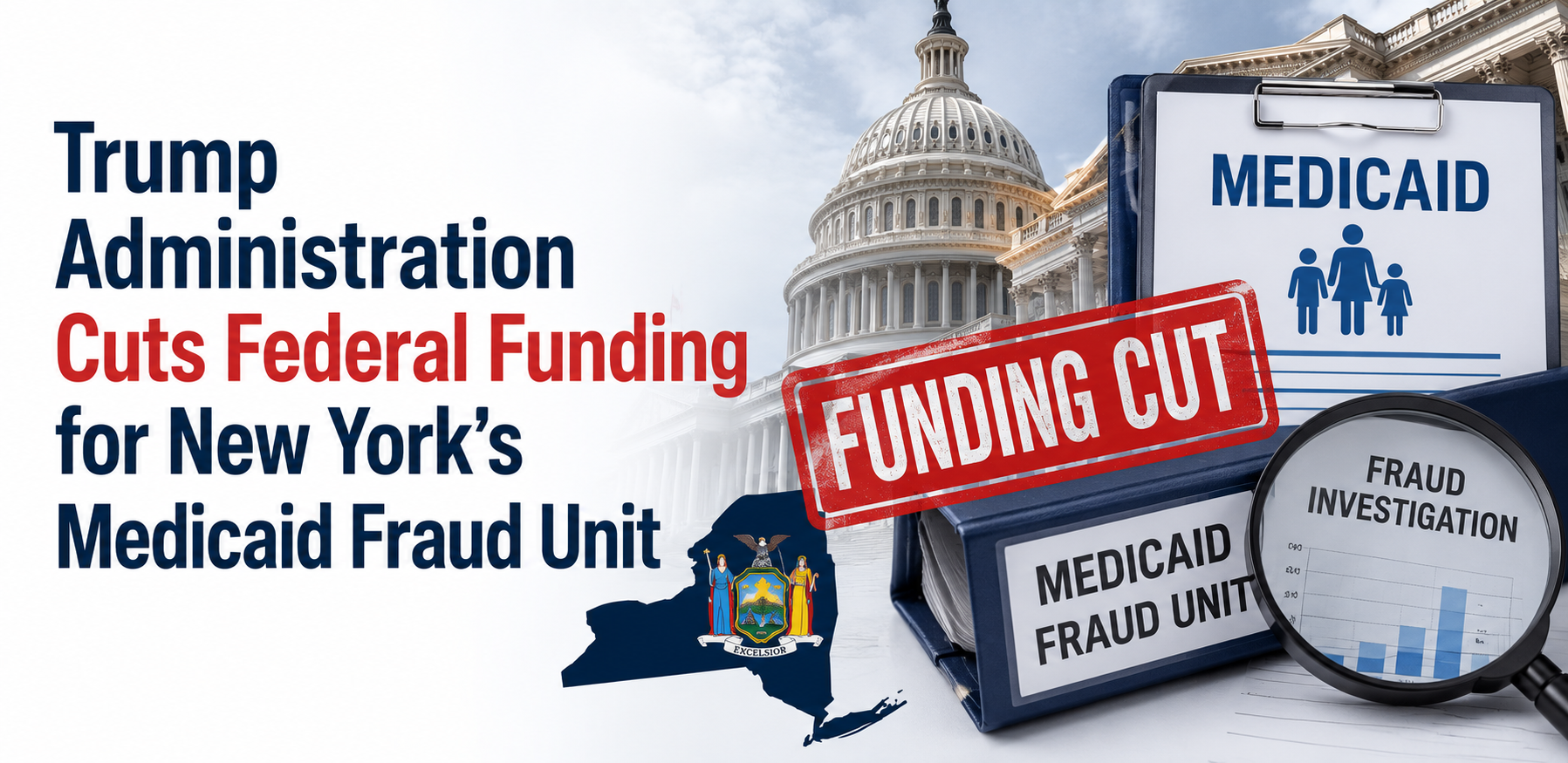
Trump Administration Cuts Federal Funding for New York's Medicaid Fraud Unit
What's Happening
The Trump administration has cut federal funding for New York's Medicaid Fraud Control Unit (MFCU), citing concerns that the state failed to meet certain federal performance requirements. The decision reduces financial support for one of the country's largest healthcare fraud investigation units, which is responsible for investigating fraud involving Medicaid providers as well as cases involving patient abuse or neglect in healthcare facilities. (reuters.com)
The U.S. Department of Health and Human Services (HHS) said the funding reduction followed an evaluation of the unit's performance and compliance with federal standards. New York officials disagree with the decision and argue that the unit has recovered significant amounts of taxpayer money while protecting vulnerable patients.
The dispute has raised broader questions about how Medicaid fraud investigations should be funded and whether reducing resources could affect efforts to detect healthcare fraud and abuse.
What Is Medicaid?
Medicaid is a joint federal and state health insurance program that provides healthcare coverage for millions of Americans with limited income or disabilities.
The program covers services such as:
- Hospital care
- Physician visits
- Prescription drugs
- Long-term care
- Nursing home services
- Home healthcare
- Behavioral health services
Because Medicaid is jointly funded by federal and state governments, both levels of government share responsibility for overseeing how taxpayer funds are spent.
Given the program's size, preventing fraud has long been a priority for federal and state agencies.
What Is a Medicaid Fraud Control Unit?
Every state operates a Medicaid Fraud Control Unit (MFCU), which investigates crimes involving Medicaid.
These specialized units are typically staffed by:
- Prosecutors
- Investigators
- Auditors
- Healthcare experts
- Financial analysts
Their responsibilities include investigating:
- Billing fraud
- False claims
- Kickback schemes
- Prescription fraud
- Provider misconduct
- Abuse or neglect of patients in nursing homes and other healthcare facilities
Unlike many law enforcement agencies, MFCUs combine legal, financial, and healthcare expertise to investigate complex healthcare-related crimes.
Most of their funding comes from the federal government, with states providing the remaining share.
Why Healthcare Fraud Matters
Healthcare fraud costs the United States billions of dollars every year.
Fraud can occur in many forms, including:
- Billing for services that were never provided.
- Charging for unnecessary medical procedures.
- Falsifying patient records.
- Paying illegal kickbacks for patient referrals.
- Submitting duplicate claims.
- Misrepresenting diagnoses to increase reimbursement.
Fraud not only wastes taxpayer money but can also harm patients by encouraging unnecessary treatment or diverting resources away from legitimate healthcare services.
Because Medicaid serves vulnerable populations, protecting the program is considered an important public health and financial responsibility.
Why the Federal Government Reduced Funding
According to Reuters, federal officials concluded that New York's Medicaid Fraud Control Unit failed to satisfy certain federal performance expectations, leading HHS to reduce its financial support.
Although the agency did not question the importance of fraud investigations themselves, it argued that federal funding should be tied to compliance with program requirements and measurable performance standards.
Federal oversight of Medicaid Fraud Control Units typically evaluates factors such as:
- Case management
- Investigation quality
- Prosecutorial effectiveness
- Financial recoveries
- Administrative compliance
- Program operations
States receiving federal funding are expected to demonstrate that they are effectively using taxpayer resources to investigate fraud and protect Medicaid beneficiaries.
New York's Response
New York officials strongly disagree with the funding reduction.
State leaders argue that their Medicaid Fraud Control Unit has successfully recovered substantial amounts of taxpayer money through investigations and legal settlements.
They also emphasize that the unit performs an important public safety role by investigating abuse and neglect involving vulnerable patients in healthcare facilities.
According to state officials, reducing federal funding could make it more difficult to pursue complex healthcare fraud investigations that often require extensive financial analysis and long-term investigative work.
The state is expected to challenge the federal decision while continuing fraud enforcement activities.
Why Fraud Investigations Are Becoming More Complex
Healthcare fraud has become increasingly sophisticated.
Investigators now examine schemes involving:
- Electronic health records
- Telehealth billing
- Genetic testing
- Durable medical equipment
- Home healthcare services
- Pharmacy benefit fraud
- Artificial intelligence-assisted fraud
The growing complexity of healthcare delivery means investigators often require advanced financial, legal, and clinical expertise.
As healthcare spending continues to increase, governments are investing more heavily in data analytics and technology to identify suspicious billing patterns before losses become widespread.
Adequate funding plays an important role in supporting these efforts.
Broader Implications for Medicaid Oversight
The funding dispute may have implications beyond New York.
Other states may closely monitor the situation because Medicaid Fraud Control Units across the country depend heavily on federal financial support.
The case highlights ongoing debates about:
- Federal oversight of state programs
- Accountability for taxpayer funding
- Performance measurement
- Healthcare fraud enforcement
- Resource allocation
Future federal evaluations could influence how Medicaid fraud units operate and how states prioritize investigative resources.
Industry Impact
- State Governments: States may face increased scrutiny regarding how Medicaid fraud investigation programs are managed and evaluated.
- Healthcare Providers: Providers can expect continued oversight of billing practices, compliance programs, and Medicaid reimbursement claims.
- Federal Agencies: HHS continues emphasizing accountability and performance standards for federally funded healthcare oversight programs.
- Patients and Taxpayers: Effective fraud investigations help protect healthcare resources while ensuring Medicaid funds remain available for legitimate patient care.
Why This Matters
The dispute between the Trump administration and New York illustrates the ongoing balance between oversight and enforcement within the U.S. healthcare system.
Medicaid is one of the nation's largest healthcare programs, making fraud prevention essential for protecting both taxpayers and patients.
At the same time, effective investigations require experienced personnel, specialized expertise, and sufficient funding.
The outcome of this disagreement may influence how federal agencies evaluate state fraud programs and could affect future funding decisions across the country.
Regardless of the final resolution, the case underscores the importance of maintaining strong oversight mechanisms while ensuring that investigators have the resources needed to combat increasingly sophisticated healthcare fraud.
Key Takeaways
- The Trump administration reduced federal funding for New York's Medicaid Fraud Control Unit.
- Federal officials cited concerns regarding compliance with program performance requirements.
- New York argues the unit has successfully recovered taxpayer money and protected vulnerable patients.
- Medicaid fraud investigations address billing fraud, false claims, kickbacks, and patient abuse.
- The dispute may influence future federal oversight of Medicaid fraud programs nationwide.
What This Means for Healthcare Marketers
This story highlights the growing importance of compliance, program integrity, and government oversight within the healthcare system. As healthcare spending continues to rise, regulators are placing greater emphasis on ensuring that public funds are used appropriately and that providers meet increasingly rigorous compliance standards.
For healthcare marketers, trust and transparency are becoming competitive advantages. Healthcare organizations that demonstrate strong compliance programs, accurate billing practices, and effective governance may strengthen relationships with payers, government agencies, and healthcare providers. Messaging around operational excellence and regulatory compliance is becoming increasingly important, particularly for organizations serving Medicare and Medicaid populations.
For healthcare intelligence teams, changes in fraud enforcement priorities can provide valuable insight into future regulatory activity. Monitoring investigations, reimbursement policies, compliance initiatives, and enforcement actions can help organizations anticipate evolving risks and strengthen internal governance strategies.
More broadly, the funding dispute illustrates that healthcare oversight extends beyond clinical care. Financial accountability, regulatory compliance, and fraud prevention remain essential components of a sustainable healthcare system, influencing how public programs operate and how healthcare organizations manage risk.