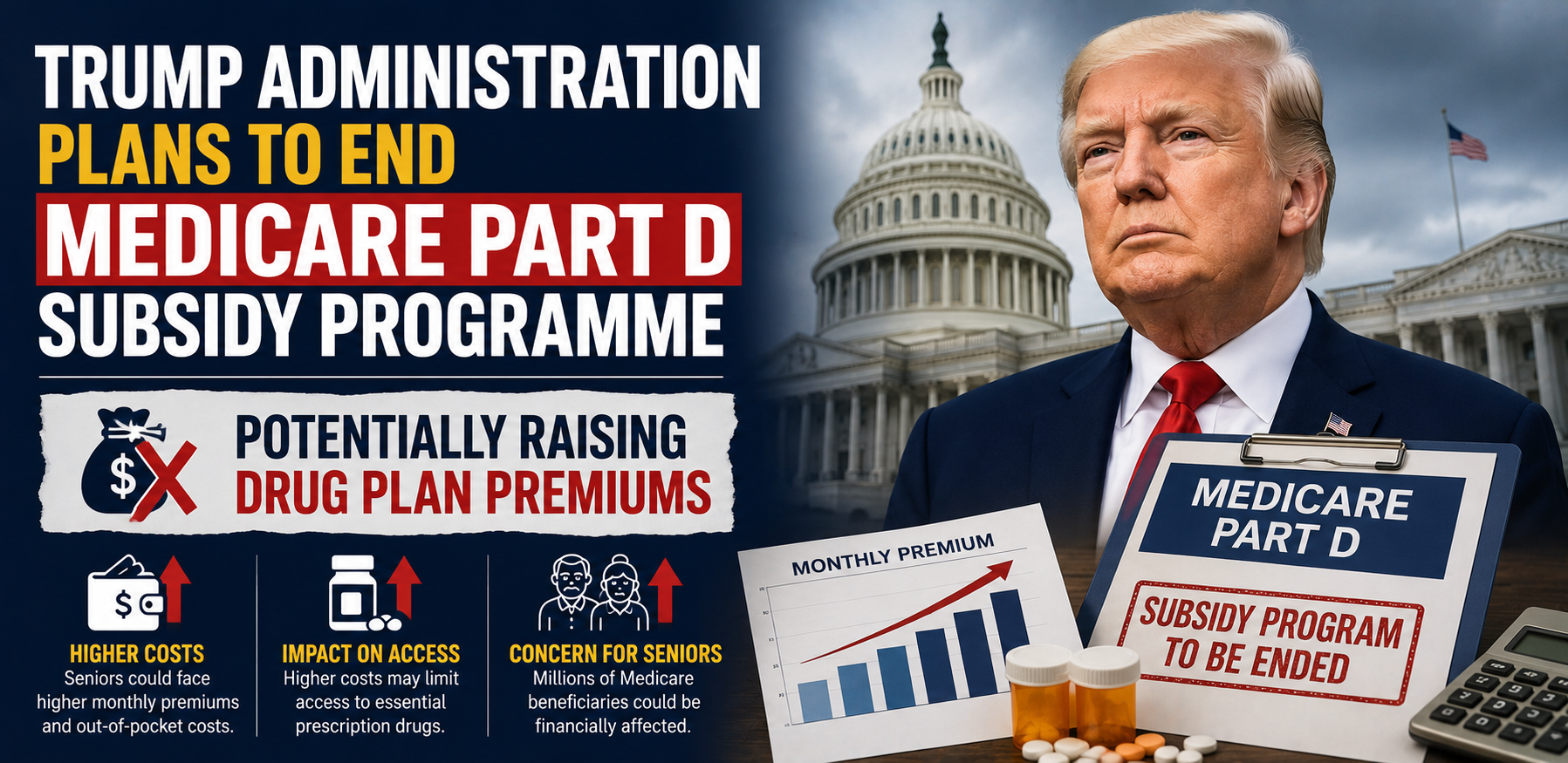
Trump Administration Plans to End Medicare Part D Subsidy Programme, Potentially Raising Drug Plan Premiums
What's Happening
The Trump administration plans to discontinue a temporary federal subsidy programme that has helped keep Medicare Part D prescription drug plan premiums stable. The programme, which is expected to provide insurers with approximately $3.6 billion in support during 2026, is scheduled to end after this year.
The subsidy was introduced to cushion premium increases as changes to Medicare prescription drug benefits shifted more financial responsibility to insurers. If the programme is not renewed, many Medicare beneficiaries could see higher monthly premiums beginning in 2027, although the impact is expected to vary depending on the plan they choose.
Understanding Medicare Part D
Medicare Part D provides prescription drug coverage through private insurance plans for millions of Americans aged 65 and older, as well as certain younger individuals with disabilities.
The temporary subsidy programme was designed to stabilise the Part D market by helping insurers absorb higher costs and avoid passing the full financial burden on to beneficiaries through premium increases.
Administration officials argue that the additional subsidies are no longer necessary and that they unintentionally encouraged insurers to increase premiums because the government absorbed much of the added cost. They also maintain that other measures to control Medicare drug spending remain in place.
What Could Change for Beneficiaries?
According to administration officials, not every Medicare enrollee will experience the same impact.
Current estimates suggest:
- Around 25% of beneficiaries may see premiums remain unchanged or decrease.
- Approximately 30% could see monthly premium increases of less than £10 equivalent in local currency terms (reported as under $10 in the U.S.).
- About 45% may experience increases between $11 and $20 per month.
The changes are expected to take effect after the 2026 plan year, giving beneficiaries an opportunity to compare available Part D plans during the annual Medicare open enrollment period.
Industry Impact
- Health Insurers: Medicare Part D insurers may need to adjust premium pricing and benefit designs without the federal stabilisation payments. Companies will likely compete more aggressively on pricing and plan offerings to retain members.
- Medicare Beneficiaries: Higher premiums could encourage more seniors to review alternative prescription drug plans or consider Medicare Advantage plans that include drug coverage as part of their benefits.
- Healthcare Policy: The decision represents another significant change in the evolving Medicare prescription drug landscape. Policymakers continue to balance efforts to reduce government spending with maintaining affordable access to prescription medicines for older Americans.
- Pharmaceutical Market: Changes to Medicare drug coverage can influence medication utilisation, reimbursement strategies and negotiations among insurers, pharmacy benefit managers and pharmaceutical manufacturers.
Looking Ahead
Prescription drug affordability remains one of the most important healthcare issues for older adults. Even relatively modest premium increases can affect people living on fixed incomes, making plan affordability a key consideration during Medicare enrollment.
The planned end of the subsidy also highlights the ongoing transformation of Medicare drug policy as federal officials continue to reshape how prescription drug benefits are financed. The decisions made today will influence insurers, healthcare providers, pharmaceutical companies and millions of beneficiaries over the coming years.
Key Takeaways
- The Trump administration plans to end the temporary Medicare Part D premium stabilisation subsidy after 2026.
- The programme currently provides about $3.6 billion in federal support to insurers.
- Some Medicare beneficiaries are expected to face higher prescription drug plan premiums beginning in 2027, while others may see little or no change.
- Health insurers are expected to adjust pricing strategies as the subsidy ends.
- The decision marks another significant shift in U.S. Medicare prescription drug policy.
What This Means for Healthcare Marketers
Changes to Medicare reimbursement and benefit design often reshape healthcare purchasing behaviour across the industry. Pharmaceutical companies, health insurers, pharmacy benefit managers and digital health organisations should closely monitor how beneficiaries respond during future enrollment cycles. Marketers that clearly communicate affordability, medication access, value-based care and patient support programmes will be better positioned as consumers compare plans in an increasingly cost-conscious environment.