Trump Administration Restores $600 Million in Funding for Global Vaccine Alliance Gavi
What's Happening
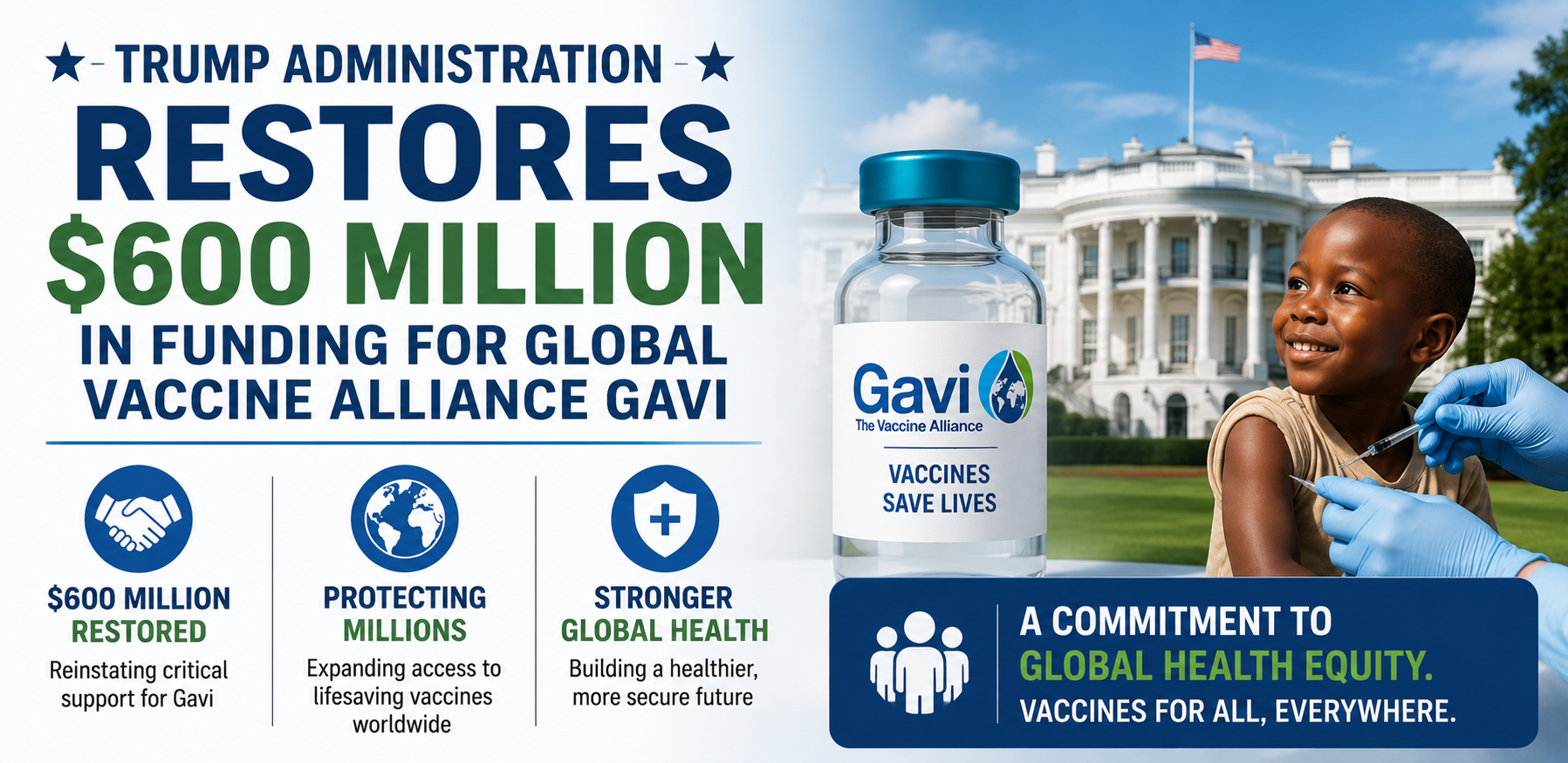
The Trump administration has released approximately $600 million in previously frozen U.S. funding for Gavi, the Vaccine Alliance, restoring financial support for one of the world's largest global immunisation programmes.
The funding had been placed on hold as part of a broader review of U.S. foreign assistance programmes. Its release allows Gavi to continue supporting vaccination initiatives across lower-income countries, helping governments purchase vaccines, strengthen immunisation systems, and respond to infectious disease outbreaks.
The decision provides greater financial certainty for ongoing vaccination programmes and comes at a time when many countries are working to rebuild routine immunisation coverage following disruptions caused by the COVID-19 pandemic.
For global health organisations, the restored funding represents an important step toward maintaining vaccine access for millions of children and vulnerable populations worldwide.
What Is Gavi?
Gavi, the Vaccine Alliance, is an international public-private partnership established to improve access to life-saving vaccines in lower-income countries.
The organisation works with:
- National governments.
- The World Health Organization (WHO).
- UNICEF.
- The World Bank.
- Vaccine manufacturers.
- Philanthropic organisations.
- Donor governments.
Rather than manufacturing vaccines itself, Gavi helps countries finance vaccine purchases, negotiate affordable pricing, strengthen healthcare infrastructure, and improve vaccine delivery systems.
Since its launch in 2000, Gavi has supported immunisation programmes protecting hundreds of millions of children against preventable diseases.
Why Funding Matters
Vaccination programmes depend on long-term, predictable financing.
Unlike many healthcare interventions, immunisation requires continuous investment to support:
- Vaccine procurement.
- Cold-chain storage systems.
- Transportation.
- Healthcare worker training.
- Community outreach.
- Disease surveillance.
- Immunisation record systems.
Interruptions in funding can delay vaccine deliveries, disrupt immunisation schedules, and increase the risk of outbreaks of vaccine-preventable diseases.
Stable financial support enables countries to plan vaccination campaigns and maintain routine immunisation services over many years.
Diseases Supported Through Gavi Programmes
Gavi helps expand access to vaccines protecting against numerous infectious diseases, including:
- Measles.
- Polio.
- Rotavirus.
- Pneumococcal disease.
- Human papillomavirus (HPV).
- Meningitis.
- Yellow fever.
- Cholera.
- Malaria in eligible regions.
Many of these diseases remain major causes of illness and death in parts of the world where healthcare resources are limited.
Routine vaccination not only protects individuals but also reduces disease transmission within communities, contributing to broader public health improvements.
Why Global Immunisation Remains a Priority
Vaccination is considered one of the most effective public health interventions ever developed.
Successful immunisation programmes have:
- Eliminated or dramatically reduced many infectious diseases.
- Prevented millions of deaths.
- Reduced disability.
- Lowered healthcare costs.
- Improved childhood survival.
- Strengthened health system resilience.
Following the COVID-19 pandemic, many countries experienced declines in routine childhood immunisation because of healthcare disruptions, workforce shortages, and delayed vaccination appointments.
Global health organisations have since prioritised restoring vaccination coverage to prevent the return of diseases that had previously been brought under control.
Continued investment is viewed as essential to maintaining these gains.
Industry Impact
- Global Health Organisations: The release of funding provides greater financial stability for international vaccination programmes and allows Gavi to continue supporting countries with vaccine procurement and immunisation planning.
- Vaccine Manufacturers: Companies supplying vaccines through Gavi may benefit from greater certainty regarding procurement contracts and long-term demand for childhood immunisation programmes.
- Healthcare Providers: Clinicians, community health workers, and vaccination programmes in participating countries can continue delivering routine immunisation services with fewer concerns about programme interruptions.
- Public Health Agencies: Governments and international health organisations will continue collaborating to improve vaccination coverage, strengthen surveillance systems, and respond to outbreaks of vaccine-preventable diseases.
Looking Ahead
Although the release of funding resolves an immediate financial challenge, global immunisation programmes continue facing several long-term priorities.
These include:
- Increasing childhood vaccination coverage.
- Expanding access to newer vaccines.
- Strengthening cold-chain infrastructure.
- Improving disease surveillance.
- Addressing vaccine misinformation.
- Reaching underserved populations.
- Preparing for future infectious disease outbreaks.
As healthcare systems continue recovering from pandemic-related disruptions, sustained international cooperation and reliable funding will remain essential to achieving global immunisation goals.
Key Takeaways
- The Trump administration has restored approximately $600 million in previously frozen funding for Gavi, the Vaccine Alliance.
- Gavi helps lower-income countries purchase vaccines, strengthen immunisation systems, and expand access to routine vaccination.
- Stable funding is essential for maintaining vaccine procurement, distribution, and healthcare infrastructure.
- The funding supports ongoing efforts to rebuild routine immunisation programmes following disruptions in recent years.
- Continued investment in vaccination remains a cornerstone of global public health and infectious disease prevention.
What This Means for Healthcare Marketers
The restoration of Gavi funding reinforces continued investment in global immunisation, public health infrastructure, and vaccine delivery systems. Vaccine manufacturers, cold-chain logistics providers, healthcare technology companies, diagnostics firms, and public health organisations are likely to continue expanding programmes that improve vaccine access, surveillance, and healthcare delivery. For healthcare marketers, organisations involved in immunisation, infectious disease prevention, and global health initiatives represent high-intent prospects seeking partnerships, educational campaigns, and technologies that strengthen population health.