Trump Delays Tariffs on Generic Drugs for Two Years Before Introducing 100% and 200% Import Duties
What's Happening
President Donald Trump has announced a new tariff policy for imported generic medicines, giving manufacturers a two-year grace period before imposing steep import duties designed to encourage pharmaceutical production in the United States.
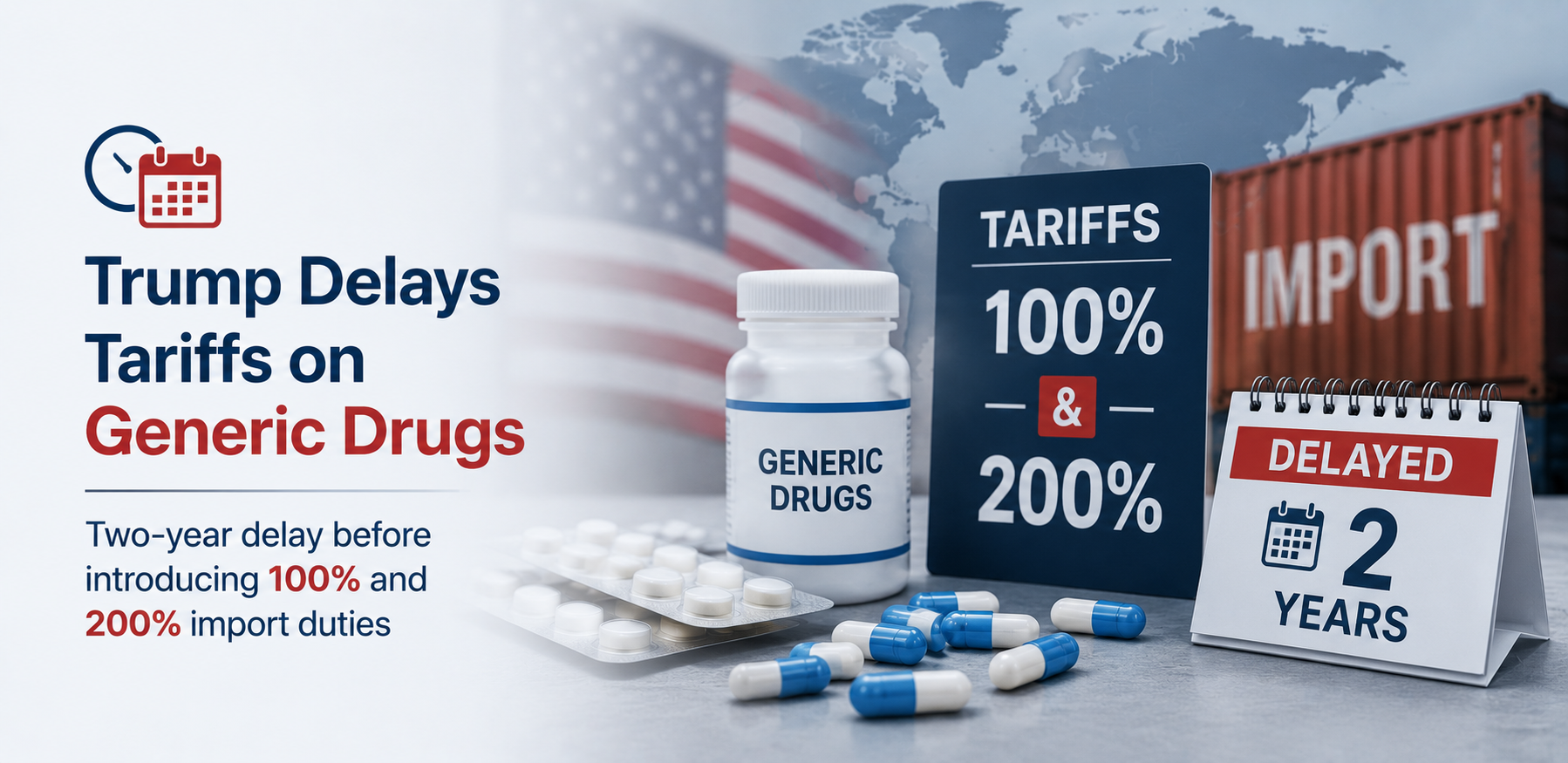
Under the plan, all imported generic drugs will continue to face a 0% tariff for two years beginning August 1, 2026. After that period, imports will be subject to a 100% tariff for one year, followed by a 200% tariff thereafter. The policy applies only to generic medicines, while the administration said its approach toward patented and branded pharmaceuticals remains unchanged.
President Trump said the delayed implementation is intended to give manufacturers sufficient time to relocate production to the United States before higher tariffs take effect.
Why Is the Administration Taking This Approach?
The administration says the policy is aimed at reshoring pharmaceutical manufacturing and reducing the country's dependence on overseas production of essential medicines.
For years, policymakers have raised concerns that a significant share of generic drug manufacturing—and especially the production of active pharmaceutical ingredients (APIs)—has shifted outside the United States.
Officials argue that relying heavily on foreign manufacturers creates vulnerabilities during global emergencies, supply chain disruptions, or geopolitical tensions.
Rather than imposing immediate tariffs, the administration is using a phased approach intended to encourage companies to invest in domestic manufacturing facilities before financial penalties begin.
Why Are Generic Drugs So Important?
Generic medicines account for more than 90% of all prescriptions dispensed in the United States, according to the U.S. Food and Drug Administration.
Although generics represent the overwhelming majority of prescriptions, they account for a much smaller share of total drug spending because they are significantly less expensive than brand-name medicines.
Generic manufacturers supply treatments across nearly every therapeutic area, including:
- Cardiovascular disease.
- Diabetes.
- Cancer supportive care.
- Antibiotics.
- Mental health.
- Pain management.
- Chronic disease management.
Because of their affordability, generic medicines play a critical role in controlling healthcare costs for patients, insurers, employers, and government programs.
Why the Two-Year Delay?
Building pharmaceutical manufacturing capacity is a lengthy process.
Companies planning to relocate production typically must:
- Construct or expand manufacturing facilities.
- Install specialized production equipment.
- Validate manufacturing processes.
- Obtain FDA regulatory approvals.
- Qualify suppliers.
- Build new supply chains.
- Hire and train skilled workers.
These activities often require several years before commercial production can begin.
The administration says the two-year delay is intended to provide manufacturers with enough time to begin shifting production back to the United States before tariffs substantially increase import costs.
Potential Impact on the Pharmaceutical Industry
The announcement introduces significant long-term planning considerations for pharmaceutical manufacturers.
Companies that currently rely on imported generic medicines may evaluate whether:
- Domestic manufacturing becomes economically attractive.
- Existing U.S. facilities should be expanded.
- Production should be relocated from overseas.
- Supply chains should be diversified.
Manufacturers that continue importing products after the grace period could face substantially higher costs if the announced tariff schedule is implemented.
At the same time, companies considering domestic expansion must weigh the large capital investments required to build or upgrade pharmaceutical manufacturing facilities.
What Could This Mean for Drug Prices?
The long-term effect on drug prices remains uncertain.
Several factors will influence the outcome, including:
- Whether manufacturers relocate production.
- How quickly new facilities become operational.
- The availability of alternative suppliers.
- Competition among generic manufacturers.
- Future regulatory and trade policy decisions.
Supporters argue that stronger domestic manufacturing could improve supply chain resilience and reduce dependence on overseas production.
Critics, however, caution that higher import costs could eventually be passed along to wholesalers, pharmacies, insurers, government healthcare programs, and patients if sufficient domestic manufacturing capacity is not established.
Industry Impact
- Generic Drug Manufacturers: Manufacturers will likely begin evaluating long-term investment strategies, including expanding U.S. production or maintaining overseas operations while preparing for higher import costs.
- Healthcare Providers: Hospitals, pharmacies, and health systems may monitor supply chains closely as manufacturers determine how to respond to the proposed tariff schedule.
- Government Healthcare Programs: Programs such as Medicare and Medicaid, which purchase large volumes of generic medicines, could eventually be affected if manufacturing costs or reimbursement patterns change.
- Patients: Although no immediate pricing changes are expected during the two-year grace period, future costs and product availability could depend on how manufacturers adapt before tariffs begin.
Why This Matters
The announcement represents one of the most significant proposed trade policy changes affecting the generic pharmaceutical industry in recent years.
Unlike previous pharmaceutical tariff proposals that focused primarily on branded medicines, this policy directly targets the generic drug market, which supplies the vast majority of prescriptions used by Americans every day.
The delayed implementation reflects an effort to balance two competing priorities: encouraging domestic manufacturing while avoiding immediate disruption to medicine supplies. Whether the strategy succeeds will largely depend on how quickly manufacturers can expand U.S. production and whether sufficient capacity exists to replace imported medicines before higher tariffs take effect.
The proposal also highlights the growing intersection of healthcare policy, industrial strategy, and national supply chain security, with pharmaceutical manufacturing increasingly viewed as a strategic national capability rather than simply a commercial industry.
Key Takeaways
- Imported generic medicines will remain tariff-free for two years beginning August 1, 2026.
- The administration plans to impose a 100% tariff for one year beginning in 2028, followed by a 200% tariff thereafter.
- The policy is intended to encourage pharmaceutical manufacturers to relocate generic drug production to the United States.
- More than 90% of prescriptions dispensed in the U.S. are generic medicines, making the policy potentially significant for the broader healthcare system.
- Patented and branded pharmaceutical tariff policies remain separate from this announcement.
What This Means for Healthcare Marketers
The proposed tariff timeline signals that pharmaceutical manufacturing strategy is becoming increasingly intertwined with healthcare policy and national economic priorities. Organizations involved in contract manufacturing, supply chain technology, pharmaceutical equipment, compliance, and domestic production may see growing interest as companies evaluate long-term reshoring plans.
For healthcare marketers, the announcement reinforces the importance of positioning solutions around supply chain resilience, manufacturing efficiency, regulatory readiness, and domestic production capabilities. As pharmaceutical companies assess future investment decisions, vendors that can support manufacturing expansion and operational modernization may find new opportunities.
For healthcare intelligence teams, the proposal serves as an important indicator of future market shifts. Monitoring tariff policies, manufacturing investments, regulatory changes, and supply chain strategies can help organizations anticipate changes in pharmaceutical production, sourcing decisions, and competitive dynamics across the generic drug industry.