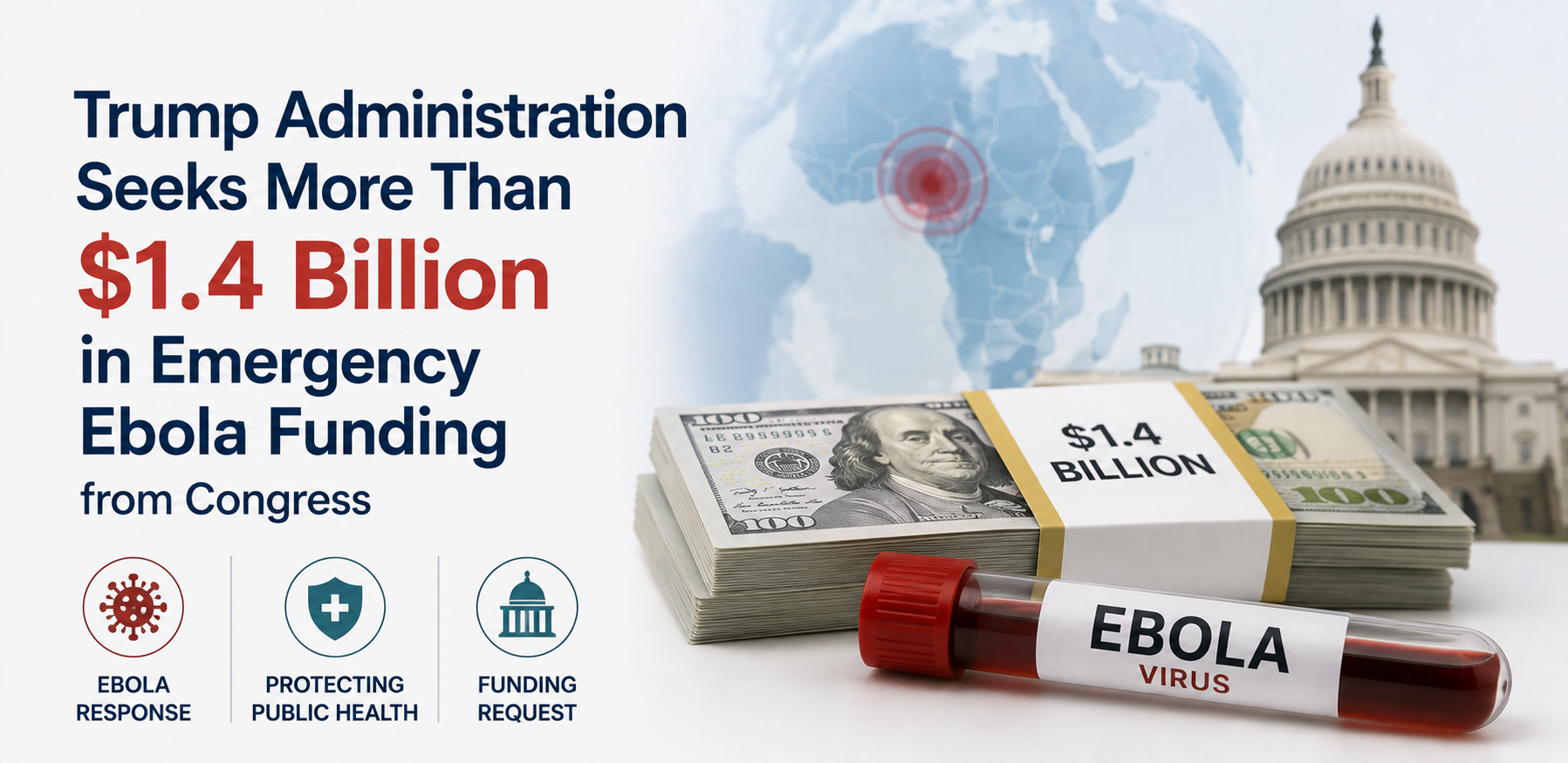
Trump Administration Seeks More Than $1.4 Billion in Emergency Ebola Funding from Congress
What's Happening
The Trump administration is preparing to ask Congress for more than $1.4 billion in emergency funding to support the U.S. response to the ongoing Ebola outbreak in Central Africa and strengthen preparedness efforts against potential international spread.
The funding request would support a wide range of activities, including outbreak response operations, medical countermeasure development, vaccine deployment, treatment programs, disease surveillance, laboratory capacity, and emergency preparedness initiatives.
The proposal comes as health officials continue monitoring the Ebola outbreak in the Democratic Republic of Congo and neighboring regions. While the immediate risk to the United States remains low, public health agencies are working to ensure they have the resources needed to respond quickly if conditions change.
The request highlights the growing focus on global health security and outbreak preparedness during the current regional emergency.
Why Governments Invest in Outbreak Preparedness
Infectious disease outbreaks can have consequences far beyond the countries where they originate. Modern travel, international trade, and global mobility allow diseases to spread more rapidly than in previous decades. As a result, governments increasingly view outbreak preparedness as both a public health and national security priority.
Preparedness investments typically focus on:
- Disease surveillance
- Laboratory networks
- Vaccine development
- Treatment programs
- Emergency response planning
- Healthcare system readiness
The goal is to identify and contain outbreaks before they become larger public health emergencies. Many experts argue that investing early in preparedness is significantly less costly than responding after a disease spreads widely.
Why Ebola Continues to Draw Attention
Ebola remains one of the world's most closely monitored infectious diseases because of its potential severity. The virus can cause:
- High fever
- Severe weakness
- Vomiting
- Diarrhea
- Internal bleeding in some cases
- Multi-organ complications
Outbreaks often require extensive public health resources to contain because infected individuals must be identified, isolated, treated, and monitored. Although major advances have been made in vaccines and treatments, Ebola continues to pose significant challenges in regions with limited healthcare infrastructure.
How the Funding Could Be Used
The proposed funding package is expected to support several key areas:
- Outbreak Response Operations: Resources would help support healthcare workers, emergency teams, and international response efforts in affected regions.
- Vaccine Programs: Funding could support vaccine manufacturing, distribution, and deployment strategies aimed at controlling outbreaks.
- Treatment Access: Governments and health organizations continue working to expand access to therapies that improve survival rates among infected patients.
- Disease Surveillance: Monitoring systems help detect cases early and identify potential spread.
- Research and Development: Scientists continue developing next-generation vaccines, treatments, and diagnostic tools.
- Domestic Preparedness: Resources may also strengthen healthcare facilities, laboratories, and emergency response capabilities within the United States.
Why Congress Plays a Key Role
Although the administration can propose emergency funding, Congress must approve major spending packages. Lawmakers will evaluate funding levels, program priorities, budget implications, public health needs, and oversight mechanisms.
Healthcare organizations, public health agencies, and international partners will closely watch the discussions because funding decisions can influence the scale and speed of response efforts.
Why Global Health Security Has Become a Bigger Priority
The global pandemic environment changed how governments think about infectious disease preparedness. Many countries increased investments in public health infrastructure, vaccine manufacturing, disease surveillance systems, and emergency response planning. The Ebola outbreak is reinforcing many of those lessons.
Public health experts increasingly emphasize that infectious disease threats should be addressed as early as possible because delayed responses can allow outbreaks to become more difficult and expensive to control.
Industry Impact
- Public Health Agencies: Additional funding could strengthen response capabilities and preparedness programs.
- Pharmaceutical Companies: Vaccine and treatment developers may benefit from increased research and procurement opportunities.
- Healthcare Systems: Preparedness initiatives may improve readiness for future infectious disease events.
- Global Health Organizations: International partners could receive additional support for outbreak control efforts.
Why This Matters
The proposed funding request reflects a broader shift in how governments approach infectious disease threats. Rather than responding only after outbreaks become widespread, policymakers are increasingly investing in prevention, preparedness, and early intervention.
The Ebola outbreak serves as a reminder that global health threats remain a constant challenge. Whether Congress ultimately approves the full request or a modified version, the proposal signals that outbreak preparedness remains a major healthcare and policy priority.
Key Takeaways
- The Trump administration plans to seek more than $1.4 billion in Ebola-related emergency funding.
- The proposal would support outbreak response, vaccines, treatments, surveillance, and preparedness programs.
- Ebola remains a significant global public health concern requiring active monitoring.
- Congress must approve any major emergency funding package.
- The request reflects growing emphasis on global health security and outbreak preparedness.
What This Means for Healthcare Marketers
This story highlights the increasing importance of public health preparedness as a major driver of healthcare investment. For healthcare marketers, government funding decisions often provide early signals regarding future market opportunities. Significant investments in outbreak preparedness can influence demand across vaccines, therapeutics, diagnostics, laboratory services, healthcare technology, data analytics, and emergency response infrastructure.
The proposed funding package also demonstrates how public health priorities can shape healthcare innovation. Organizations that support disease surveillance, clinical research, population health management, and preparedness initiatives may benefit from increased attention and investment as governments strengthen response capabilities.
For healthcare intelligence teams, emergency funding proposals can provide valuable insight into future procurement activity, research priorities, and healthcare policy direction. Monitoring these developments may help organizations identify emerging opportunities within public health and global health markets.